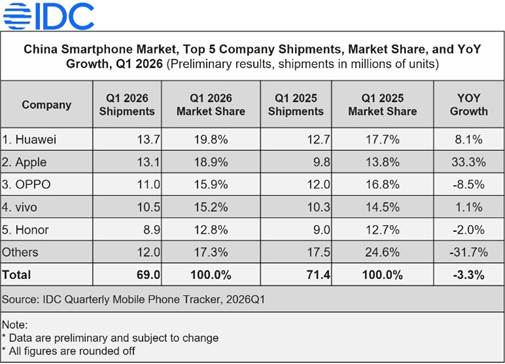
Apple has defied a broader downturn in the Chinese smartphone market, recording a 33.3% growth rate in the first quarter of 2026. This performance stands in stark contrast to the overall market, which saw total shipments decline by 3.3% to 69 million units during the same period. While the sector faces significant headwinds from supply chain constraints and rising component costs, the divergence suggests that high-end consumer demand remains resilient despite the cooling environment for mass-market devices.
Divergent Performance in a Shrinking Market
The contraction in the Chinese smartphone sector reflects a challenging macroeconomic landscape where memory shortages have disrupted production schedules and inflated costs for original equipment manufacturers. Despite these industry-wide pressures, Apple and Huawei have emerged as the primary drivers of premium segment activity. The ability of these firms to maintain volume growth while the aggregate market shrinks highlights a bifurcated recovery where consumers are prioritizing established high-end brands over mid-tier alternatives.
This shift in consumer behavior suggests that the premium segment is currently insulated from the cost-driven volatility impacting the rest of the supply chain. While smaller manufacturers struggle to navigate the rising costs of memory and other critical components, Apple continues to capture market share by maintaining its position as a preferred choice for high-end buyers. The 33.3% growth figure serves as a critical indicator of brand loyalty and pricing power in a market that is otherwise showing clear signs of saturation and exhaustion.
Supply Chain Constraints and Future Outlook
The impact of memory shortages remains the most significant variable for the remainder of the year. As OEMs grapple with these supply constraints, the ability to secure inventory will likely dictate the next phase of market share distribution. For Apple, the challenge will be to sustain this growth trajectory if the supply chain disruptions persist or intensify in subsequent quarters. The current data suggests that the company has successfully managed these constraints better than its competitors, allowing it to capitalize on the shift toward premium devices.
Within the broader technology landscape, AAPL stock page currently holds an Alpha Score of 60/100, reflecting a moderate outlook as the company navigates these regional supply and demand dynamics. The stock is trading at $270.23, marking a 2.59% increase today. This movement underscores the importance of regional performance in the company's global strategy, particularly as it balances growth in China against global stock market analysis trends.
Investors should look to the next round of quarterly filings for evidence of margin compression. While revenue growth in China is a positive signal, the sustainability of this trend depends on whether the company can pass on the rising costs of production to the consumer without dampening demand. The next concrete marker for this narrative will be the upcoming guidance update, which will clarify whether the current growth in China is an outlier or the beginning of a sustained trend of premium market dominance.