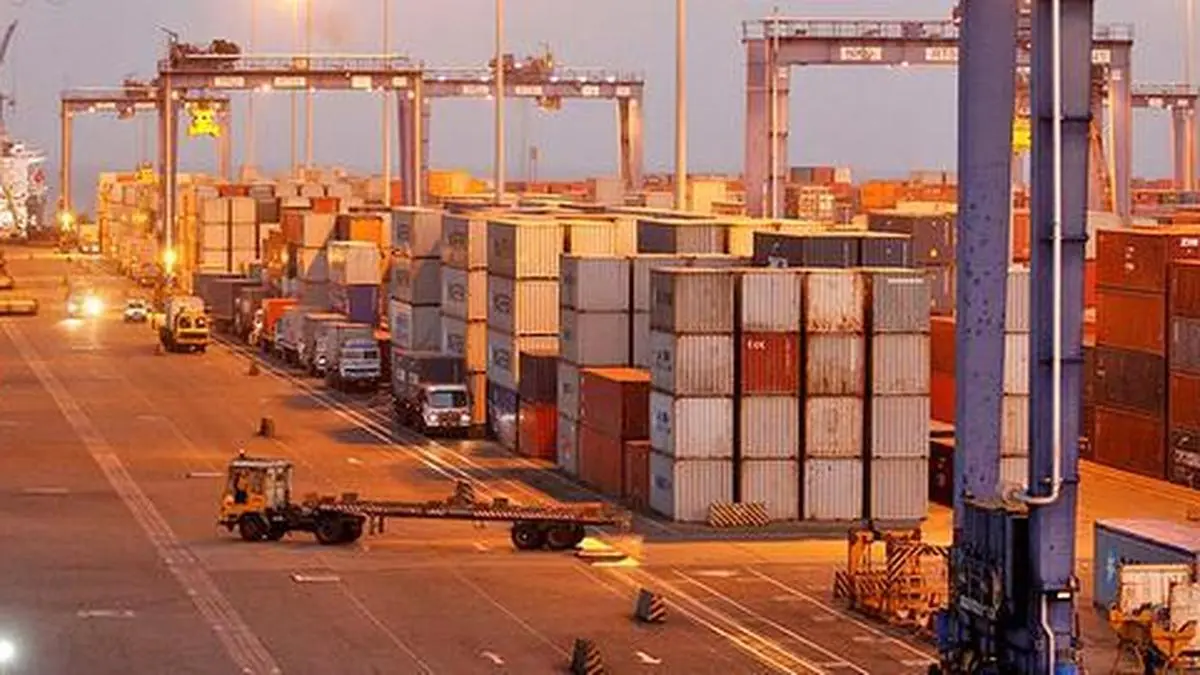
Adani Ports and Special Economic Zone Limited (APSEZ) experienced a sharp intraday reversal on Tuesday, shedding early gains despite reporting robust operational metrics for April 2026. The stock reached a fresh 52-week high of ₹1,757.40 shortly after the opening bell, only to succumb to selling pressure that pushed the price down to ₹1,719.00. By midday, the shares were trading at ₹1,731.00, representing a 0.67 per cent decline from the previous close of ₹1,742.60. This price action highlights a classic 'sell the news' reaction, where investors opted to lock in profits following a period of significant outperformance against the broader market.
Operational Performance and Volume Mix
The company's May 4 operational update confirmed that total cargo volumes reached 4.31 crore metric tonnes in April 2026, marking a 15 per cent year-on-year increase. This growth was primarily driven by strength in the container and dry cargo segments, both of which recorded 17 per cent year-on-year expansion. These segments serve as the primary engines for APSEZ, and their double-digit growth rates suggest that the core port operations remain resilient despite broader macroeconomic headwinds. However, the report contained a notable outlier: logistics rail volumes fell by 16 per cent year-on-year to 48,490 TEUs. This contraction in the rail segment warrants attention, as it may indicate localized supply chain friction or a shift in the modal mix of cargo transport that could impact margin profiles if the trend persists in subsequent months.
Order Flow and Liquidity Dynamics
The intraday reversal was accompanied by a clear imbalance in order flow, with 60.82 per cent of orders on the sell side compared to 39.18 per cent on the buy side. Total traded volume reached 28.07 lakh shares with a total traded value of ₹488.03 crore. This level of liquidity suggests that institutional participants were active in the price discovery process, likely rebalancing positions after the stock hit its new 52-week high. For traders, the divergence between the positive volume growth and the negative price action suggests that the market is currently prioritizing valuation concerns over immediate operational updates. With a price-to-earnings ratio of 32.06, the stock is priced for perfection, and any weakness in specific segments like rail logistics provides a convenient excuse for profit-taking.
Relative Strength and Market Context
Despite the recent dip, APSEZ remains a standout performer in the current market environment. The stock has delivered a 28.18 per cent return over the past year, a stark contrast to the Nifty 50 index, which has declined 2.30 per cent during the same period. Year-to-date, the stock has gained 16.58 per cent, while the index has posted an 8.60 per cent loss. This relative strength has been a cornerstone of the bullish thesis for the stock, attracting investors looking for growth in a stagnant index. For those tracking stock market analysis, the current setup requires a careful look at whether the 15 per cent cargo growth is sufficient to justify the current valuation premium. If the stock fails to reclaim the ₹1,750 level in the coming sessions, it could signal a broader consolidation phase as the market digests the rapid gains accumulated over the past month. Conversely, sustained volume growth in the container segment would likely provide a floor for the stock, limiting the downside risk for long-term holders who are less sensitive to short-term volatility. The company's total market capitalisation currently stands at approximately ₹3,98,792 crore, reflecting its dominant position in the sector. Investors should watch the next monthly operational update for signs that the rail volume contraction is a temporary anomaly rather than a structural shift in the company's logistics strategy. If the rail segment continues to underperform, the market may begin to discount the stock's growth multiple, regardless of the strength in port-side cargo volumes.