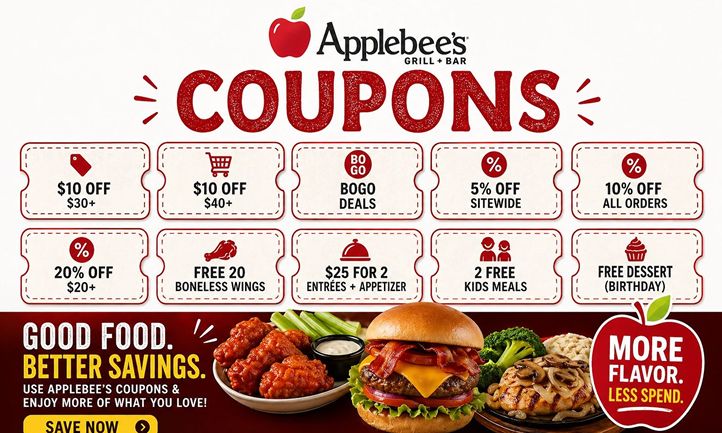
The casual dining industry is watching a behavioral shift that started as a cost-saving hack and is becoming a permanent fixture of the American restaurant visit. More than 70% of diners now research a restaurant online before walking in, and coupon usage at chains like Applebee's has climbed sharply over the past 18 months. The result is a customer who arrives with a promo code, a menu price list, and a budget already set.
For investors tracking Dine Brands Global (DIN), the parent of Applebee's, the trend cuts both ways. The simple read is that coupon-driven traffic boosts footfall and protects market share in a price-sensitive environment. The better market read is that the shift compresses margins, rewards operators with strong digital infrastructure, and punishes chains that rely on walk-in impulse spending.
The Coupon-First Diner: A Structural Shift
The source data is clear: over 70% of American diners now check a restaurant online before visiting, and coupon usage at casual dining chains has risen sharply since early 2024. Diners are arriving with promo codes, discount offers, and deal screenshots already pulled up on their phones. For a family saving $5 to $15 per visit, the habit compounds quickly over a month.
What Changed
Restaurant prices have been rising steadily since 2023, pushing the average check higher. Diners responded by becoming more deliberate. Instead of showing up and hoping for the best, they now treat a restaurant visit like a planned purchase: research the menu, find a coupon, lock in the deal.
The Mechanism That Matters
This is not a temporary response to inflation. The behavior is embedding itself into the dining routine. Deal-focused pages like Applebee's Coupons have seen a sharp rise in traffic. Menu guides that list current prices, nutrition facts, and active promotions are becoming the primary decision tool. The diner of 2026, as one casual dining industry observer put it, is not just hungry – they are prepared.
Applebee's as a Bellwether for Casual Dining
Applebee's is a useful proxy because its customer base skews toward value-conscious families – exactly the demographic driving the coupon-first behavior. The chain's parent, Dine Brands Global (DIN), operates in a segment where average ticket size and traffic volume are the two main levers. If coupon usage is rising, it implies that traffic is being subsidized by discounting.
Margin Pressure vs. Volume Gain
The naive interpretation is that more coupons equal more customers, which is good for revenue. The practical market read is that same-store sales may hold up, but restaurant-level margins face compression. Each coupon redeemed reduces the average check. If the discount is not offset by higher volume or lower food costs, earnings per share take the hit.
What Confirms the Thesis
Investors should watch Dine Brands' quarterly same-store sales and guest count data. If traffic is rising while average check is flat or declining, the coupon strategy is working but at a cost. If both metrics are declining, the coupons are not enough to offset broader demand weakness. The next earnings report will be the first concrete test.
Casual Dining Sector Read-Through: Margin Pressure or Volume Gain?
The trend is not isolated to Applebee's. Every casual dining chain with a digital loyalty program or coupon page is exposed to the same dynamic. Chains that have invested in digital infrastructure – mobile apps, personalized offers, real-time menu updates – are better positioned to capture the prepared diner without giving away margin.
Who Benefits and Who Loses
- Winners: Operators with strong first-party digital channels, low reliance on third-party delivery, and menu flexibility to offer targeted discounts without broad price cuts.
- Losers: Chains that depend on walk-in traffic, have weak online menu presence, or use blanket percentage-off coupons that compress margins across the board.
The Confirmation Signal
The key metric to track is digital engagement: app downloads, coupon redemption rates, and time spent on menu pages. If these numbers continue to rise across the sector, the structural shift is real. If they plateau, the coupon boom may be a cyclical response to inflation that fades as real wages catch up.
Valuation and Execution Risk
Dine Brands (DIN) trades at a discount to casual dining peers, partly because of its franchise-heavy model and partly because of persistent traffic concerns. The coupon trend introduces a new variable: if discounting becomes permanent, the franchisee profitability could erode, leading to store closures or royalty pressure.
The Better Market Read
The simple take is that coupons drive traffic. The better take is that the shift forces a revaluation of digital assets within restaurant companies. Chains that own their customer relationship through apps and first-party data will command higher multiples. Chains that rely on third-party coupon aggregators will see margin leakage.
What Would Weaken the Thesis
If consumer confidence improves and real wage growth accelerates, diners may revert to less price-sensitive behavior. That would reduce coupon usage and restore margins. Until that data arrives, the coupon-first diner is the new normal.
For a broader view of how consumer behavior shifts affect stock market analysis, AlphaScala tracks sector-level spending data and digital engagement metrics. The casual dining space is one of the clearest examples of a structural change that looks like a short-term promotion but is actually a long-term margin reset.
Bottom line for traders: The coupon surge at Applebee's is a signal, not a one-off. Watch DIN earnings for same-store sales versus average check. If traffic gains come at the expense of ticket size, the stock's discount may widen before it narrows.