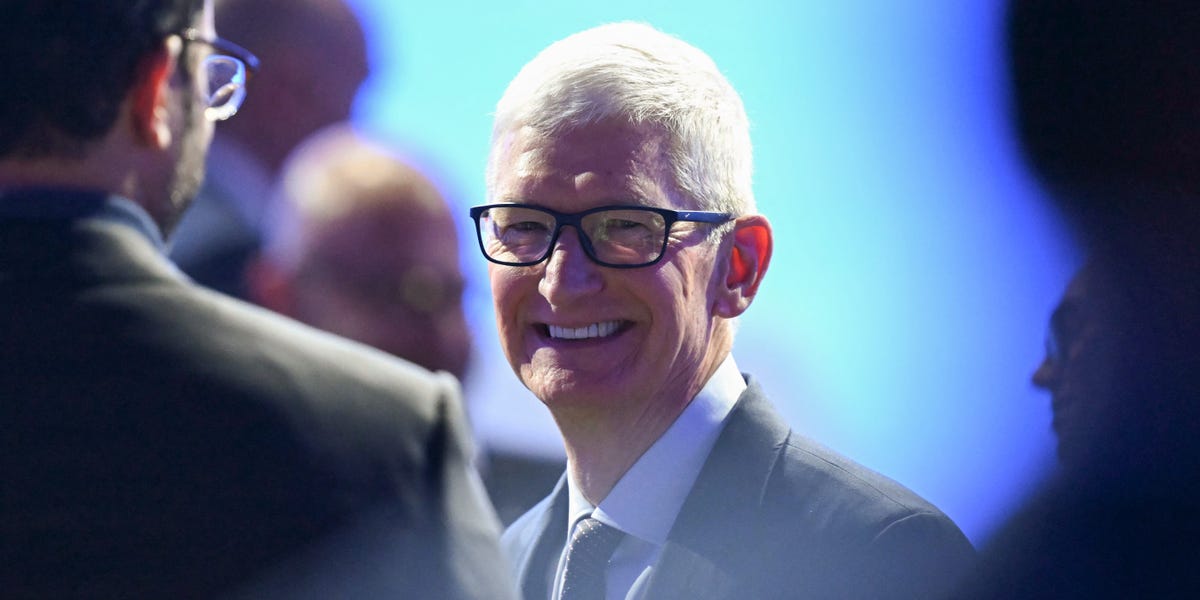
The announcement of Tim Cook’s departure from the CEO role at Apple marks a definitive shift in the company’s executive trajectory. While the outgoing leader emphasized that the transition is not a final exit, the move forces a reassessment of the firm’s long-term hardware roadmap and its reliance on established product cycles. Investors are now forced to reconcile the legacy of a decade defined by services growth with the necessity of a new vision for integrated consumer technology.
Strategic Continuity and Hardware Evolution
Apple has built its recent valuation on the strength of its ecosystem, transitioning from a pure hardware manufacturer to a services-heavy revenue model. The departure of a leader who oversaw this transformation creates a vacuum in the narrative of how the company balances hardware innovation with software-driven recurring revenue. The core question for the next leadership team involves whether to double down on existing product lines or to accelerate the push into new hardware categories that have seen slower adoption rates.
Market participants are evaluating how the company will maintain its premium pricing power during this transition. The current leadership structure has prioritized supply chain efficiency and margin expansion, which has been a primary driver for the stock’s performance. Any deviation from this operational discipline could lead to a re-rating of the equity as the market tests the resolve of the incoming management team.
Sector Read-through and Valuation Pressure
Apple currently holds an Alpha Score of 60/100 with a Moderate label, reflecting the market’s cautious optimism as it trades at $273.05, up 1.04% today. This performance is closely watched by the broader technology sector, as the firm often serves as a proxy for consumer spending health and supply chain stability. The AAPL stock page provides further detail on how these metrics have evolved in the lead-up to this announcement.
The broader semiconductor and hardware landscape, including companies like ON Semiconductor Corporation, remains sensitive to shifts in Apple’s procurement strategy. If the new leadership pivots toward a more aggressive hardware refresh cycle, the downstream impact on component suppliers could be significant. Conversely, a focus on software-led growth might dampen the capital expenditure requirements that have supported the broader tech rally.
The Path to Executive Clarity
Investors are now looking for the first public appearance of the successor to provide a concrete roadmap. The primary marker for this transition will be the next quarterly earnings call, where the new leadership will be expected to articulate a clear stance on capital allocation and research spending. Until then, the market will likely focus on the stability of the existing executive team and the continuity of the current product pipeline.
This transition serves as a reminder of the risks inherent in highly centralized corporate structures. As the company navigates this leadership change, the focus will remain on whether the firm can sustain its current operational efficiency while attempting to capture new growth in an increasingly saturated market. The next filing will be the first indicator of whether the company intends to maintain its current strategic course or initiate a broader shift in its corporate philosophy.