Anthropic Curbs Expose India's AI Dependency Problem
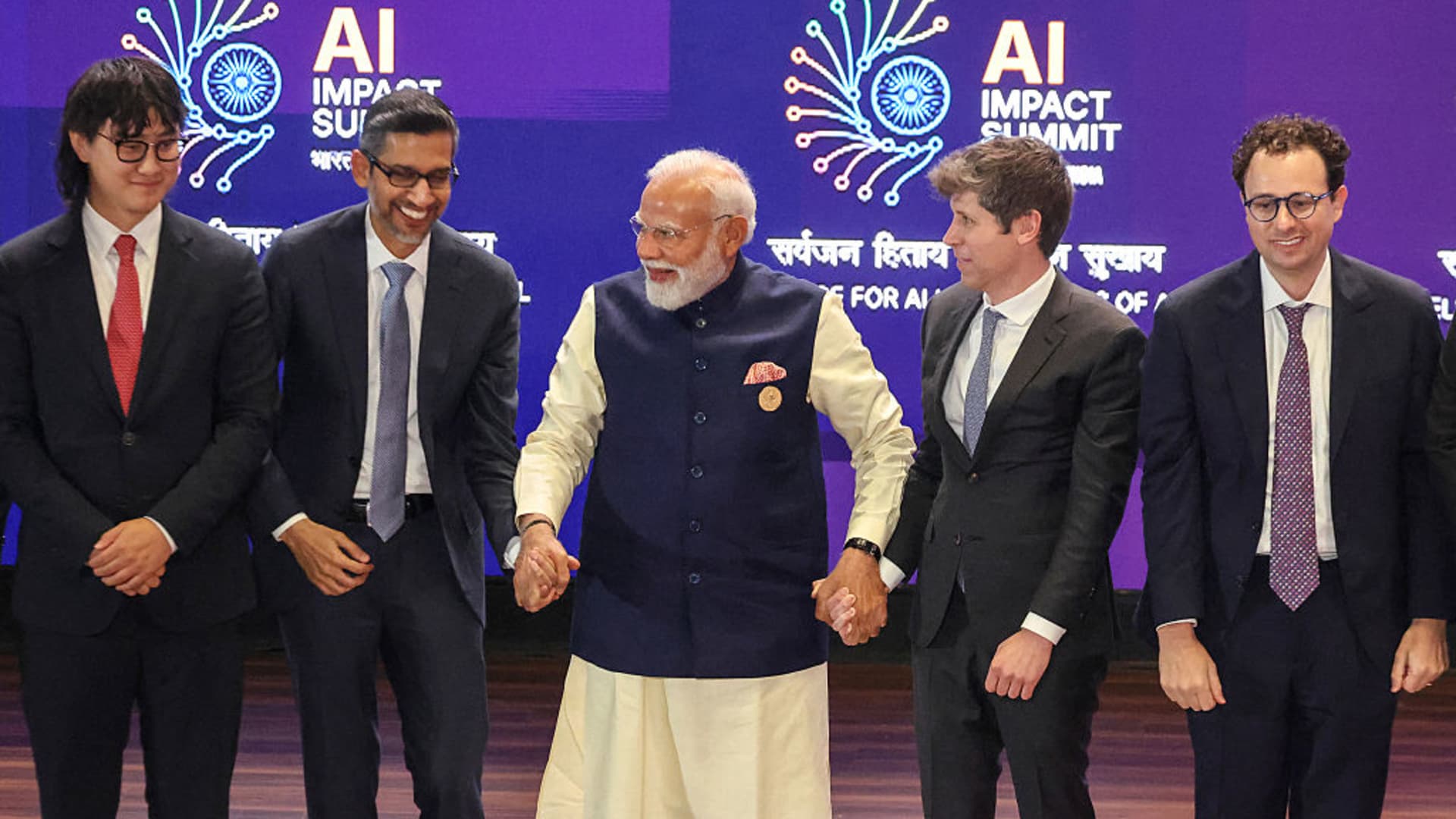
Anthropic disabled Fable 5 and Mythos 5 for foreign nationals. Indian startups that built on those models now face a sovereign AI reckoning. The capital gap is stark, and chip dependency on Nvidia adds another layer of risk.
Anthropic disabled access to its Fable 5 and Mythos 5 models for foreign nationals last week, complying with a U.S. export-control directive. The move exposed a fault line in India's AI strategy: build applications on top of foreign foundational models and hope the access stays open.
Saket Dandotia, co-founder of Onetab.ai, told CNBC the restriction could have broken his business had he not diversified across multiple models. "Diversification buys time; it doesn't buy independence," he said. India needs sovereign AI so startups like his do not "lose their edge" with one directive from a foreign government.
The fragility is not hypothetical. An ADP Research report released Thursday found that 41% of Indian workers use AI nearly every day – higher than 26% in China and 19% in the U.S. Without a domestic stack, that adoption rate measures dependence, not strength. India does not produce cutting-edge chips yet, does not have a frontier-scale foundation model on par with U.S. or Chinese offerings, and its data center capacity lags far behind.
Government programs are running on three fronts: a semiconductor mission, an AI mission, and tax breaks for global hyperscalers building data centers in the country. The private sector is also moving. On Monday, Sarvam AI, which is building sovereign AI models, raised $300 million at a $1.5 billion valuation from investors including HCL Technologies, India's third-largest software services company by market cap.
The efforts face a scale problem. Industry experts said the biggest challenge is access to computing power and a lack of deep-tech investment capital. Manish Agarwal, co-founder of Humyn Labs, said India has a strong domestic market and deep tech talent pool but lacks the capital available to sovereign AI companies in the U.S. and China.
Last year Indian startups raised $10.5 billion in funding, the third highest globally after the U.S. and U.K., according to Tracxn. Most of that went to enterprise applications and retail, not deep-tech. HCL Tech's investment of 14.27 billion rupees ($151 million) in Sarvam was less than 10% of what it paid out as dividends in the fiscal year ending March 2026.
Calls are growing for the government to invest more heavily. Mohandas Pai, a prominent venture capitalist, urged Prime Minister Narendra Modi to start an AI mission, calling existing programs "too slow, way too small to make any large impact." Experts said building a foundational model that does not hallucinate requires trillions of parameters. Sarvam's flagship model has a little over 100 billion parameters.
There is also the chip risk. Sovereign AI models in India currently use Nvidia architecture. If the U.S. restricts access to Blackwell chips as it did with China, India would be helpless, said Neil Shah, vice president of research at Counterpoint Research. Nvidia carries an Alpha Score of 70/100 at AlphaScala, reflecting its central role in the global AI buildout – a role that makes any export-control shift a direct risk for Indian startups reliant on that hardware.
Sridhar Vembu, co-founder of Zoho, posted on X that "Technology is the ultimate weapon" and India must find its "own way ahead." To do that, the country needs capital and sovereign computing power, both of which it severely lacks.
Without a strong government drive to address those issues, the conversation around building sovereign AI is at risk of "ephemerality," Agarwal said. The ADP Research finding – that 41% of Indian workers use AI daily – shows how deep the adoption runs. ADP itself carries a Mixed Alpha Score of 47, a reminder that even the companies measuring this trend face their own positioning questions.
The next concrete marker is the Reliance Industries annual general meeting on June 19, where any AI investment announcements will be watched closely. Until then, the gap between India's AI ambition and its sovereign stack remains the story.
Drafted by a large language model from the source reporting linked above, then screened by automated publishing checks. It is not read by a journalist before publication. Some articles cite our Alpha Score. Verify prices and figures against the original source. Educational coverage, not personalized advice.