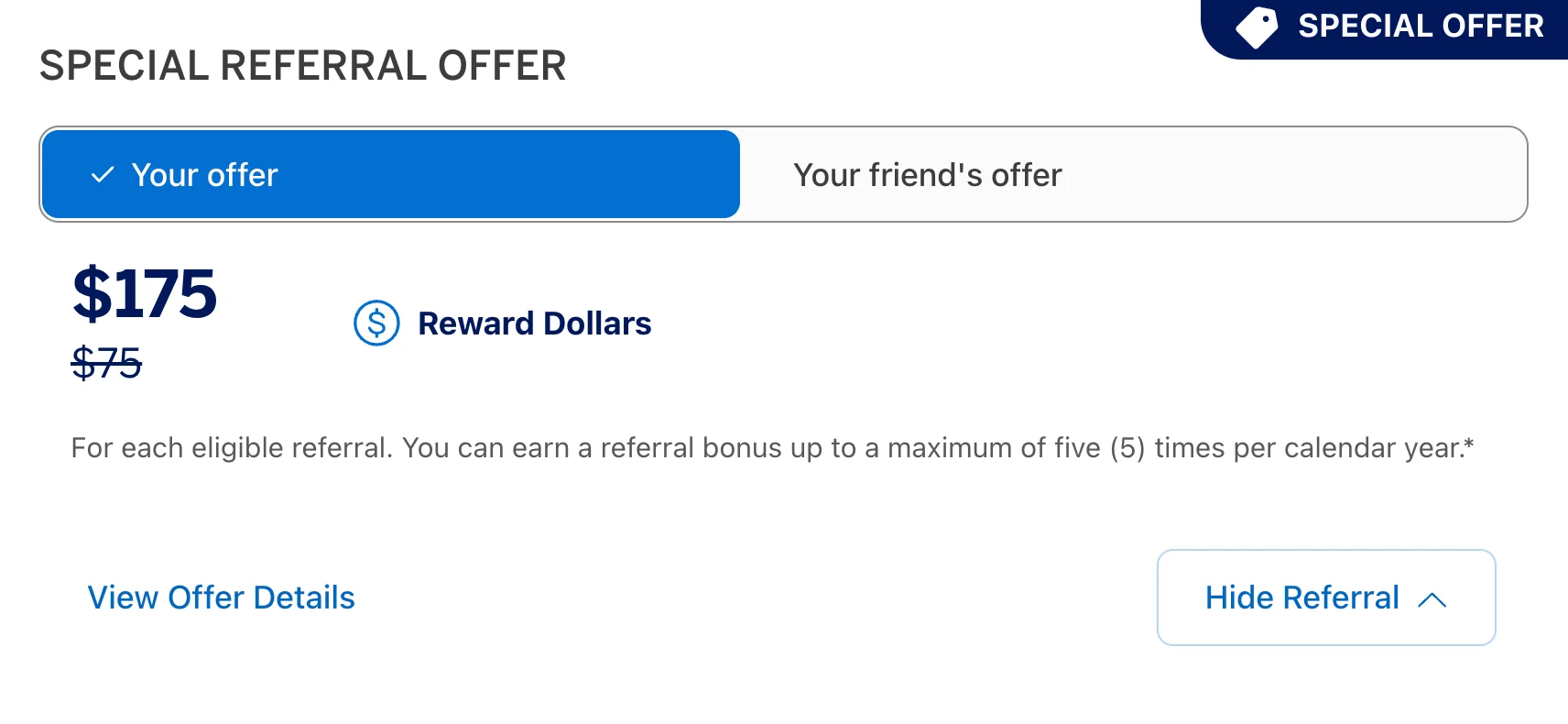
American Express raised the referral bonus on its Blue Cash Everyday card to $175 per successful referral, the company's website shows. Cardholders can earn the bonus on up to five referrals per year, or $875 total. New members still get the standard sign-up offer of up to $200 in statement credits.
Behind the increase is a bet on word-of-mouth acquisition. Industry studies show referral programs tend to produce customers with higher retention rates and average spending than those acquired through mass advertising. For American Express, the $175 bonus costs roughly one month's swipe fees on an average cardholder's spending. If the referred customer stays active for more than a year, the math works.
The Blue Cash Everyday card carries no annual fee. It offers 3% cash back at U.S. supermarkets and 2% at gas stations. All other purchases earn 1%. That structure puts it in competition with cards like the Chase Freedom Unlimited and the Capital One SavorOne. American Express has historically relied on its premium card portfolio for growth. The everyday segment is where the volume is, and a higher referral bonus aims to capture more of it. The card's no-annual-fee structure helps attract cost-conscious customers who might otherwise choose a rival.
New accounts are the prize credit card issuers are jostling for. Chase and Citi have run similar referral promotions. The bonus amounts vary across issuers. The general trend is toward higher incentives. Referral programs have become a key acquisition channel. They allow companies to pay for marketing only when a new account opens. The cost per acquisition through referrals is often lower than through digital ads or direct mail, according to industry analysts. The drawback is the volume limit: a cardholder can only refer so many friends.
For American Express, the Blue Cash Everyday is a critical product in its bid to attract younger, everyday spenders away from rivals. The up-to-$200 signup bonus matches what many competitors offer on comparable no-annual-fee cards.
American Express's Alpha Score is 56 out of 100, a Moderate rating from AlphaScala. The stock trades near a $200 billion market cap. The higher referral bonus alone is unlikely to move the needle on that valuation. What matters is whether the program drives measurable card growth. American Express reports new card acquisitions each quarter. The Blue Cash Everyday card accounted for roughly 15% of new accounts in the most recent quarter, according to company filings. A sustained lift from the referral program would show up in the next one or two earnings cycles. AXP stock page
On the cost side, the $175 bonus is a marketing expense. American Express's marketing budget was about $5 billion in the last fiscal year. The maximum possible payout from the referral program, even if all five slots are used on every eligible cardholder, is a small fraction of that. The risk is not the dollar amount. The risk is the precedent: if competitors match or beat the offer, the industry's customer acquisition cost could rise across the board.
The referral bonus is a tactical tweak, not a strategic shift. Investors can watch the next quarterly filing for changes in the marketing expense ratio and new account numbers. The stock's Moderate Alpha Score implies the current price already reflects a steady outlook. The referral program could marginally improve that outlook. It is not a catalyst on its own.