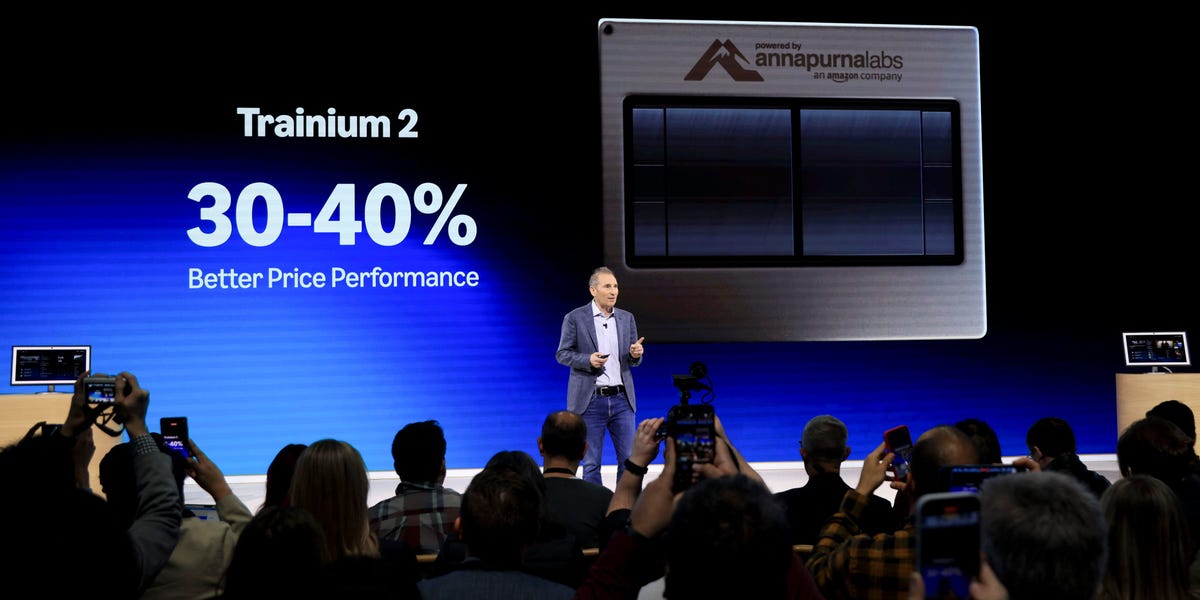
Amazon has signaled a fundamental change in its hardware strategy by announcing plans to offer its proprietary Trainium AI chips to external customers within the next two years. This shift moves the company beyond its traditional role as a cloud infrastructure provider and places it in direct competition with established semiconductor leaders. By transitioning its internal silicon development into a commercial product, Amazon aims to capture a segment of the hardware market currently dominated by specialized chip manufacturers.
Competitive Realignment in AI Hardware
The decision to externalize Trainium production forces a reevaluation of the relationship between cloud service providers and hardware suppliers. Historically, Amazon has relied on third-party silicon to power its massive data center operations. By offering its own chips as a standalone product, the company is attempting to leverage its deep understanding of cloud-scale workloads to attract developers who are seeking alternatives to existing market standards. This move suggests that Amazon views its internal hardware capabilities as a core competitive advantage rather than just an operational necessity.
This strategy creates a new friction point for companies like NVIDIA Corporation, which currently maintains a dominant position in the AI hardware ecosystem. While Amazon remains a significant customer for external chip suppliers, the introduction of a proprietary, commercially available alternative provides a pathway for cloud users to reduce their reliance on traditional hardware vendors. The success of this transition will depend on the company's ability to scale manufacturing and provide the necessary software ecosystem to support external developers.
Operational Scaling and Market Positioning
Amazon's pivot toward external hardware sales reflects a broader trend of vertical integration among major technology firms. By controlling both the cloud infrastructure and the underlying silicon, the company can optimize performance and cost structures in ways that third-party hardware providers cannot easily replicate. This integration is designed to appeal to enterprises that are looking to manage the rising costs of AI compute capacity.
AlphaScala data currently tracks Amazon.com Inc. with an Alpha Score of 54, reflecting a mixed market sentiment as the company balances its retail and cloud operations. The firm's ability to execute this hardware transition will be a critical factor in its long-term valuation as it navigates the capital-intensive nature of the AI sector. The shift also highlights the ongoing pressure on stock market analysis to account for hardware-software convergence in cloud service valuations.
The next concrete marker for this strategy will be the release of specific technical benchmarks and pricing structures for the externalized Trainium units. Investors and developers will look for evidence that the chips can perform effectively outside of Amazon's proprietary cloud environment. The company's progress in establishing a developer ecosystem around its hardware will serve as the primary indicator of whether this initiative can meaningfully disrupt the current semiconductor hierarchy.