Stocks● Neutral
Alligator Energy Hits 70% Uranium Recovery at Samphire Field
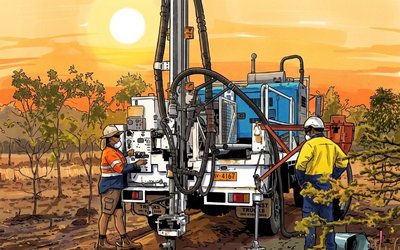
Alligator Energy's 70% recovery at Samphire validates its ISR model. The next phase will test lower-grade margins, a key indicator for project scalability.
Continue with
Alligator Energy (ASX: AGE) has reached a critical technical threshold at its Samphire project in South Australia, recording 70% uranium recovery over 70 pore volume exchanges during its initial in-situ recovery (ISR) field trial. This result serves as a primary de-risking event for the project, validating the core assumptions regarding orebody permeability and reagent efficiency that underpinned the company’s December 2023 scoping study. By confirming that the palaeochannel system responds predictably to lixiviant contact, the company has moved beyond theoretical modeling into empirical proof of concept.
Technical Validation of ISR Performance
The 70% recovery figure is significant because it validates the hydraulic connectivity within the mineralized zone. The trial demonstrated flow rates exceeding 5 litres per second, a metric that places the Samphire project in a favorable position relative to industry standards for ISR operations. When combined with solution grades averaging 115 milligrams per litre of uranium oxide, the data suggests that the project’s wellfield design is capable of maintaining consistent production levels without material hydraulic instability. The fact that reagent consumption aligned with the highly favorable category under international benchmarks further supports the potential for lower operating costs than previously modeled.
Beyond the extraction phase, the downstream processing results provide a secondary layer of confirmation. The ion exchange and elution process achieved a 98% recovery rate, effectively closing the loop on the technical viability of the project from the wellhead to the final product. For investors, this reduces the execution risk associated with the transition from pilot-scale testing to potential commercial production. The consistency of the hydraulic behavior throughout the trial indicates that the geological model is robust, which is a necessary precursor for any bankable feasibility study.
Scaling the Margin Test
While the first pattern results are positive, the market should look toward the upcoming second well pattern as the true test of the deposit's variability. Alligator Energy plans to initiate this second phase in the coming weeks, targeting a lower-grade and less permeable area at the margins of the mineralized system. This is a critical shift in the testing narrative. If the first pattern represented the best-case scenario for the deposit, the second pattern will define the lower bounds of the project’s economic viability.