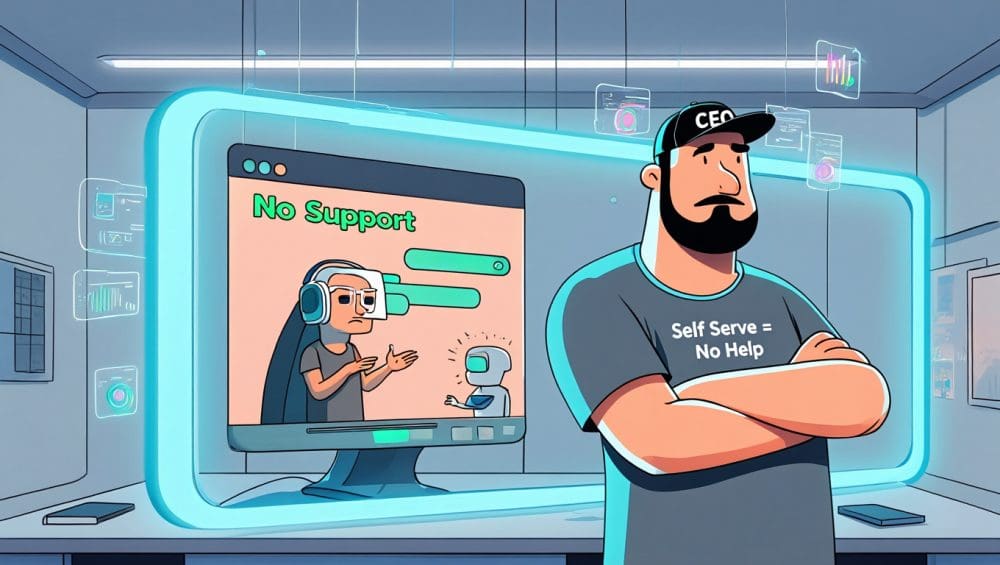
The rapid proliferation of AI-native software has introduced a structural vulnerability for enterprise and power users. While tools like Recall offer high-utility transcription and video management, the sector is currently defined by a lack of traditional customer support infrastructure. This creates a hidden operational risk where critical workflows rely on black-box software that lacks a clear path for troubleshooting or service recovery.
The Operational Fragility of AI-Native Tools
The naive interpretation of the current AI software boom is that low cost and high utility equate to a sustainable business model. Users often overlook the absence of support because the initial deployment is frictionless and the subscription price is low. However, the lack of human-in-the-loop support means that when an API integration fails or a transcription engine hangs, the user has no recourse beyond waiting for an automated patch or a community forum response.
This creates a dependency risk for teams integrating these tools into their core production pipelines. If a service goes down or a data processing error occurs, the lack of a service-level agreement or a dedicated support desk turns a minor technical glitch into a complete work stoppage. For businesses scaling their operations on top of these platforms, this is not just a nuisance. It is a failure of operational continuity.
Scaling Constraints and Service Reliability
Many AI startups prioritize rapid feature deployment over the establishment of robust backend support teams. This strategy allows for aggressive growth in the short term, but it leaves the user base exposed to platform instability. When a tool becomes essential to a workflow, the cost of a support failure outweighs the monthly subscription savings.
Users should evaluate their reliance on these platforms by assessing the cost of a 48-hour outage. If the tool is integrated into a revenue-generating process, the absence of support is a material risk factor. This is particularly relevant for those managing stock market analysis or high-frequency content production where data integrity and uptime are non-negotiable.
Assessing Vendor Viability
To mitigate this, users must look for signs of institutional maturity beyond the product interface. A company that cannot provide a clear escalation path for technical issues is likely operating with a lean, engineering-focused team that is not optimized for long-term reliability. Before committing to a new AI tool for professional use, verify if the vendor provides documentation for enterprise-grade support or if they rely solely on Discord-based community feedback.
If a platform does not have a dedicated support channel, the risk of data loss or service interruption remains high. The next concrete marker for the sector will be the emergence of support-as-a-service providers that bridge this gap, or the consolidation of AI tools into larger, more stable software suites that offer guaranteed uptime and professional support tiers. Until then, treat AI-native tools as experimental components rather than core infrastructure.