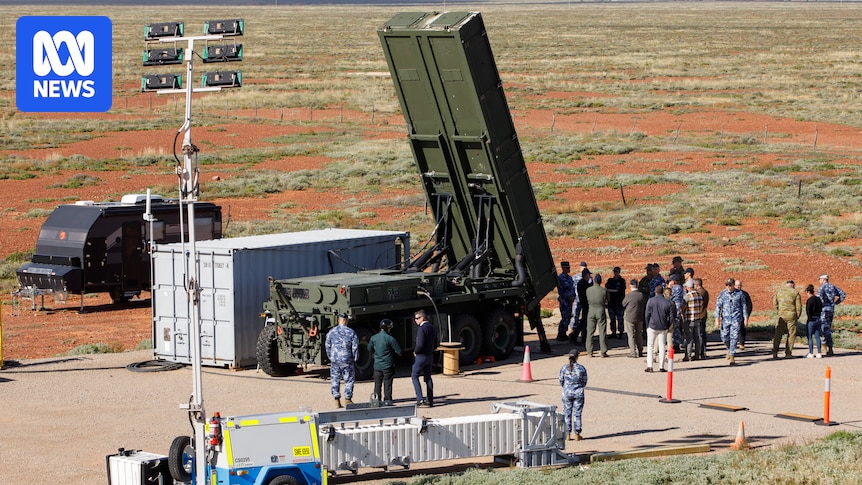
The Australian Defence Force test-fired a Standard Missile-2 interceptor at the Woomera range in South Australia in June. The system paired an American launcher and control unit with an Australian radar. The ADF released footage and new details this week, days after China launched a nuclear-capable ICBM into the South Pacific.
Canberra plans to spend between $7 billion and $10 billion over the next decade on integrated air and missile defence. The Woomera shot was a prototype demonstration, not a fielded capability. Defence Minister Richard Marles called it "a practical demonstration of how the Australian Defence Force is working with its partners and local industry to deliver crucial defence capabilities, growing our sovereignty and helping to keep Australians safe."
The timing gave the opposition room to push back. Shadow Defence Minister James Paterson criticised the pace of spending, pointing to the Chinese missile as a threat Australia could not currently intercept. "We don't have sufficient capabilities to intercept missiles like this if they were launched towards Australia," he told Channel 7. "We are not investing fast enough or moving quick enough to have those capabilities."
Raytheon and Lockheed as the Likely Beneficiaries
The SM-2 is built by Raytheon, part of RTX. The launcher and control system used in the test were American. Lockheed Martin's Mk 41 vertical launching system is the standard for Aegis ships and has supplied ground-based launchers in other medium-range systems. The Australian radar was from an unnamed local supplier.
The spending programme itself is still taking shape. Defence's 2026 Integrated Investment Plan singles out medium-range ground-based air defence as a priority and says decisions are likely this year. Air Marshal Stephen Chappell, the chief of the Air Force, said the test was designed "to explore medium-range air defence capability options to inform capability acquisition decisions."
That means the real contract awards could come in 2026 or 2027, after the plan is finalised. The $7–10 billion figure is an envelope, not a line item. The final number depends on which system Australia chooses, how many sites it protects, and the degree of local industry participation.
Political pressure adds urgency. Paterson's critique, combined with public concern about the Chinese ICBM, makes it harder for the government to slow the programme. Marles has linked the test directly to sovereignty: "growing our sovereignty and helping to keep Australians safe."
The ADF is not buying off the shelf. This test was a data-gathering exercise to shape a request for proposals. If the government moves toward a rapid acquisition model – buying an existing U.S. system rather than developing a bespoke Australian one – RTX and Lockheed could see production orders within 18 months. A slower approach would push manufacturing into the next decade.
For now, the test proves the concept. The government plans to make decisions on a medium-range system later this year. The next step is turning a successful prototype into a purchase order.