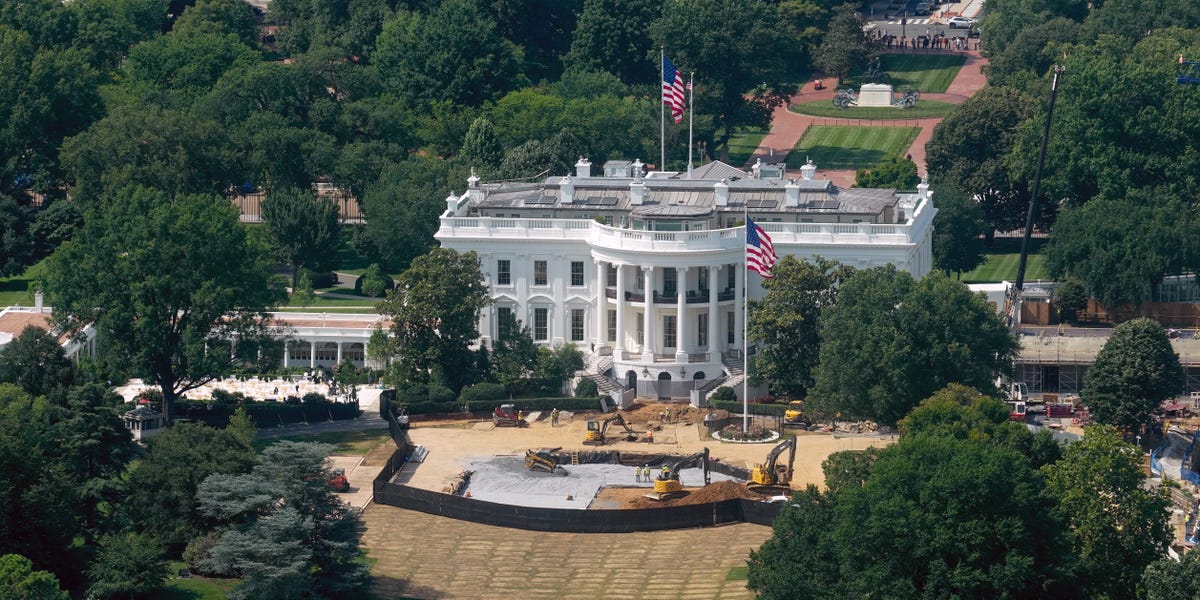
President Donald Trump told reporters Monday the White House is installing a permanent granite helipad on the South Lawn. The $6 million project, built by Lockheed Martin's Sikorsky unit, is designed to protect the lawn from the new Marine One helicopters.
The new VH-92A helicopters, delivered in 2021, are heavier than the older VH-3D models. Their rotor wash has torn up turf on previous landings. A permanent pad set flush with the ground solves that without changing the look of the lawn.
For Lockheed, the helipad is a small contract. It carries symbolic weight. Sikorsky is the sole supplier of presidential helicopters. The permanent pad replaces a temporary landing zone that had been used since the VH-92A entered service. The VH-92A program has faced delays and cost overruns. The White House is now investing in infrastructure to support it.
The $6 million contract is a fraction of Lockheed's annual revenue. It reinforces the company's position as the sole supplier of presidential helicopters. The VH-92A program has been a priority for Sikorsky.
The granite pad must be strong enough to support the helicopter's weight and withstand rotor wash. It must also blend with the historic landscape. The project involves coordination with the Secret Service and the White House Military Office.
Trump did not say when construction would finish. The pad will be built on the south side of the mansion, near the existing temporary landing zone. The White House Military Office oversees the project.
The $6 million price tag covers materials and labor, plus site preparation. The White House did not disclose a timeline for completion. The existing temporary landing zone will remain in use until the pad is finished.
For taxpayers, the permanent pad may reduce long-term costs. Temporary landing pads required frequent replacement after each use. The granite surface eliminates that recurring expense. It also prevents damage to the underlying irrigation and electrical systems.
The helipad also serves as a fixed asset for future administrations. It can accommodate any helicopter in the presidential fleet, including the older models used as backups. The design allows for potential upgrades without major reconstruction.
Lockheed's Sikorsky unit has built presidential helicopters for decades. The VH-92A is the latest in a line that includes the VH-3D Sea King and the VH-60N White Hawk. The VH-92A fleet is expected to remain in service for three decades. The permanent helipad reflects that long-term planning.
The project is one of several infrastructure upgrades at the White House complex. Others include security enhancements and renovations to the West Wing. The helipad is the most visible addition to the South Lawn in years.
Trump's announcement came during an impromptu question-and-answer session with reporters. He described the helipad as a practical solution to a recurring problem. The new helicopters, he said, were too powerful for the old landing zone.
The White House did not provide a detailed breakdown of the $6 million cost. Lockheed Martin declined to comment on the contract. The company's Sikorsky division is based in Stratford, Connecticut.
Trump said the helipad will prevent damage, saving money on lawn repairs. The White House Military Office will oversee construction. No completion date has been set.