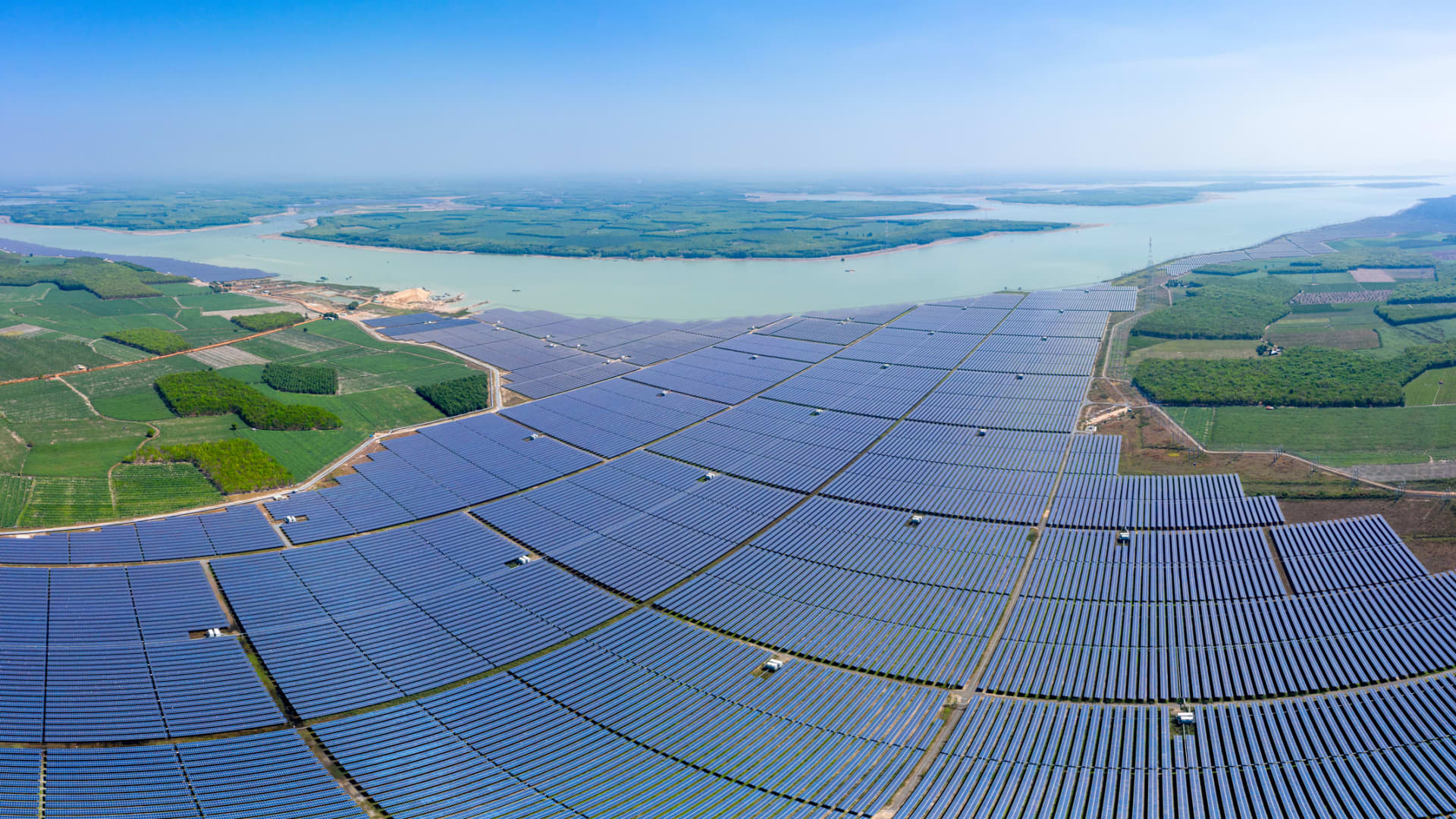
The Asian Development Bank (ADB) has unveiled a $70 billion financing initiative aimed at accelerating energy and digital infrastructure development across the Asia-Pacific region by 2035. While the mandate covers a broad geographic footprint, the structural characteristics of Southeast Asian economies position them as the primary beneficiaries of this capital deployment. The program focuses on two specific pillars: a pan-Asia power grid designed to link national and subregional electricity systems, and an Asia-Pacific digital highway intended to bridge the region's persistent infrastructure gap.
The Structural Case for Southeast Asia
Market participants often view regional development bank funding as a broad tide that lifts all boats, but the reality of capital allocation is more surgical. According to Greg Statton, vice president and chief technology officer for Asia Pacific and Japan at Cohesity, the ADB prioritizes developing member countries based on project readiness and specific growth mandates rather than sheer market size. This creates a distinct divergence in the potential impact of the $70 billion fund.
Larger regional powers such as China have largely shifted away from ADB financing, opting instead for domestic institutions and independent policy frameworks. Similarly, India maintains robust access to private capital markets and self-funded infrastructure projects, while Japan acts primarily as a financier rather than a recipient of these funds. Consequently, the capital is likely to be concentrated in markets where the marginal utility of each dollar is highest. Chasen Nevett, managing partner of principal investments at GMA Capital Partners, notes that Southeast Asia remains structurally underbuilt in both energy interconnection and digital infrastructure, providing a more efficient environment for capital to unlock private sector participation.
Beneficiary Tiers and Capital Deployment
Indonesia, Vietnam, and the Philippines are widely expected to capture the largest share of the funding. These nations possess the combination of population scale, acute infrastructure deficits, and active project pipelines that align with the ADB's historical lending patterns. While Malaysia and Thailand are also regional hubs, their more mature infrastructure bases suggest that the relative impact of ADB capital may be lower compared to their neighbors.
However, the role of Malaysia and Thailand in the digital transition remains significant. Data from Wood Mackenzie indicates that Malaysia currently hosts the largest data center project pipeline in Southeast Asia, accounting for approximately 60% of all proposed regional projects. Both Malaysia and Thailand are projected to lead data-center load demand in the region through 2035, creating a specific demand profile for the digital highway component of the ADB initiative.
Energy Interconnection and Transmission Mechanics
Beyond the headline dollar figure, the technical objective of the ADB plan is to create interoperable transmission systems. Scott Dunn, strategy and growth lead for Asia at AECOM, highlights that the current regional energy landscape is characterized by a mismatch between resource availability and demand centers. Markets such as Laos, Thailand, Vietnam, and Cambodia possess significant hydropower potential alongside rapidly expanding solar and wind capacity, yet they lack the cross-border transmission infrastructure required to move this clean power efficiently.
| Metric | 2035 Target |
|---|
| Renewable Energy Integration | 20 Gigawatts |
| Transmission Line Expansion | 22,000 Circuit-Kilometers |
The ADB's plan to integrate 20 gigawatts of renewable energy and link 22,000 circuit-kilometers of transmission lines is designed specifically to address these bottlenecks. By enabling power to flow across borders, the initiative aims to improve grid reliability and reduce costs, which are critical variables for industrial scaling in the region. For investors tracking the broader stock market analysis, this infrastructure build-out serves as a foundational layer for long-term industrial productivity in Southeast Asia.
Operational Scaling and Market Positioning
For those evaluating the industrial and technology sectors, the ADB's focus on digital and energy connectivity acts as a catalyst for firms involved in grid modernization and data center support. While FAST stock page and HUBS stock page represent distinct segments of the industrial and technology landscape, the broader trend toward regional integration in Southeast Asia provides a tailwind for companies capable of servicing these large-scale, cross-border projects.
Investors should distinguish between the headline funding amount and the actual execution risk associated with cross-border infrastructure. The success of the pan-Asia power grid depends on regulatory harmonization between participating nations, which has historically been a slow process. While the ADB provides the financing, the operational reality requires local governments to align on grid standards and energy pricing. The next concrete marker for this initiative will be the announcement of specific project tenders that move beyond the planning phase and into the procurement cycle. Monitoring the pace of these tenders will be more telling of the program's success than the total committed capital figure, as it will confirm whether the regional integration goals are matched by local political and regulatory commitment.