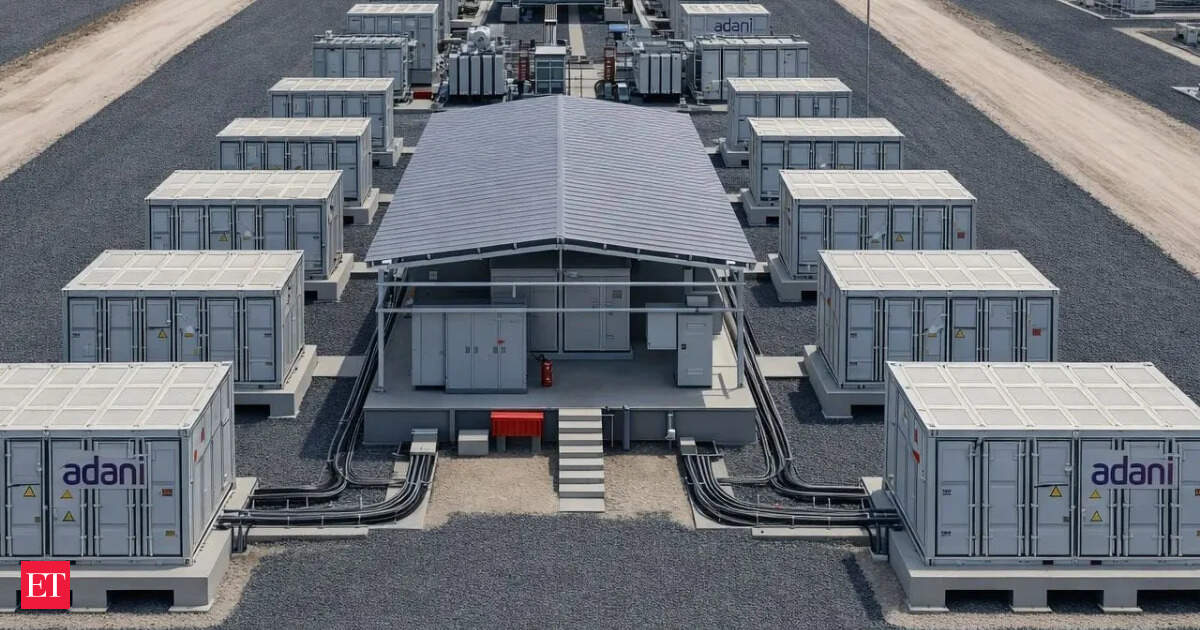
Adani Green commissioned a 3.37 GWh battery storage system at Khavda, pressuring peers to follow on storage obligation. Quarterly throughput data will confirm economics.
Adani Green Energy commissioned a 3.37 GWh battery energy storage system (BESS) at its Khavda renewable energy hub in Gujarat. The facility is one of the largest single-site storage installations in India and directly addresses a core bottleneck in the country's clean energy push: grid reliability as renewable penetration rises.
Adding 3.37 GWh of storage at Khavda changes the economics of the larger renewable park. The system lets Adani Green shift solar and wind output into peak demand hours, reducing curtailment risk and improving plant-level revenue. Given that Khavda is planned to host 30 GW of generation capacity, the BESS is a logical next step. The company plans further storage expansion.
The simple read is that Adani Green is building more infrastructure to reinforce its lead. The better market read: battery storage is becoming a competitive necessity. India’s Ministry of Power now requires renewable projects above certain thresholds to include storage or face curtailment. The 3.37 GWh figure matters because it approaches utility-scale viability – enough to cover Gujarat’s evening peak draw for a short window. For traders tracking the sector, the central question is whether lithium-ion pack costs have fallen enough for such projects to earn their weighted average cost of capital without subsidy support.
Adani Green’s move forces a read-through across the renewable developer universe. If the largest private player is front-loading storage capex, smaller developers may need to follow or lose positioning in future SECI tenders. The energy storage obligation – a policy mandating that a percentage of new renewable capacity be paired with storage – is set to ramp up from FY27. The BESS at Khavda gives Adani Green a first-mover advantage in compliance and operational data.
Supply-chain implications are direct. Battery pack suppliers, inverter manufacturers, and thermal management providers stand to see order flow if more developers mirror this strategy. On the other hand, developers with weaker balance sheets may face margin pressure. Storage adds roughly 30-40% to upfront capital costs for a solar-plus-storage project, based on industry estimates. The read-through is that capital allocation discipline will separate winners from laggards. For broader context on renewable sector dynamics, see stock market analysis.
Adani Green’s stock already prices in aggressive capacity expansion. The storage commissioning adds a new revenue stream: peak-time power sales and, potentially, ancillary services like frequency regulation. The market needs evidence that the BESS can achieve the assumed utilisation of 60-70% annual cycles to justify the capex. The next concrete marker is the first quarterly disclosure of battery throughput and cycle degradation rates from Khavda.
A second catalyst is the upcoming SECI tender for 12 GWh of standalone storage systems. If Adani Green wins a meaningful share, it would confirm the strategy of bundling storage with generation as a standard product. A loss to a rival like Tata Power or JSW Energy would weaken the narrative that Adani’s vertical integration affords an edge.
Adani Green has opened a lead in storage scale. Whether that lead translates into superior returns depends on execution cost and utilisation rates that only quarterly data will reveal. For the sector, the Khavda BESS marks the point where Indian battery storage shifted from pilot projects to commercial reality.
Prepared with AlphaScala editorial tooling from the source reporting linked above. Indexable analysis may include a cited Alpha Score value. Publishing checks screen each story before release. Educational coverage, not personalized advice.