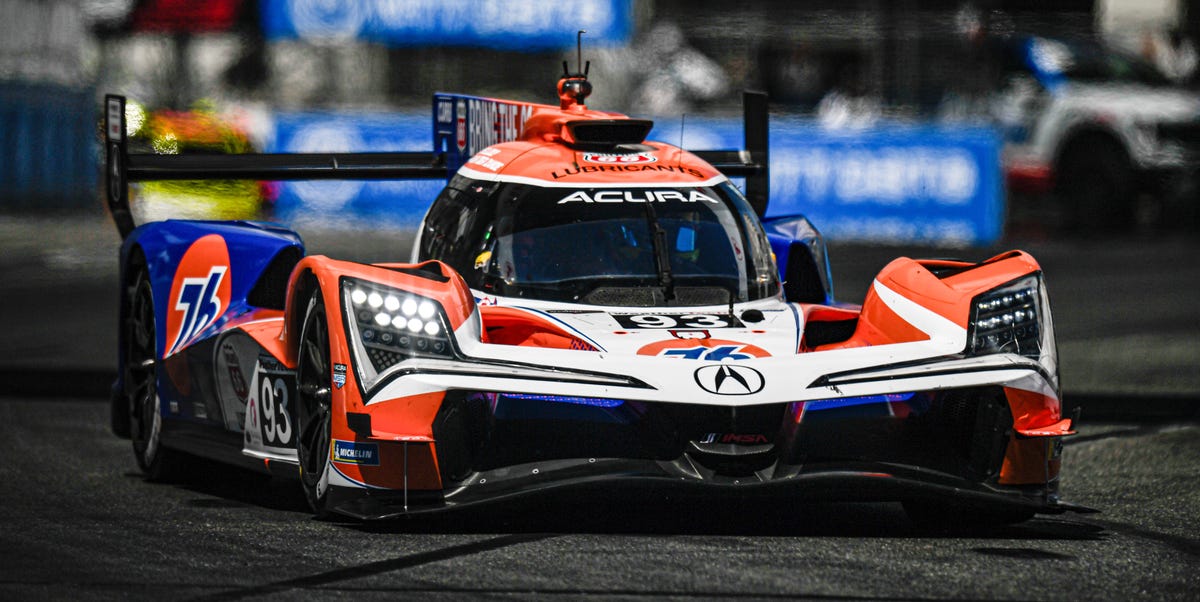
Acura Secures First Long Beach IMSA Victory Since 2019

Meyer Shank Racing's victory at the Long Beach Grand Prix marks a return to form for Acura, signaling a potential shift in competitive standing for the remainder of the IMSA season.
Alpha Score of 55 reflects moderate overall profile with moderate momentum, moderate value, moderate quality. Based on 3 of 4 signals — score is capped at 90 until remaining data ingests.
Alpha Score of 40 reflects weak overall profile with strong momentum, poor value, poor quality. Based on 3 of 4 signals — score is capped at 90 until remaining data ingests.
Alpha Score of 47 reflects weak overall profile with moderate momentum, poor value, moderate quality. Based on 3 of 4 signals — score is capped at 90 until remaining data ingests.
Alpha Score of 44 reflects weak overall profile with weak momentum, weak value, strong quality. Based on 3 of 4 signals — score is capped at 90 until remaining data ingests.
The victory of Meyer Shank with Curb-Agajanian’s No. 93 Acura at the Long Beach Grand Prix marks a significant shift in the competitive landscape of the IMSA WeatherTech Sportscar Championship. Drivers Renger van der Zande and Nick Yelloly secured the win on the street circuit, representing the first time an Acura entry has claimed the top spot at this event since 2019. This performance serves as a critical proof point for the manufacturer's current racing platform.
Competitive Dynamics and Manufacturer Standing
The Long Beach street circuit is widely considered one of the most demanding venues on the IMSA calendar due to its tight corners and limited passing opportunities. Achieving a win here validates the mechanical reliability and agility of the Acura ARX-06 prototype. For the Meyer Shank organization, this result provides a necessary momentum shift after a period of inconsistent performance in the early stages of the season. The ability to navigate the technical constraints of the Long Beach layout highlights the effectiveness of the team's current setup and driver pairing.
This win carries weight for the broader automotive sector as manufacturers increasingly use high-profile endurance racing to demonstrate hybrid technology and powertrain efficiency. While the race is a singular event, it influences the perception of brand engineering capabilities among enthusiasts and potential consumers. The victory provides a tangible benchmark for the Acura program as it competes against established rivals in the prototype class.
Strategic Implications for the Racing Program
The success at Long Beach functions as a catalyst for the team's development path throughout the remainder of the season. By breaking the five-year drought at this specific venue, the team establishes a new baseline for performance expectations. The following list outlines the primary factors contributing to this outcome:
- Execution of a precise pit strategy that maximized track position on a narrow course.
- Consistent lap times from both van der Zande and Yelloly under high-pressure conditions.
- Reliability of the Acura powertrain throughout the duration of the sprint race.
This result forces competitors to re-evaluate their own setups for upcoming street circuit rounds. The focus now shifts to how the team maintains this performance trajectory on permanent road courses, which present different aerodynamic and tire-wear challenges. The next concrete marker for the team will be the upcoming endurance rounds, where the durability of the current platform will face a more rigorous test than the sprint format offered at Long Beach.
AlphaScala Market Context
Investors often monitor the intersection of automotive performance and brand equity, as racing success can correlate with long-term consumer sentiment. While individual race results are volatile, they serve as public demonstrations of R&D efficacy. For those tracking the broader technology and automotive sectors, such as the trends observed in stock market analysis, these events provide a window into the operational discipline of the teams and manufacturers involved. The ability to convert technical development into podium finishes remains a key indicator of organizational health in the competitive automotive space.
AI-drafted from named sources and checked against AlphaScala publishing rules before release. Direct quotes must match source text, low-information tables are removed, and thinner or higher-risk stories can be held for manual review.