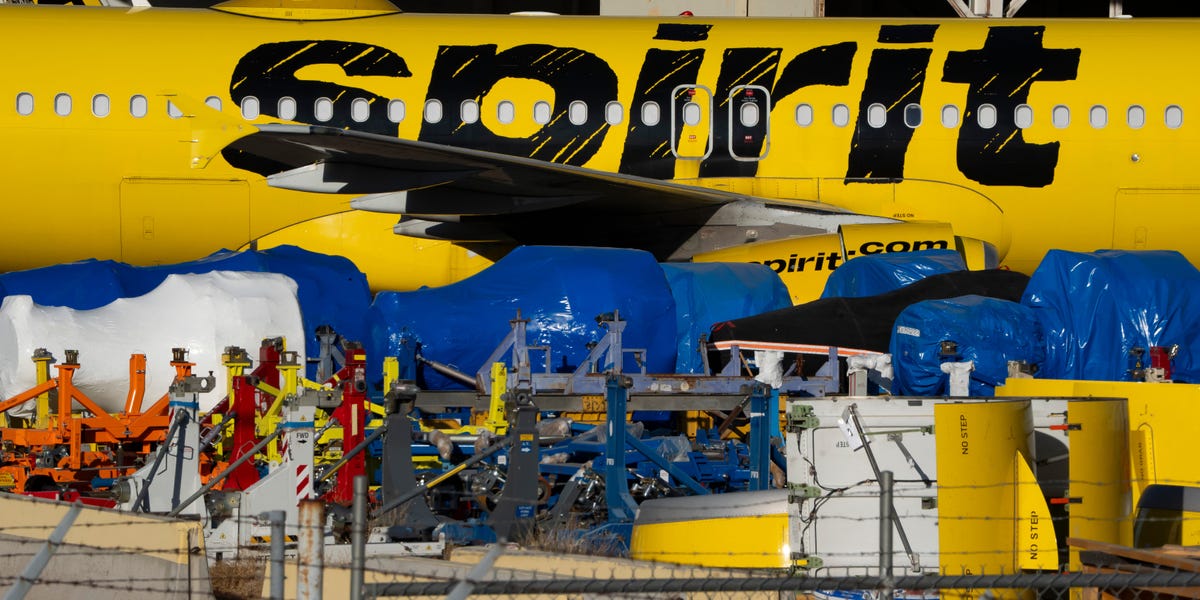
A four-year-old Spirit Airlines A320neo was dismantled this weekend by an excavator, a rare move that signals how engine supply constraints can invert normal aircraft valuation. The aircraft, one of dozens that Spirit grounded after filing for Chapter 11 protection in late 2024, was torn apart because its components – especially the Pratt & Whitney GTF engines – are worth more than the complete airframe.
The arithmetic behind the decision is straightforward. The PW1100G that powers A320neo family jets has suffered from chronic durability problems in the high-pressure turbine and combustor, forcing early removals and long shop visits. Serviceable used GTF engines trade at a premium on the secondary market, typically $5 million to $8 million per unit depending on remaining life. The airframe, especially one that may carry corrosion, non-compliant modifications, or storage damage, might fetch only $2 million to $4 million. When the sum of the parts exceeds the whole, teardown becomes the rational choice.
Spirit A320neo Parts vs. Whole
The video of the excavator drew attention because scrapping a near-new narrowbody is rare. Aircraft with only four years of service normally hold high residual value and low depreciation. The Spirit case shows that assumption breaks down when an airline is distressed and the engine is a known flaw. Spirit grounded over 20 A320neos in 2024 due to GTF availability, and shedding assets is part of its restructuring. The cost to return a grounded plane to service – including engine overhaul, storage fees, and airframe maintenance – exceeded the net present value of keeping it whole. The teardown was the cheaper outcome.
GTF Engine Aftermath and Pricing
The read-through is for the broader aircraft parts and MRO sector. Companies that specialize in used serviceable material, such as HEICO and AAR Corp, benefit when teardowns accelerate because it expands their inventory of scarce components. The GTF engine supply chain remains tight. Pratt & Whitney's parent RTX is still working through a multi-year upgrade cycle for the PW1100G, and each early teardown removes a potential future customer for overhaul services.
For lessors and airlines, the Spirit teardown forces a reassessment of asset valuation models. A four-year-old A320neo was treated as a high-value, low-risk asset. Now the market sees that a distressed operator plus a known engine defect can flip that calculus. Teardowns of grounded A320neos from other financially stressed carriers could follow if the parts demand holds.
Parts Market Read-Through for HEICO and AAR
Watch for the auction results from this specific aircraft. If the engines sell at the upper end of the range, it confirms that the GTF parts pipeline is still constrained. That would support more teardowns and strengthen the case for aftermarket suppliers. For traders tracking stock market analysis, the next catalyst is Q1 2025 commentary from HEICO and AAR Corp. If they cite an uptick in early teardown activity, the parts trade is real.
The dismantling of a near-new aircraft is never a routine move. It is a market vote on the relative value of assembly versus components. Right now, the engines win.