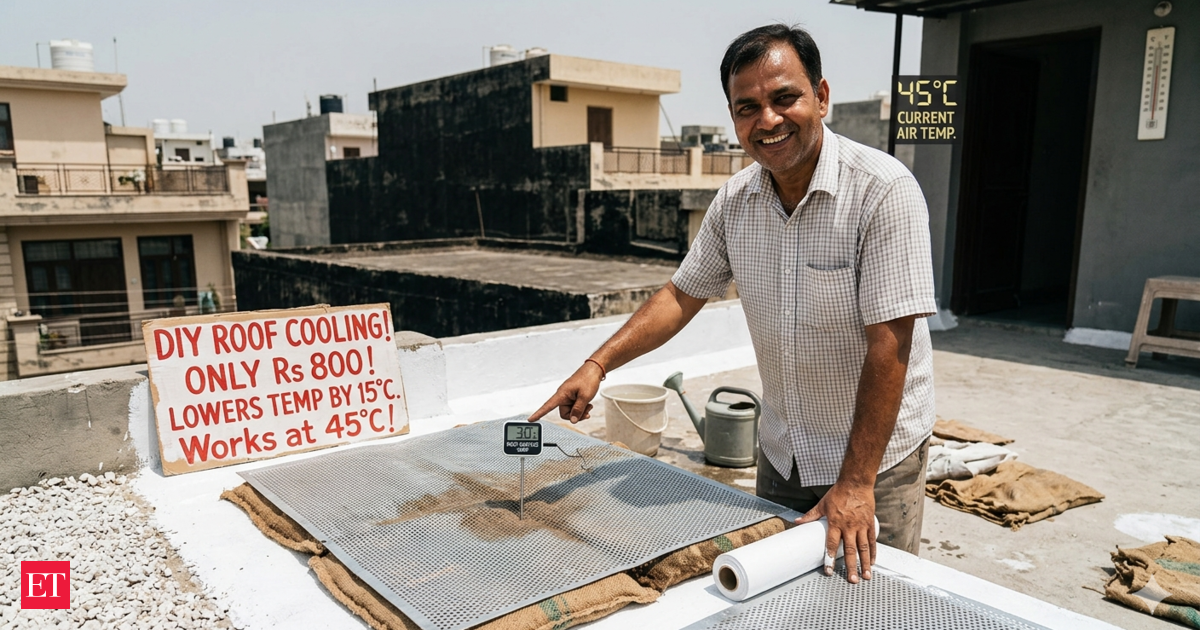
A viral DIY hack claims a ₹800 white roof coating can cut indoor temperatures by 15°C even in 45°C heat. The mixture uses Fixit URP (a Pidilite waterproofing compound), lime powder, and Fevicol. If the claim holds up, it exposes a fragility in India's cooling-demand narrative: a cheap alternative to air conditioners that cost ₹20,000–30,000.
The Claim and the Mechanical Reality
The naive read is simple: households adopt the ₹800 fix, AC sales slow, and Indian manufacturers like Voltas, Blue Star, and Havells lose growth. The better market read requires separating the known physics from the unverified claim. White roof coatings reflect sunlight – that is a documented passive cooling method. The novelty here is the ultra-low cost and a binder mix designed to resist monsoon rain. No independent test has confirmed a 15°C drop. Typical white paint coatings yield a 3–6°C reduction. A 15°C delta would be extraordinary and would require specific roof material and ambient humidity conditions.
Industry Exposure: Asymmetric Upside and Downside
The direct threat sits with budget AC brands targeting price-sensitive buyers in north Indian cities. For these companies, a rapidly adopted low-cost alternative could shave 2–3 percentage points off volume growth in the next 12–18 months. The upside, however, is concentrated in a different part of the supply chain. Pidilite Industries (maker of Fixit URP) could see a demand spike for a product currently positioned for leak repairs. Lime powder suppliers and adhesive firms (Fevicol is part of Pidilite as well) also benefit indirectly. The risk is asymmetric: AC makers face a contingent downside only if the hack scales, while material suppliers have upside regardless – even partial adoption boosts input sales.
Affected Assets:
- AC Manufacturers: Voltas, Blue Star, Havells, Johnson Controls-Hitachi. Their 3–5 year growth assumptions depend on India's cooling deficit – roughly 10% AC penetration. A validated low-cost alternative would weaken the replacement-cycle thesis.
- Roofing and Construction Chemicals: Pidilite is the primary beneficiary. Regional paint companies selling white reflective coatings (Berger, Asian Paints) could see a minor revenue lift if the DIY approach popularizes the category.
- Real Estate Developers: Low-cost housing projects might standardize the hack, shaving construction costs by a few thousand rupees per unit – a marginal margin benefit.
Scaling Problems and Verification Gate
The viral claim faces three concrete hurdles. First, replication: the 15°C delta needs independent testing by a media outlet or builder association. A result of 3–6°C would kill the viral momentum quickly. Second, durability: the mixture may need reapplication after heavy rain. Monsoon season in north India is a natural stress test. Third, terrace access and awareness: most urban Indian households live in apartments with shared roofs or limited direct sunlight. The hack is more relevant for semi-urban and rural homes where AC penetration is under 10%.
What Would Weaken the Disruption Case:
- A well-publicised test showing a 2–3°C temperature drop.
- Monsoon reports that the coating washes off within weeks.
- A government or industry body dismissing the mixture as ineffective.
What Would Confirm the Disruption:
- A large YouTube channel or real estate trade group publishes a replicated test confirming an 8°C+ drop.
- Pidilite reports a sudden acceleration in Fixit URP sales in its June quarter results.
- State governments include white roof coating in heatwave relief subsidies.
Next Decision Point
Investors should watch the first batch of independent DIY replications over the next 30 days – peak summer in north India. If the hack holds, the narrative shifts from novelty to a niche but real headwind for entry-level AC demand. If it fizzles, AC makers can ignore it. Either way, the story exposes a near-term vulnerability in the cooling-sector investment thesis in India.