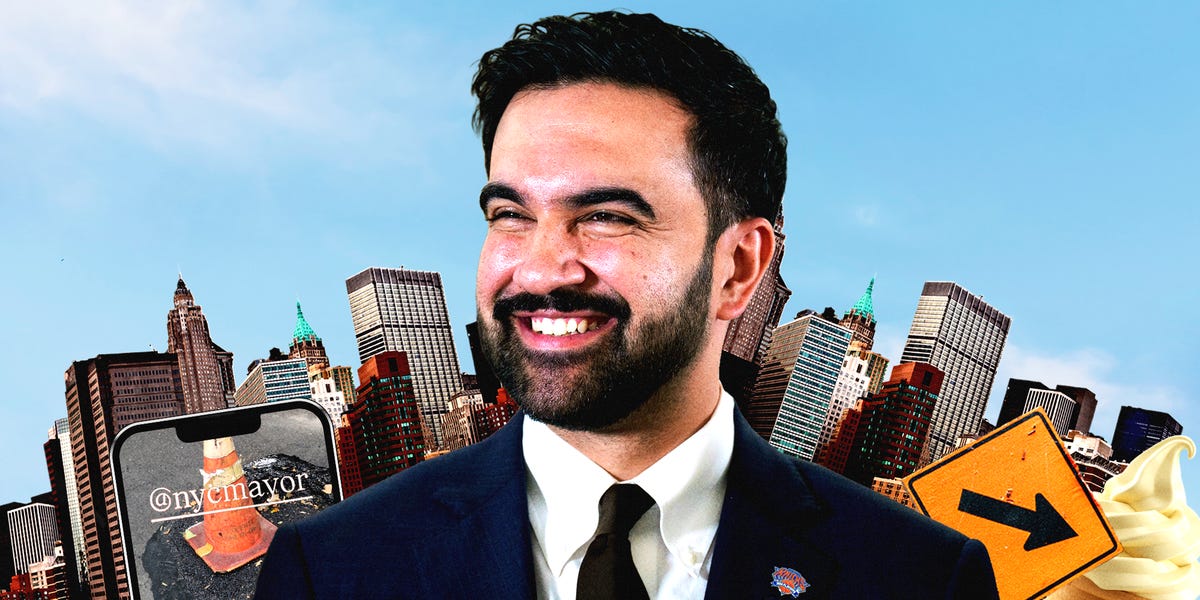
Zohran Mamdani's administration is fighting fees, scams, and bureaucratic headaches that make day-to-day life in New York more annoying. The mayor's team is targeting rule-breaking parking lots and dentists, cracking down on convoluted cancellation policies, and cutting through the city's red tape.
A finalized "click-to-cancel" rule takes effect this fall, requiring businesses to make quitting a subscription as easy as signing up. The Department of Consumer and Worker Protection has filed lawsuits against self-storage companies, dental providers, and solar companies over bait-and-switch pricing and deceptive loans. It has cracked down on deceptive tipping practices by delivery apps and secured restitution for freelancers at a local production company over late payment.
"This is part of the death by a thousand cuts that New Yorkers feel," Deputy Mayor for Economic Justice Julie Su said. "We have the broader agenda of bringing down prices in big ways – cost of housing, the cost of childcare, the cost of groceries – but we also have to make sure that we increase what people are able to keep in their pockets."
Mamdani has also directed agencies to scrub duplicate permits, needless fines, and administrative mazes that make running a small business a logistical nightmare. His administration announced 50 proposed reforms this summer. The mayor is implementing a modern version of "sewer socialism," a 20th-century movement from Milwaukee that prioritized pragmatic reforms. Mamdani prefers less ideologically charged rhetoric like "pothole politics."
"These are the types of issues that people want their mayor to take on but also believe he can take on," said Eric Phillips, who served as former Mayor Bill de Blasio's press secretary. "The reality is that people want smaller, faster solutions to fees and annoying costs that feel much more real to their finances than the downstream effects of global trade or the economy."
The click-to-cancel rule could save New Yorkers $21.5 million to $162.5 million a year, according to an estimate from the progressive think tank the Roosevelt Institute. Banning hotel fees could put $46.4 million to $67.4 million back in people's pockets annually. "This is not small potatoes," said Carolyn Carter, a senior attorney at the National Consumer Law Center. "Junk fees and making it difficult to cancel are ways that companies use to set up a long-term drain on consumers' pocketbooks."
Some of Mamdani's efforts target the "annoyance economy," the administrative hurdles consumers and businesses face that cost them money, energy, and time. He's holding "rental ripoff" hearings for tenants to voice complaints about landlords and working to require realtors to disclose when they use AI to enhance housing listings.
"There are ways in which corporations are squeezing more and more out of people," said Brad Lipton, director of the corporate power and financial regulation program at the Roosevelt Institute. "On top of all of that, there are also things that drive people crazy and just make you feel like you can never get ahead."
There are potential drawbacks. These actions can feel minuscule in the grand scheme of the economy. It may be easier to cancel a Netflix account, but that helps little when a family cannot afford childcare, Lipton noted. There is also a risk of going too far and hurting small businesses.
Rob Walsh, who served as commissioner of the New York City Department of Small Business Services under former Mayor Mike Bloomberg, said enforcers do not want to be so aggressive that they create a pain point for small businesses. "You have a lot of regulatory agencies that don't like to admit it, but their budget framework is based on the number of fines that they deliver to small businesses," he said.
Walsh sees DCWP Commissioner Sam Levine as the most aggressive consumer affairs commissioner since Mark Green worked under Mayor David Dinkins in the early 1990s. Green dispatched undercover agents to city salad bars and delis to catch them overcharging customers and launched "Tuesday Night Out" to boost midweek business.
What is different is the extent to which Mamdani is weaving this work into a broader theory of economic governance. The mayor cannot control interest rates, national labor policy, or corporate consolidation. Consumer protection is one place where he has a lever within reach. New York City may not have the scale to achieve the "California effect," where a state is large enough that companies adjust products for everyone. But given the focus on the city and Mamdani, the administration can shape the national conversation.
At the heart of these measures is a broader point about proving that government can work. "We have a very important role to play in demonstrating what is possible when government delivers for real people," Su said.
It is too soon to know how this will shake out. No one will care that tourists save $30 on hotel fees if their rent continues to rise. The real test is whether fixing enough small things convinces New Yorkers that his government can fix some big ones too.