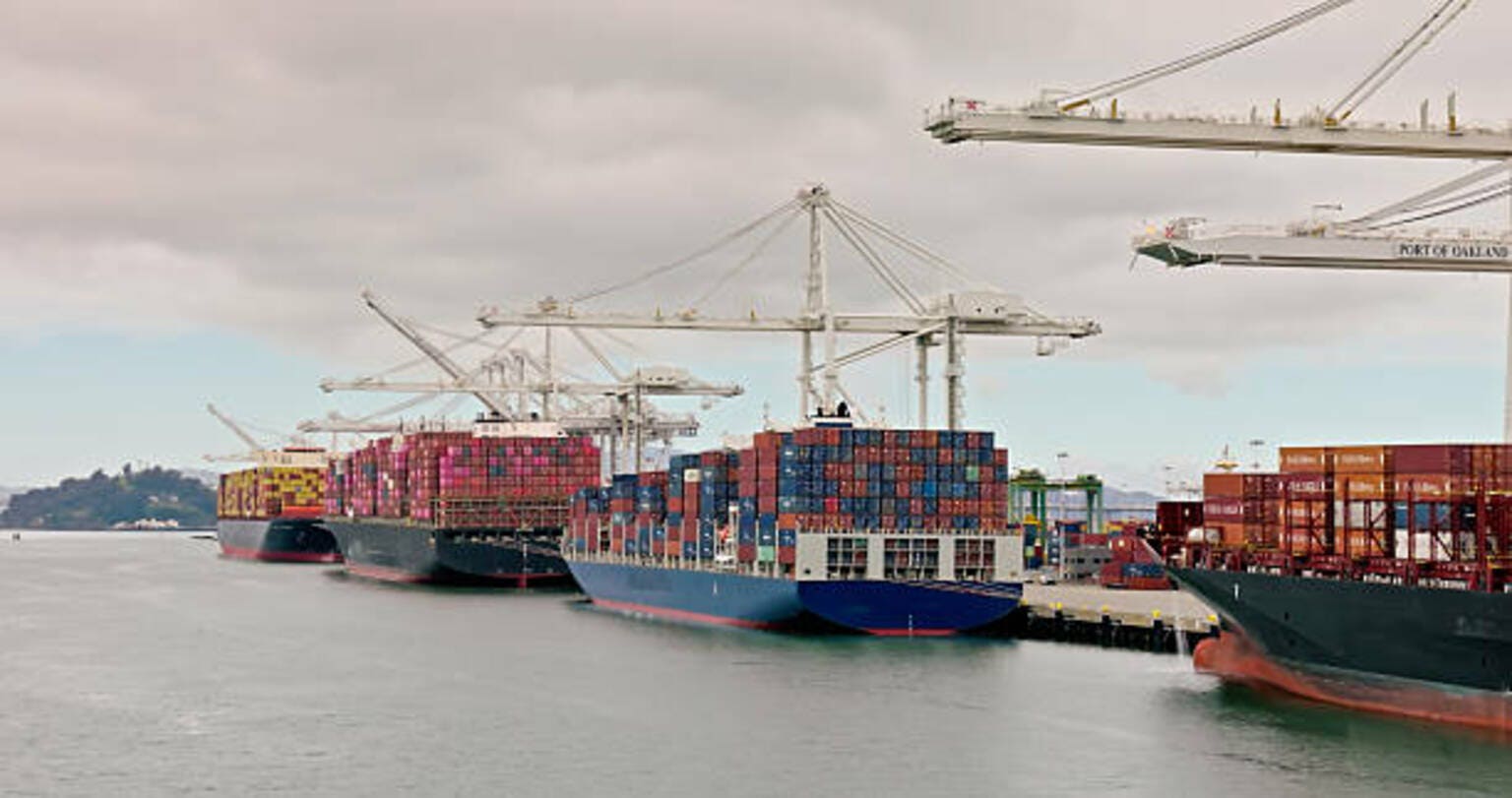
The $4.5 Billion Offer That Changed the Setup
ZIM Integrated Shipping (ZIM) received a $4.5 billion acquisition offer from a rival shipping line, a bid that provides a valuation floor for the stock even as the company's core business faces headwinds. The offer price represents a significant premium to ZIM's market value before the bid was disclosed, effectively capping downside risk for shareholders in the near term.
The bid arrives at a moment when ZIM's first-quarter results showed the strain of falling freight rates. Revenues contracted, free cash flow turned negative, and the company posted net losses. The offer from the rival carrier introduces a strategic alternative that the market had not priced in: either a sale at a premium or a forced re-rating if ZIM's board rejects the bid and must justify its standalone value.
Why the Freight Rate Contraction Matters for the Bid Calculus
ZIM's financial deterioration is the direct result of a global container shipping glut that has driven average freight rates below breakeven levels for several carriers. The company's spot-rate exposure is higher than most peers, meaning it benefits disproportionately when rates rise but suffers acutely when they fall. In Q1, that asymmetry worked against ZIM.
The rival bidder sees an opportunity to acquire capacity at a cyclical trough. For the acquirer, buying ZIM now means securing vessels, routes, and customer contracts at a price that reflects distressed earnings rather than normalized earnings. For ZIM shareholders, the offer creates a tension: accept the bid and lock in the premium, or reject it and bet on a rate recovery that may take quarters.
The mechanism at work is a classic cyclical M&A pattern. The acquirer is not buying current earnings; it is buying replacement cost and future optionality. ZIM's fleet and network would cost more to build today than the bid price implies, especially given elevated newbuild costs and financing rates.
Affected Assets and the Timeline to Resolution
The primary affected asset is ZIM common stock (NYSE:ZIM) . The bid also has read-through implications for other container shipping equities, including Maersk (MAERSK-A.CO) and Hapag-Lloyd (HLAG.DE) , because a successful consolidation would reduce capacity in the market and support freight rates. Bondholders of ZIM's debt instruments face a different calculus: a takeover at a premium could trigger change-of-control provisions or accelerate repayment terms.
The timeline for resolution depends on ZIM's board response)Skip the formal process. Under standard M&A timelines, a special committee would evaluate the offer, negotiate terms, and either recommend acceptance or reject it as inadequate. If rejected, the bidder could take the offer directly to shareholders via a tender offer, or walk away. A decision is expected within 60 to 90 days.
What Would Reduce the Risk and What Would Make It Worse
Factors that reduce downside risk for ZIM shareholders:
- A formal board recommendation to accept the bid, which would set a floor price near the offer level.
- A competing bid from another carrier, which would drive the price higher.
- A recovery in spot freight rates that strengthens ZIM's standalone valuation and gives the board leverage to negotiate a higher price.
Factors that increase downside risk:
- Regulatory rejection of the deal on competition grounds, removing the bid premium and leaving ZIM exposed to its weak earnings trajectory.
- A deterioration in global trade volumes that pushes freight rates lower, making ZIM's financial position worse and reducing the bidder's willingness to close.
- A shareholder vote that rejects the deal, leaving ZIM without a strategic alternative and with a management team that may lack credibility after the failed process.
The Next Decision Point
The next concrete catalyst is ZIM's board response to the offer. If the board engages in negotiations, the stock will trade at a discount to the bid price reflecting deal risk. If the board rejects the offer without a credible standalone plan, the stock could fall back toward pre-bid levels. For traders, the spread between ZIM's current price and the offer price is a direct measure of the market's assessment of deal completion probability. That spread will widen or narrow based on regulatory signals, financing news, and any competing bids.
For investors considering a position, the key question is whether the bidder has the balance sheet and regulatory clearance to close. If yes, the stock offers a risk-adjusted return to the offer price. If no, ZIM remains a cyclical shipping stock with negative earnings and no clear catalyst for a turnaround.