Zepto FEMA Risk, SBI Value: Sabharwal's India Playbook
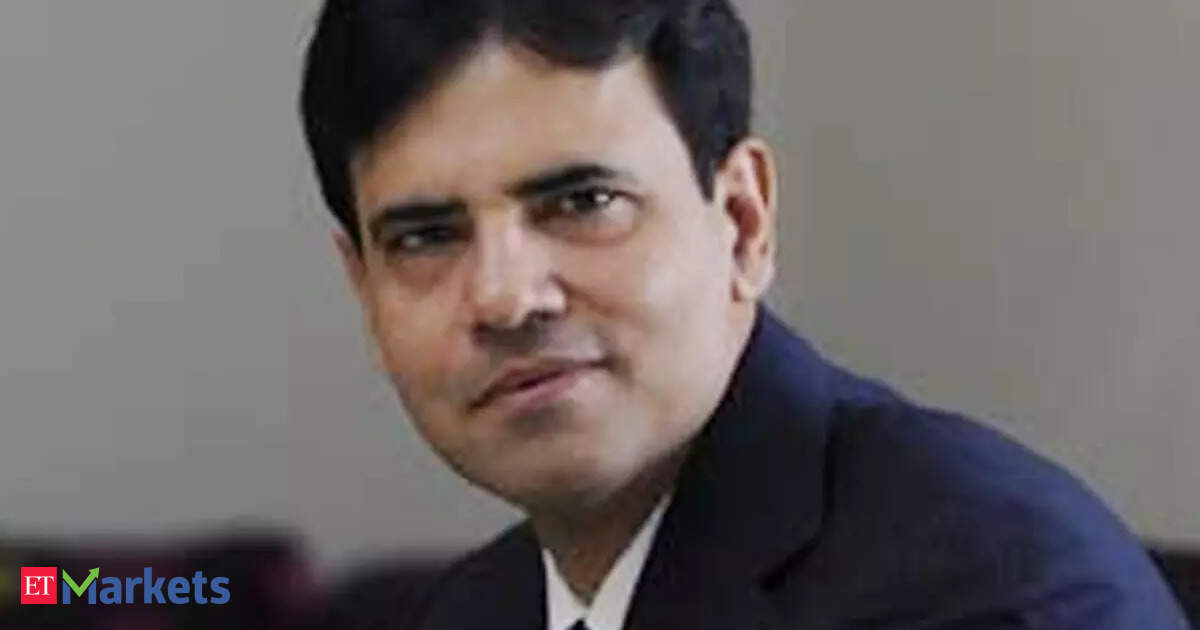
Sandip Sabharwal picks SBI and Bharti Airtel, warns on Zepto IPO's FEMA risk. Alpha Scores confirm cautious IT view. Framework for rates, regulation, and valuation.
The market narrative around Indian equities is splitting into two distinct camps. One camp sees a structural growth story driven by domestic flows and policy continuity. The other sees a valuation bubble propped up by global liquidity that is about to reverse. Sandip Sabharwal, a veteran independent market analyst, is firmly in the second camp on technology stocks and frothy IPOs. He sees value in banks and telecom.
Sabharwal's latest stock picks and his warning on the Zepto IPO offer a practical framework for separating signal from noise in a market that is pricing in very different outcomes for different sectors. The key is understanding which sectors have earnings that can absorb a rates shock and which are priced for perfection.
The Zepto IPO Warning: FEMA Risk Changes the Math
Sabharwal explicitly said he is "worried about the Zepto IPO." The concern is not about the business model or the quick-commerce market size. It is about the regulatory overhang that emerged just as the company filed its updated draft red herring prospectus (DRHP).
The Enforcement Directorate (ED) has summoned Zepto founders under the Foreign Exchange Management Act (FEMA) . This is a pre-IPO disclosure that changes the risk profile for prospective investors.
What the FEMA Notice Means for the IPO Timeline
The updated DRHP reveals that the ED summoned the founders. A FEMA investigation, even at the preliminary stage, introduces execution risk to the IPO timeline. The company cannot control how long the probe takes or what additional disclosures the regulator may demand.
Risk to watch: A FEMA notice does not automatically mean a violation occurred, it forces the company to disclose contingent liabilities. For an IPO priced at a premium to already-stretched quick-commerce valuations, any regulatory overhang compresses the multiple.
The Read-Through for Quick-Commerce Peers
The Zepto situation does not directly implicate Zomato (ZOMATO) or Swiggy. It does reset the regulatory lens on the entire sector. Quick-commerce companies operate with complex ownership structures that often involve foreign venture capital, offshore holding companies, and Indian operating entities. The FEMA framework governs exactly these cross-border flows.
If the ED finds structural issues in Zepto's foreign funding structure, the compliance cost for the entire sector rises. That is a sector-wide headwind that is not yet priced into Zomato or Swiggy shares.
Why Sabharwal Picks Banks: The Rates and Valuation Case
Sabharwal's top pick is State Bank of India (SBIN) . His reasoning is straightforward: the public sector bank (PSB) trades at a valuation that already discounts significant bad news. Its earnings trajectory is supported by a structural improvement in asset quality.
The Mechanism: How SBI Benefits from a Rates Pause
The Reserve Bank of India (RBI) has held the repo rate at 6.50% since February 2023. A prolonged pause, or even a cut later in 2025, benefits banks with large floating-rate loan books and low-cost deposit franchises. SBI has the largest branch network in India, giving it a current account savings account (CASA) ratio that is the envy of private peers.
When the RBI pauses, the repricing of deposits lags the repricing of loans. That spread expansion flows directly into net interest margins (NIMs). Sabharwal is betting that the market is underestimating how much of that margin expansion will sustain through FY26.
The Valuation Anchor
SBI trades at a price-to-book (P/B) multiple that is a fraction of private sector peers like HDFC Bank (HDB) . The Alpha Score for HDB is 36/100, labeled Mixed, reflecting the overhang from the merger integration and margin compression. SBI does not carry that integration risk.
| Metric | SBI (Approx.) | HDFC Bank (Approx.) | Axis Bank (Approx.) |
|---|---|---|---|
| P/B (x) | 1.5 | 3.2 | 2.1 |
| NIM (%) | 3.2 | 3.4 | 3.8 |
| GNPA (%) | 2.2 | 1.3 | 1.7 |
| CASA Ratio (%) | 41 | 38 | 44 |
Source: Company filings, consensus estimates. Approximate values for illustrative comparison.
The table shows that SBI's lower P/B is not purely a discount for risk. Its CASA ratio is competitive, and its gross non-performing asset (GNPA) ratio has fallen sharply from the 10%+ levels of 2018. The market is pricing SBI as if the bad loan cycle will return. If it does not, the stock rerates.
Bharti Airtel: The Tariff Hike Catalyst
Sabharwal also picked Bharti Airtel (BHARTIARTL) . The thesis here is not about subscriber growth. It is about pricing power.
The Mechanism: How Tariff Hikes Flow to the Bottom Line
Indian telecom is an oligopoly with three private players (Airtel, Reliance Jio, Vodafone Idea) and one state-owned operator (BSNL). After years of price wars, the industry has consolidated. The next leg of earnings growth comes from average revenue per user (ARPU) expansion, not adding subscribers.
Airtel has consistently led tariff hikes. Every time it raises prices by 10-15%, the incremental revenue drops almost entirely to the operating line because the network cost is already sunk. Telecom is a high operating leverage business. A 10% ARPU increase can drive a 25-30% increase in earnings before interest, tax, depreciation, and amortization (EBITDA).
The Risk: Jio's Response
The bull case for Airtel depends on Reliance Jio following the price hike rather than using it to gain market share. If Jio holds prices steady and Airtel raises them, Airtel loses subscribers. The market is betting that Jio's parent, Reliance Industries, prefers industry profitability over market share gains at this stage of the cycle.
What would confirm the thesis: Airtel announces another tariff hike in the next two quarters, and Jio matches it within 30 days.
What would weaken the thesis: Jio launches a low-price plan targeted at Airtel's postpaid base.
The IT Sector: Why Sabharwal Is Cautious
Sabharwal is not buying Indian IT stocks. His caution reflects a global view: the AI bubble that lifted US tech stocks is showing signs of deflating. Indian IT services companies are directly exposed to US enterprise spending.
The Transmission Path from US Tech to Indian IT
Indian IT companies like Infosys (INFY) , Wipro (WIT) , and Tata Consultancy Services (TCS) generate 60-70% of revenue from North America. Their clients are US banks, retailers, and manufacturers. When US tech stocks fall, it signals that enterprise clients are cutting discretionary IT spending.
The Alpha Score for INFY is 57/100, labeled Moderate. The Alpha Score for WIT is 46/100, labeled Mixed. Neither score signals a strong buy. The moderate scores reflect the fact that these companies have strong balance sheets and decent dividend yields. The earnings growth trajectory is uncertain.
The AI Reality Check
The market narrative in 2023-2024 was that AI would drive a new wave of IT spending. Indian IT companies would benefit as clients needed help integrating AI tools. That thesis is now being tested. If US companies are cutting overall IT budgets, the AI spending is just a reallocation within a shrinking pie, not incremental demand.
Sabharwal's view is that the market is still pricing Indian IT for the AI boom scenario. If the boom fades, the stocks have further to fall.
The Iran War Risk: How It Hits Indian Markets
The article also flags the mounting costs of the Iran war on the Indian economy and government finances. This is a macro risk that cuts across all sectors.
The Oil Price Channel
India imports about 85% of its crude oil. A sustained rise in Brent crude above $85 per barrel widens the current account deficit (CAD) and puts pressure on the rupee. A weaker rupee then feeds into imported inflation, which complicates the RBI's rate-cutting path.
The Fiscal Channel
Higher oil prices force the government to either raise fuel taxes (which is politically difficult before elections) or absorb the cost through lower excise duties. Either way, the fiscal deficit target becomes harder to hit. That reduces the government's capacity for capex spending, which is a headwind for infrastructure and capital goods stocks.
The Sector Exposure
- Positive for oil marketing companies (OMCs): HPCL, BPCL, IOC benefit if the government allows them to pass on higher crude costs to consumers.
- Negative for airlines: Akasa Air, IndiGo, and SpiceJet face higher fuel costs. The article specifically mentions Akasa CEO Vinay Dube commenting on how the Iran crisis is hitting the airline.
- Negative for paint, tyre, and consumer goods companies: These sectors use crude derivatives as raw materials.
What the AlphaScala Data Confirms
The proprietary Alpha Score data aligns with Sabharwal's cautious view on IT and his mixed view on banks.
- HDB (HDFC Bank): Alpha Score 36/100, Mixed. The score reflects the overhang from the merger with HDFC Ltd. The bank's core franchise is strong, the near-term earnings trajectory is uncertain as it integrates the mortgage book.
- INFY (Infosys): Alpha Score 57/100, Moderate. The score is not bearish, it is not a strong buy either. It reflects a company with solid fundamentals facing headwinds from US tech spending.
- WIT (Wipro): Alpha Score 46/100, Mixed. Wipro has lagged peers in revenue growth, and the score reflects that execution risk.
For a trader building a watchlist, the data suggests that the risk-reward is better in banks and telecom than in IT. That matches Sabharwal's framework.
The Practical Framework for Traders
Sabharwal's picks and warnings boil down to a simple framework that any trader can apply to the current market.
- Separate valuation from narrative. A stock can have a great story (AI, quick-commerce) and still be a bad investment if the price already reflects the best-case outcome.
- Regulatory risk is real. The Zepto FEMA notice is a reminder that IPOs carry disclosure risks that are not always visible in the marketing roadshow.
- Global rates drive Indian IT. Until the US Federal Reserve cuts rates and US enterprise spending recovers, Indian IT stocks are a show-me story.
- Domestic cyclicals offer a margin of safety. SBI and Airtel trade at valuations that do not require perfection. If earnings merely meet expectations, the stocks can rerate.
The next catalyst for the market is the Union Budget 2025, due in February. If the government sticks to fiscal consolidation, bond yields fall, and rate-sensitive sectors like banks get a tailwind. If the budget is populist, the bond market sells off, and the entire equity market reprices lower.
Sabharwal is positioning for the fiscal consolidation scenario. The Zepto IPO, by contrast, is a bet on a different set of assumptions about liquidity and regulatory tolerance. The market will decide which bet is right, the framework for making that decision is clear.
Drafted by a large language model from the source reporting linked above, then screened by automated publishing checks. It is not read by a journalist before publication. Some articles cite our Alpha Score. Verify prices and figures against the original source. Educational coverage, not personalized advice.