Stocks● Neutral
Zambia President Cites $1.9 Billion Debt Saving Ahead of Vote
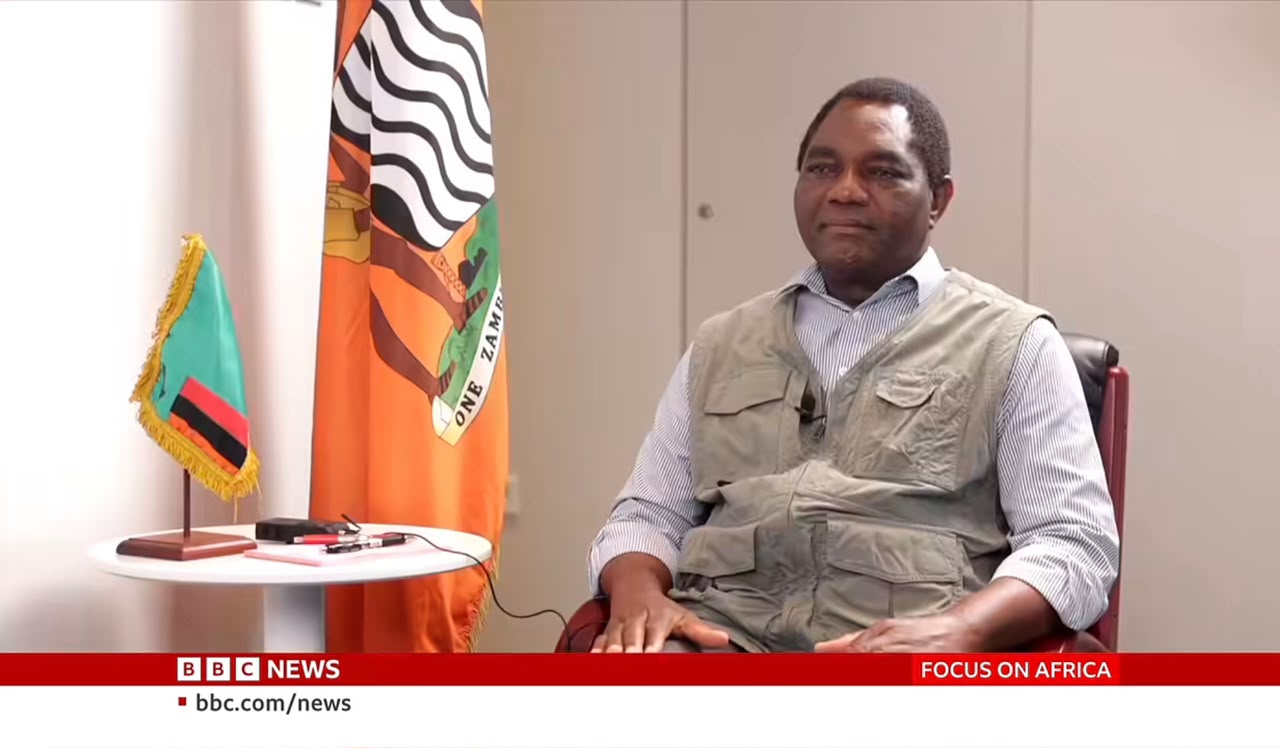
Hichilema told the BBC a record 5 million tonne maize crop is cutting mealie meal prices while debt relief moves into investment ahead of the 2026 vote.
Continue with
President Hakainde Hichilema cited $1.9 billion in debt-restructuring savings and a record 5 million tonne maize harvest in a BBC Focus on Africa interview. He was answering opposition criticism ahead of Zambia's 2026 election.
The interviewer put the question directly: the tide appeared to have turned, and the opposition was now challenging the government. Was that dissatisfaction with Hichilema's rule? "One can say so," he told the BBC's Dingindaba Jonah Buyo, "we don't believe that is the issue, we are proud to have competition in the election." Democracy and elections matter, he said: "After all, elections are the ultimate in a democratic period, five years."
He acknowledged the delivery record has gaps. "We sought leadership from the people of Zambia when we were in opposition," he said. "We made commitments, we declared our vision clearly, and our manifesto to the people of Zambia." Then he blamed shortfalls on forces outside his control: "By and large we have delivered on a greater majority of those commitments, save maybe where we were disturbed by exogenous variables, factors that are beyond our control such as drought and the war." He said he was glad to go into specifics.
The $1.9 Billion Debt Pitch
The first specific was the debt. The starting point, he said, was "a broken-down country, completely broken down," in debt distress and in default on its obligations, with the economy shrinking. "Minus 2.8 percent GDP growth, that is how we know," he said; that reading was the pandemic-year contraction the government inherited. The turnaround, he argued, is the debt restructuring: "We said we will restructure the debt and we have delivered on that. A clear saving of $1.9 billion, that is the money we are putting in the economy, creating a headroom and driving that headroom away from consumption expenditure of the past into investment expenditure."
Zambia defaulted on its sovereign debt in 2020, the first African state to do so during the pandemic, and spent years restructuring under the G20 Common Framework, the process built to coordinate official creditors including China and the Paris Club. The $1.9 billion figure is the government's headline number for what that process delivered. Hichilema says the money is being redirected from consumption spending to investment.