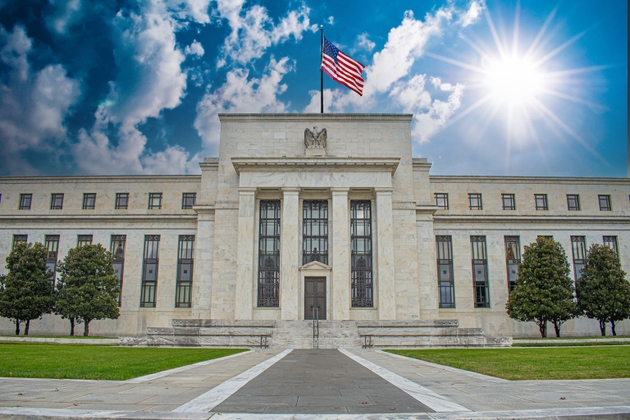
The Federal Reserve may need to reintroduce explicit rate-hike risk into its forward guidance, not merely drop its easing bias, according to Yardeni Research. The firm points to years of CPI above 2% and the threat of renewed energy shocks as factors that could force a policy reversal. For investors holding short-term Treasury exposure through vehicles like the iShares 1-3 Year Treasury Bond ETF (SHY), the call shifts the tail-risk scenario from a prolonged pause to an actual tightening cycle.
The Insufficiency of Dropping the Easing Bias
Markets have focused on whether the Fed will remove the easing bias from its statement, a move that would signal rates staying higher for longer. That adjustment alone implies no cuts in the near term. Yardeni’s argument goes further. The persistence of inflation above the central bank’s target for multiple years has eroded the credibility of a soft landing. Energy price spikes–whether from geopolitical disruptions or supply constraints–add an upside risk that a mere pause cannot address.
The naive read is that dropping the easing bias is a dovish step because it avoids immediate tightening. The better market read is that it leaves the door open to a hawkish surprise. If inflation re-accelerates, the Fed might have to signal that the next move could be a hike, not a cut. That probability shift reprices the entire short end of the Treasury curve, lifting yields and pushing bond prices lower. For a broader view on how such macro signals ripple through equity indexes, see our stock market analysis.
How Rate-Hike Risk Reprices the Front End
The most direct transmission runs through short-duration Treasury ETFs like SHY. The fund holds government debt with maturities between one and three years, giving it an effective duration of roughly 1.9 years. A repricing of the fed funds rate path by just 25 basis points higher over the next six months would translate to a price decline of about 0.5% in SHY. That is modest on its own, yet it signals a broader shift in front-end expectations.
Beyond the direct price impact, the expectation of renewed hikes would lift the 2-year Treasury yield, the anchor for SHY’s portfolio. If that yield climbs toward a level consistent with a higher terminal rate, the ETF’s total return turns negative even before accounting for carry. Investors who hold SHY as a cash-equivalent safe haven would face mark-to-market losses, forcing a reassessment of duration risk in their liquidity allocations.
Currency markets would respond in parallel. A Fed that even hints at hikes supports the U.S. dollar against major counterparts, tightening financial conditions globally. Equity indices weighted toward growth stocks, which derive much of their valuation from low discount rates, would come under pressure as the front end reprices. The chain is the same one that drove the correlated sell-off in stocks and bonds during 2022. For ongoing macro coverage, visit our market analysis section.
The CPI and Energy Price Trigger
The next concrete test arrives with the monthly Consumer Price Index release. A core inflation print of 0.3% month-over-month or higher would raise the probability of a no-cut scenario through the summer and begin to price a small chance of a hike by autumn. Energy costs–particularly gasoline and diesel–feed through quickly to the headline number and into consumer expectations, making them a flash point for the Fed’s reaction function.
Yardeni’s call is not a specific prediction of a rate move at a given meeting. It is a warning that the easing-bias discussion is the wrong focus. The real risk is that the terminal rate expectation, which has drifted down to around 3.5% in forward markets, may need to climb back above 4% if inflation proves persistent. For traders, the operational implication is to watch the SHY price relative to its 50-day moving average. A break below that level, combined with climbing 2-year yields, would confirm that the market is beginning to price the hawkish tail.
This shift, if it materializes, would cascade from short-term bonds into credit spreads and equity multiple compression. Until the next CPI release clarifies the inflation picture, the rate-hike tail remains a low-probability but high-impact scenario that portfolio construction cannot ignore.