Crypto● Neutral
Won Stablecoin Trilemma: South Korea's Sovereignty vs Adoption Risk
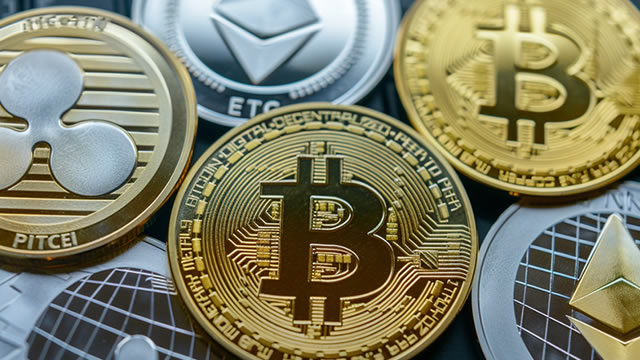
Policy debate on KRW stablecoin faces a trilemma: won sovereignty, adoption, and redemption stability. Digital dollarization risk without credible digital KRW.
Continue with
South Korea's Stablecoin Policy Reaches a Three-Way Crossroads
South Korea's policy debate on a won-denominated stablecoin has moved beyond technical feasibility into a three-way tradeoff that defines the country's digital payment future. The central question is no longer whether a KRW-pegged token can be built. It is whether such a token can simultaneously preserve monetary sovereignty, achieve market adoption, and maintain redemption stability in a payment infrastructure where dollar stablecoins already function as core settlement assets.
The framework, outlined in a detailed analysis by TokenPost, maps the challenge as a triad of competing constraints. Each goal pulls against the other two, and optimizing for one often strains the others.
Monetary Sovereignty
Monetary sovereignty requires that the won remain the unit of account in domestic payment and settlement infrastructure. If digital commerce, remittances, and exchange trading migrate onto programmable networks using stablecoins, tokenized deposits, and smart contracts, the absence of a won-native token could cause the market to default to dollar stablecoins. That shift would not trigger a balance-of-payments crisis. It would be a slow, structural form of digital dollarization that gradually erodes the won's institutional role.
Market Adoption
Adoption is not guaranteed by regulatory approval or bank issuance. A government-led token that is safe yet rarely used would represent what the analysis calls a manageable failure: a product that looks sound on paper yet never becomes infrastructure. Winning adoption means competing directly with dollar stablecoins on usability, speed, cost, and integration with wallets, exchanges, and merchant systems. Mandates do not create liquidity. Network effects matter. Once a token becomes the base asset in wallets and platforms, dislodging it is difficult.
Redemption Stability
A stablecoin's essence is its ability to redeem. A token claiming to be worth 1 won must be redeemable for 1 won under stress, with transparent reserves and enforceable legal rights. The analysis points to Tether (USDT) as a cautionary case. USDT became the most widely used dollar stablecoin yet endured years of controversy over reserve transparency and jurisdictional accountability. Trust in stablecoins is not built by branding. It is built by verifiability and legal certainty.
Digital Dollarization: The Network Effects That Drive the Debate
The risk that gives the trilemma urgency is digital dollarization. Dollar stablecoins have already improved cross-border settlement speed and reduced friction compared with traditional correspondent banking. That efficiency creates network effects. The more wallets, exchanges, users, merchants, and platforms adopt a token, the more valuable it becomes as a settlement standard. South Korea is not the issuer of the global reserve currency nor part of a large shared-currency zone. If commerce and settlement migrate onto tokenized rails while a credible won-native token is absent, the market defaults to dollar stablecoins as the unit of account.
Historically, the won circulated through cash, bank deposits, card networks, and account-to-account transfers. Those channels remain functional. As programmable payment systems expand, the infrastructure itself changes. Without a won-denominated settlement asset, Korea risks becoming a rule-taker in global standards-setting rather than a participant.
Conditional Coexistence: A Pragmatic Stance on Dollar Stablecoins
The proposed regulatory posture is conditional coexistence. Blanket bans on dollar stablecoins would be politically simple but operationally ineffective. Dollar stablecoins already anchor digital finance. A ban could push activity offshore without eliminating it.
Proposed Access Conditions
If dollar stablecoin issuers want access to Korean users and markets, they should face requirements on: