Stocks● Neutral
Industrial Solar Push: Tarshid, TALCO Sign 4.5 MW Riyadh Deal
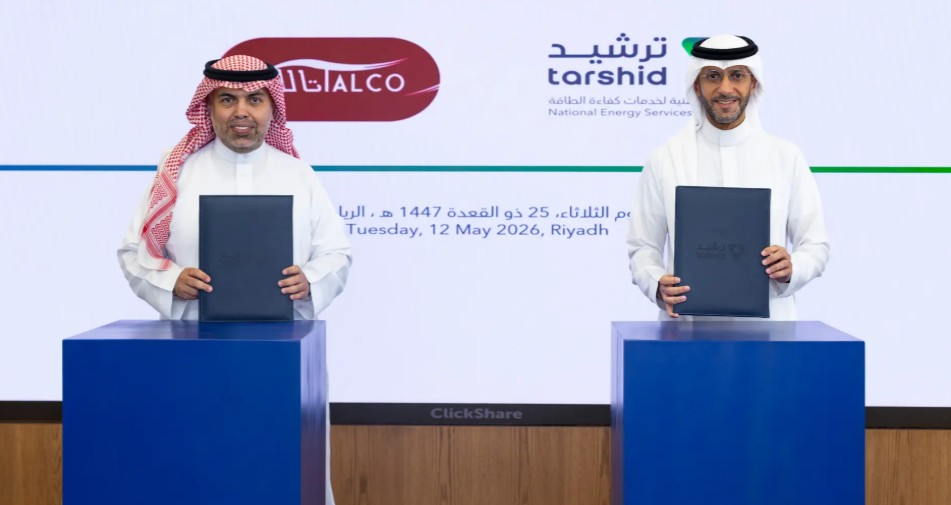
Tarshid and TALCO signed a study agreement for a 4.5 MW solar system across four Riyadh facilities. The deal signals industrial firms exploring on-site generation to manage energy costs.
Continue with
The National Energy Services Co. (Tarshid) and Al Taiseer Group Talco Industrial Co. (TALCO) signed an agreement to study a solar energy project for TALCO's facilities in Riyadh. The system would cover 37,000 square meters across four group facilities, with a total capacity of 4.5 megawatts. The solar arrays will integrate with existing power infrastructure, providing a dedicated clean energy supply.
The deal is a study-and-development arrangement, not a construction contract. Tarshid will assess feasibility and design, while TALCO will host the panels on its sites. The behind-the-meter model means the generated power generated will offset TALCO's grid consumption directly. For an industrial metals company, electricity is a major operating cost. A 4.5 MW system can cover a portion of that load portion, though the exact savings depend on local irradiance and tariff rates.
Tarshid-TALCO Agreement: 4.5 MW Industrial Solar
The agreement covers a dedicated clean energy generation system spanning 37,000 square meters. The system will be integrated with existing power infrastructure across four group facilities. The total capacity is up to 4.5 MW. This is a small-scale project relative to Saudi Arabia's multi-gigawatt renewable energy pipeline. Yet it signals a shift in how industrial firms approach energy. Rather than relying solely on utility-scale solar farms, companies like TALCO are exploring on-site generation to manage energy costs and meet sustainability targets.