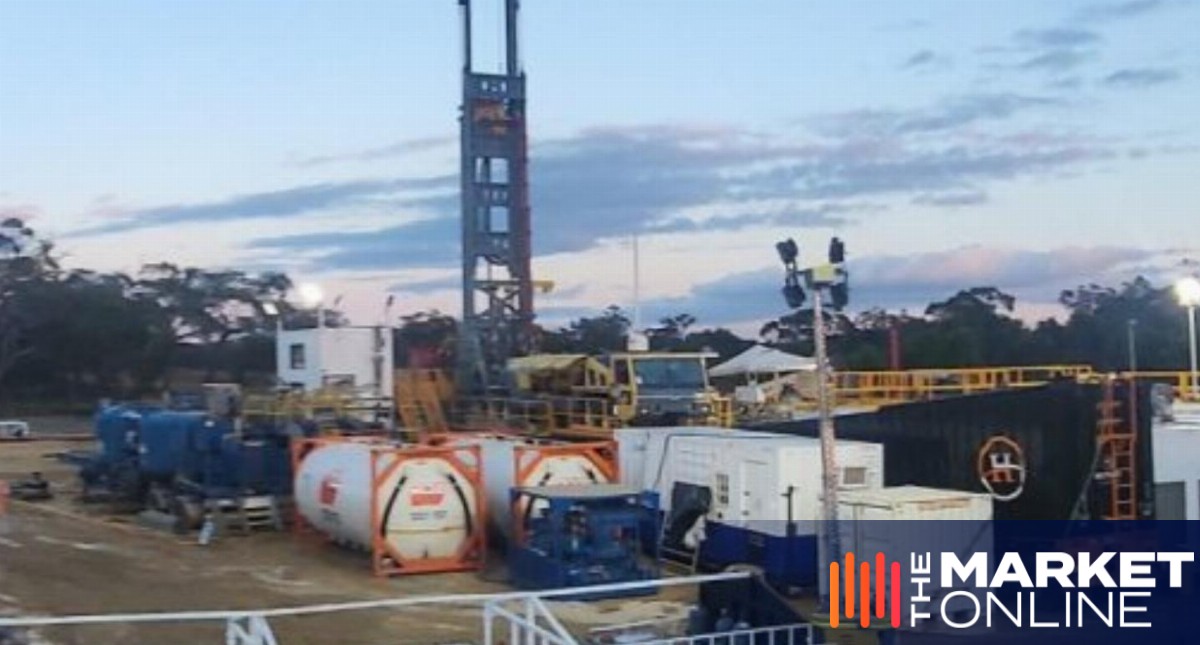
Lakes Blue Energy (ASX: LKO) reported that production testing at its onshore Wombat-5 gas well in Victoria has confirmed three strong gas zones within a 1,500-metre horizontal section. The company observed gas shows ranging from C1 (methane) through to C5 (pentane) across the intervals, which it interprets as evidence of a gas-charged system.
The stock rose 3.80% to 41.0¢ on the news, giving the company a market capitalisation of $29.00 million. The move reflects the market's initial read on the gas shows. The real data point for anyone tracking the well economics is still weeks away.
The Pressure Build-Up Phase: What the 1,764 psi Reading Tells You
Why Pressure Data Is the First Real Test
The well is currently in the pressure build-up phase following clean-up and initial flowback. The reading has reached 1,764 psi. Chair Roland Sleeman said the technical team is encouraged, noting that pressure analysis indicates both pressure contribution from the open hole section beyond the cased hole and a high formation skin from drilling activities.
The pressure build-up confirms that the reservoir is charged – gas is present and the system has energy. What it does not confirm is deliverability. A well can show strong shut-in pressure and still flow at uneconomic rates if permeability is low or the skin damage is severe.
Risk to watch: The market is pricing the gas shows as a positive signal. The pressure build-up is a necessary condition for commercial flow. It is not a sufficient one. The next phase – perforation and flow testing – will separate the wells that produce from the wells that just show gas.
The Next Phase: Perforation, Stimulation, and the August 2026 Timeline
What the PEP Program Is Designed to Do
Subject to regulatory approval, Lakes intends to run a propellant enhanced perforation (PEP) program, followed by reservoir-compatible completion fluid placement, flow testing, and potential stimulation. The company targets commencement in late August 2026.
Practical rule: PEP uses a propellant charge to create fractures beyond the damaged zone, bypassing the skin that the pressure build-up identified. If the PEP program succeeds, the flow test that follows will be the first meaningful read on commercial viability. If it fails, the well may require hydraulic stimulation, which adds cost and regulatory lead time.
The 237 Metres of Gas-Bearing Sands Behind Casing
Lakes has identified a minimum of 237 metres of gas-bearing sands behind casing, with inferred porosity and high gas shows from C1 through C5. These intervals are not yet connected to the wellbore. The perforation program is designed to access them.
What this means: The 237 metres is a resource volume indicator, not a flow rate. A well with 237 metres of pay can still flow at sub-commercial rates if permeability is low or if the gas is tight. The market should treat the pay count as a ceiling on potential, not a floor on production.
Victoria's Gas Supply Context: Why This Well Matters Beyond LKO
The Onshore Victoria Gas Deficit
Victoria's onshore gas production has declined steadily over the past decade. The Morrison government's moratorium on conventional gas exploration in 2020 and the subsequent ban on onshore gas exploration in Victoria in 2021 removed the state's primary source of new supply. The state now relies heavily on gas from the Gippsland Basin offshore and imports from New South Wales and South Australia.
Mechanism: If Lakes achieves commercial flows at Wombat-5, the well would add new onshore gas supply to a system that has seen no meaningful new production in years. That would have pricing implications for Victorian gas users and potentially for the broader east coast gas market.
The Regulatory Hurdle
The next phase of testing requires regulatory approval. Victoria's regulatory environment for onshore gas has been hostile to new exploration since the moratorium. Lakes is targeting late August 2026 for the PEP program. Regulatory timelines are outside the company's control.
Risk to watch: A delay in regulatory approval would push the flow test into 2027, extending the period of uncertainty and potentially draining cash. The company's market cap of $29 million means it has limited runway for extended delays.
What Would Confirm the Thesis and What Would Break It
Confirmation Signals
- Flow test above 1 million standard cubic feet per day (MMscf/d) after the PEP program. That would indicate commercial deliverability in the Victorian market context.
- Regulatory approval for the next phase on schedule in late August 2026.
- Pressure build-up continuing to rise above 1,764 psi, indicating a larger drainage area than currently modelled.
Thesis-Breaking Signals
- Flow test below 0.5 MMscf/d after PEP, indicating the skin damage is deeper than the propellant can bypass.
- Regulatory rejection or extended delay beyond Q4 2026.
- Pressure build-up plateauing below 2,000 psi, suggesting limited reservoir energy.
The AlphaScala View: A Watchlist Name, Not a Buy Signal
Lakes Blue Energy has delivered a technically interesting data point. The gas shows are real. The pressure build-up is constructive. The 237 metres of pay behind casing gives the well meaningful upside if the PEP program works. The stock's 3.80% move on the day reflects the market pricing in the good news before the hard data arrives.
For broader context on how small-cap energy names trade around testing catalysts, see our stock market analysis.