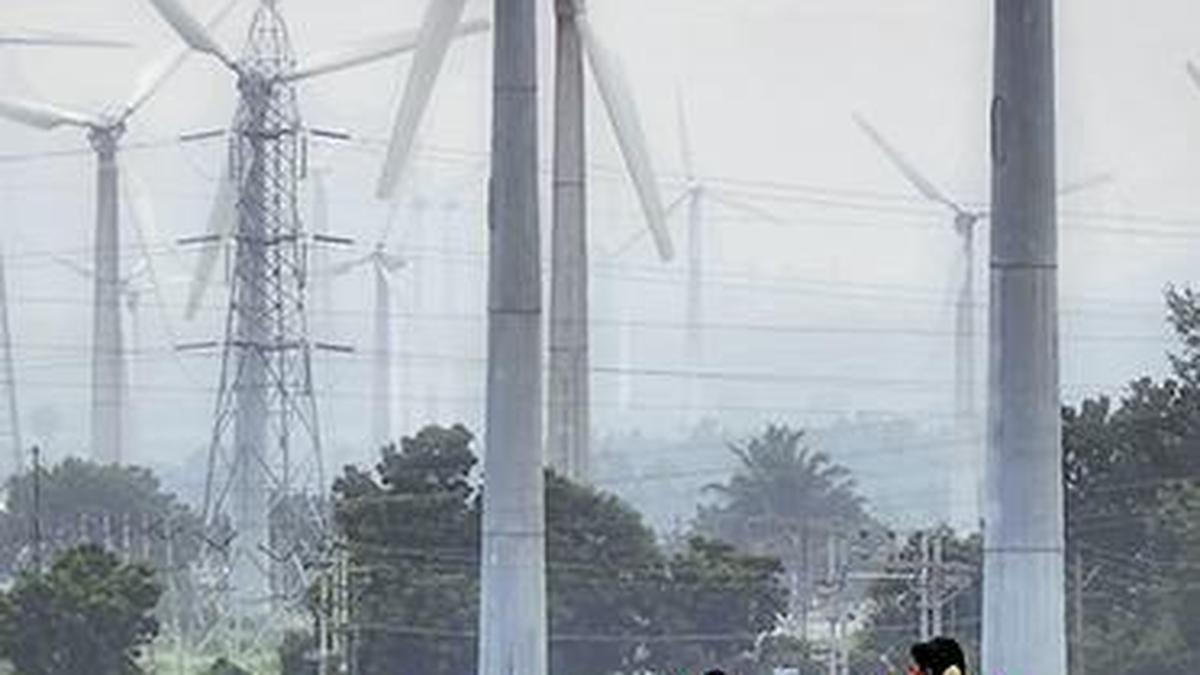
IWTMA writes to MNRE, citing cost gap with China; proposes rupee-per-MW export incentive over 5-7 years and PLI for large bearings and flanges to boost indigenous manufacturing.
India's wind turbine manufacturers have asked the government for an export-linked incentive scheme and support for domestic forging facilities to make their products more competitive against Chinese rivals, according to the industry association.
Amit Pyasi, chief executive of the Indian Wind Turbine Manufacturers Association (IWTMA), told The Hindu that the association has written to the Ministry of New and Renewable Energy with the proposals.
Pyasi proposed a manufacturer-linked incentive for exports, gauged in rupees per megawatt, valid for five to seven years. It would apply only to equipment sold outside India, he said.
"There is a lot of demand for India-manufactured equipment. However, we are not as cost competitive as China because they have an established ecosystem and provide a lot of subsidies to their manufacturing segment," Pyasi said.
The association also asked the government to consider providing export finance facilities and a credit facility for domestic buyers who purchase Indian-made turbines.
On the manufacturing side, Pyasi said the industry needs incentives for producing large bearings and flanges, components that require heavy forging facilities not available in India.
Platform sizes of about 3-3.5 megawatts are 80-85% indigenised, Pyasi said. Larger platforms of around 5 MW depend on imports for forgings. "We request the government to support the industry with incentives for manufacturing large bearings, flanges which are part of the tower because the forging facility is not there in India," he said.
The specialised high-strength steel required for these components is not made locally because aggregate demand is missing, Pyasi added.
Pyasi said the ongoing free-trade negotiations with the European Union present a window to negotiate better access for Indian wind equipment. "We request the government to negotiate with the counterparts in Europe and especially now that European Union FTA is under discussion, it is probably the opportune time to approach with this kind of a facility," he said. "This will go a long way in us competing with the Chinese counterparts or other countries."
Pyasi also offered context on renewable energy's grid performance. Solar and wind have lower capacity utilisation factors – about 21% and 36-40% respectively – compared with coal plants at 85%, he said. Higher installed capacity is needed to achieve the same output, and curtailment by grid operators should not be read as underperformance.
"When we look at the generation figures, we should be clear that it may come across that renewable is not in it but that is not the case, we just need to deploy more capacities," Pyasi said.
Drafted by a large language model from the source reporting linked above, then screened by automated publishing checks. It is not read by a journalist before publication. Some articles cite our Alpha Score. Verify prices and figures against the original source. Educational coverage, not personalized advice.