Stocks● Neutral
Why USTR's Forced Labor Tariffs Face a Legal Test
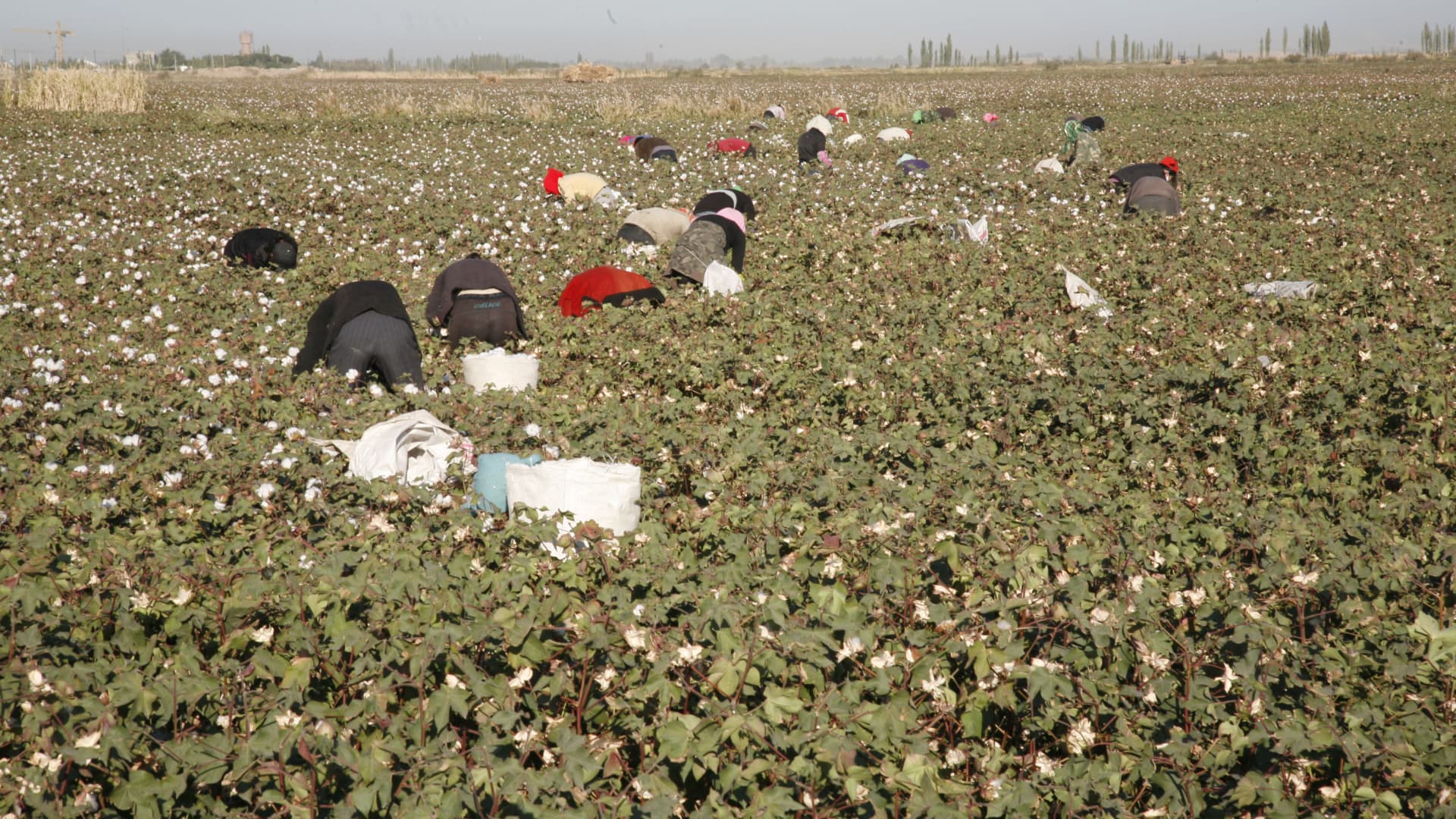
USTR proposes 12.5% tariffs on 59 countries and the EU over forced labor. Legal experts say the accelerated 3-month investigation and novel legal theory face near-certain judicial challenge.
Continue with
The Office of the U.S. Trade Representative (USTR) last week proposed tariffs of up to 12.5% on 59 countries and the European Union, citing widespread failure to restrict imports of goods produced by forced labor. The action, grounded in Section 301 of the Trade Act of 1974, marks a deliberate shift in the White House's trade war strategy after the Supreme Court struck down President Donald Trump's sweeping global tariff plan.
Trade Representative Jameison Greer stated in an X post that "the failure of our most important trading partners to address the importation of goods made with forced labor is unacceptable," adding that it "creates a dynamic where American workers are forced to compete globally on an unlevel playing field."
The Forced Labor Problem by the Numbers
Forced labor is a pervasive global issue. The International Labour Organization (ILO) estimates that 27.6 million men, women, and children are victims of the practice daily. Around 86% of forced labor occurs in the private economy, while the remaining 14% results from state-imposed indentured servitude.
The Scale of Illegal Profits
Approximately $236 billion in illegal profits is generated globally from forced labor every year, according to the ILO. Occupations such as mining, quarrying, manufacturing, and food services generate substantial illegal profits, ranging up to $4,944 per victim.
U.S. Exposure to At-Risk Goods
A 2025 report from the Homeland Security Operational Analysis Center (HSOAC) found that the U.S. made up a disproportionately large share of all direct imports of at-risk goods – goods the Bureau of International Labor Affairs believes are at elevated risk of being produced with forced labor. "In 2021, for example, the United States accounted for about 23 percent of those imports, by value, accounted for only about 13 percent of all global imports," the report stated.
The Enforcement Gap: Why Existing Laws Haven't Stopped the Flow
U.S. legislation restricting forced labor imports dates back almost a century. Section 307 of the U.S. Tariff Act of 1930 marks an outright prohibition on imports made by forced labor. The UFLPA restricts imports from China's Xinjiang Uyghur Autonomous Region under an encompassing "reputable presumption" of coerced labor.
Congressional Findings on Enforcement Failure
Recent Congressional review of Section 307 identified challenges including "fraud in the import process, the expansion of direct-to-consumer e-commerce, and limited access to technologies that enhance supply chain traceability."
Congressman Dan Bishop noted in a 2023 Congressional hearing that, more than a year after the UFLPA took effect, goods made with forced labor in Xinjiang were still entering the U.S. "[Customs and Border Protection] conducted isotopic testing on clothing samples, and found that 15 percent of the items tested positive for cotton from Xinjiang," Bishop said.
CBP's Detection and Detention Record
Customs and Border Protection (CBP) has detained significant volumes of goods. A CNBC report from 2023 found that CBP had detained $961 million worth of goods at the Port of New York and New Jersey within less than a year. Assistant Port Director Edward Fox said the agency targeted at-risk goods using national intelligence information and "expert cargo targeting systems."
The Importer's Dilemma: Proving a Negative
Importers whose goods come under CBP scrutiny must produce conclusive evidence that the goods were produced without forced labor, typically within 30 days of detention. This is not a simple process. Millions of dollars' worth of cargo can be held at a single time, disrupting supply consistency and profitability. Paired with compounding storage and legal fees, companies face immense fiscal pressure when trying to prove fair labor practices throughout their sourcing.
The Intermediary Problem
Due to globalized production, tracing labor across a supply chain is difficult. A major garment or automotive manufacturer may source materials from several independently operating intermediaries.
"Intermediaries can sell goods to big buyers at the same rate as if they were carrying out fair labor practices," said Desirée LeClerq, an assistant professor at the University of Georgia School of Law with expertise in international trade and labor law. LeClerq noted that a large part of illegal profits attached to using forced labor comes from intermediaries. "The difference between production costs and the selling price is then taken in by the intermediary as profit."
Direct Sourcing as a Partial Fix
Brandon Daniels, CEO of Exiger, which provides supply chain and third-party risk management to over 150 Fortune 500 companies and 60-plus government agencies including CBP, told CNBC earlier this year that many companies now go to suppliers directly and use their buying power to draw up contracts specifying where materials can be made. "This is just scratching the surface on how to monitor forced labor," he said.
Daniels alleged that Chinese companies have used forced labor during the trade war to drive cheap products into secondary nations with favorable tariff rates, then reroute those goods into the U.S. or other markets. "It's financial abuse," Daniels told CNBC.