Stocks● Neutral
Why 'The Mind Illuminated' Is the Best Meditation Book for Traders
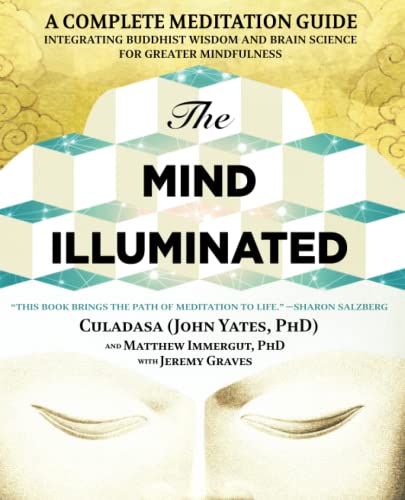
The Mind Illuminated gives traders a concrete method to improve focus and emotional control. The key distinction: attention vs. peripheral awareness, and how to expand both.
Continue with
The single best practical guide to meditation I have read is The Mind Illuminated by John Yates and Matthew Immergut. It is written in clear, precise English, informed by a Buddhist framework but built for anyone who wants concrete instructions. I first read it a few years ago and came back to it recently. The book breaks down the mind into two systems: attention and peripheral awareness. That distinction is worth internalizing for anyone who makes decisions under uncertainty.
Attention singles out one object to analyze. Peripheral awareness holds the background context. Most traders overuse attention, especially during fast markets. The result is tunnel vision: you focus on the bid-ask spread or the P&L ticker and miss the broader trend, the volume profile, or the shift in correlation. The book calls this “awareness deficit disorder.” The fix is not to concentrate harder. It is to increase the total conscious power available to both systems.
The method is simple: practice sustaining stable attention on the breath while keeping peripheral awareness open. You do not push distractions away. You let them sit in the background. Over time, the mind’s processing capacity expands. The book’s term for this is “mindfulness,” defined as the optimal interaction between attention and awareness. That is a more useful definition than the usual vague appeal to being present.
For a trader, the payoff is twofold. First, you catch emotional reactions earlier. Anger or fear appears in peripheral awareness before it hijacks attention. The book’s advice is to reframe “I am angry” as “Anger is arising.” That small shift creates objective distance. Second, you recognize when attention is locked onto a losing position or a confirmation bias. Peripheral awareness provides the context that the trade is against the trend or that the catalyst has passed.
The book also explains why willpower cannot sustain focus. The part of the mind that holds attention for more than a few seconds works unconsciously. Conscious intention is used to train that unconscious process by repeating small tasks with clear purpose. That is the essence of meditation: reprogramming the unconscious through repetition.