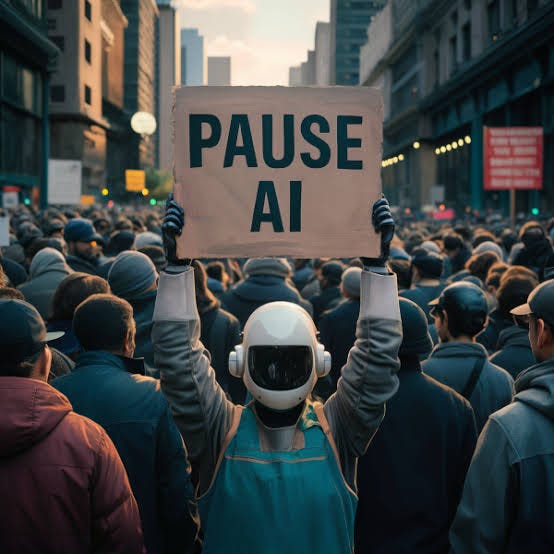
Calls to pause AI development follow a familiar historical pattern: each prior tech shift faced doomers who warned of extinction, and regions that blocked change lost ground.
The latest push to pause advanced AI development echoes earlier campaigns against transformative technologies. Each one arrived with warnings of unprecedented risk. Each one faced opposition from those who had welcomed prior leaps. And each time, the regions that blocked the change lost ground over the long run, according to historical accounts cited by proponents of continued AI development.
Supporters of a pause argue that AI is different. They point to the potential for machines to outsmart humans, to deceive, or to reshape society faster than any prior innovation. Some call AI a new alien species. Others say the speed of change makes forecasting impossible.
Critics push back. They say every big shift in history came with differences that seemed absolute at the time. The printing press, the industrial revolution, the internet – all drew warnings of existential collapse. All also came with concrete harms, from job displacement to social upheaval. The relevant question, they argue, is not whether AI is unique but whether the track record of blocking change is better than the track record of managing it.
One specific concern centers on the mechanism of a pause. Past efforts to halt a technology – for example, bans on human cloning or moratoriums on commercial supersonic flight – typically led to indefinite delay, not a careful review followed by a green light. A global committee empowered to decide when AI is safe enough to proceed would require enforcement powers that critics call dangerous in themselves.
Another argument runs through the nature of AI itself. Developers describe large language models as descendants of human culture, trained on texts that encode human values. The likeliest outcome, some researchers say, is not conflict but continuity – machines that inherit enough respect for their creators to coexist, even if they eventually surpass human capabilities.
On the jobs front, advocates of continued development say the right response is insurance and retraining, not a halt. They acknowledge the risk of mass displacement but note that every prior wave of automation created new roles even as it eliminated old ones.
No formal international body has yet been empowered to enforce an AI pause. The debate remains at the level of think tanks, academic papers, and congressional testimony. The next concrete milestone is a series of hearings scheduled in the U.S. Senate for late March, where executives from leading AI labs are expected to testify.
Drafted by a large language model from the source reporting linked above, then screened by automated publishing checks. It is not read by a journalist before publication. Some articles cite our Alpha Score. Verify prices and figures against the original source. Educational coverage, not personalized advice.