Stocks● Neutral
Why TD WebBroker's Consent Request Demands Your Attention
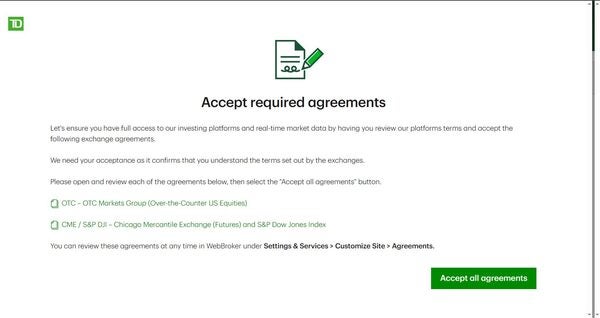
TD WebBroker users face a mandatory consent request. Here's what likely changed and why ignoring it could affect your trading terms.
Continue with
A consent request appeared during a recent login to TD WebBroker. The screen asks users to agree to updated terms before proceeding. Ignoring the pop-up blocks account access. The question is straightforward: is this consent mandatory, and what exactly are you agreeing to?
The short answer is yes – the request is mandatory if you want to continue using the platform. TD Bank, which operates WebBroker, typically rolls out consent screens when it revises its privacy policy, terms of service, or data-sharing practices. Common triggers include regulatory updates such as Canada’s PIPEDA or new OSFI guidelines, changes in how TD shares data with third parties, or updates to margin trading and market data terms. Without seeing the exact text, we cannot isolate the specific trigger. The pattern, however, is consistent: a pop-up signals a material change in the client agreement.
What the Consent Request Changes
The consent request likely updates one or more of the following: data usage permissions, liability terms, fee schedules, or order routing disclosures. For active traders using WebBroker for stock trading, options, or foreign exchange, a change in data-sharing could affect how orders are routed to exchanges or how market data is delivered. For long-term investors, a revision to liability terms could shift responsibility for execution errors or system outages. The effective date of the new terms is always included in the consent language. After that date, continuing to use the platform implies acceptance even without a new pop-up.