The Catalyst: Gurtej Sandhu's Patent Count and Micron's IP Moat
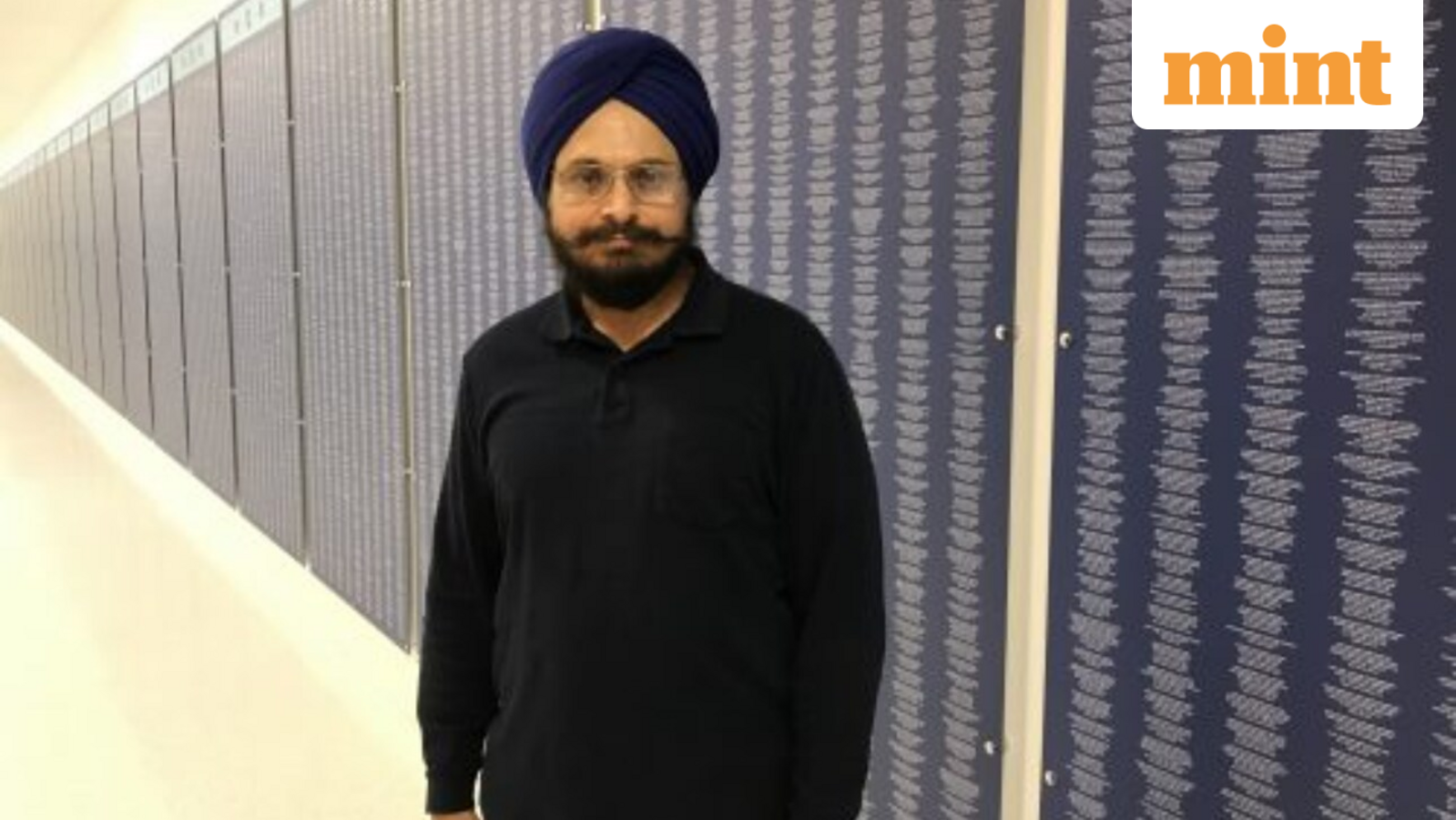
Gurtej Sandhu, an Indian-origin engineer with an MTech from IIT Delhi (1985), is now the seventh most prolific inventor in US history. His 1,382 US patents – more than Thomas Edison's 1,093 – are held as Senior Fellow and Vice President at Micron Technology (MU). A viral post on X framed the development as another example of Indian talent achieving abroad: "India trains the engineer and America files the patents. We export the inventor and we import the chip."
For investors, the question is narrower: Does Sandhu's patent portfolio translate into a structural advantage for Micron's memory business? The answer depends on whether those patents protect Micron's gross margins during upcycles and raise competitors' costs during node transitions.
Sandhu's work covers semiconductor manufacturing, atomic layer deposition, and silicon CMOS technology for DRAM and NAND. Those are the physical bottlenecks in memory scaling. Atomic layer deposition, for example, is the key to high-kappa dielectrics that allow capacitors to shrink without charge leakage – a requirement for every DRAM node since 1α. His Si-to-Package integration research supports the thermal and reliability demands of HBM3E stacks, where Micron competes directly with Samsung.
Why the Simple Read Is Not Enough
The simple read holds that Micron's world-class inventor makes the stock a buy. That claim is accurate about Sandhu's talent. It fails to account for the commodity nature of memory chips. Every node transition delivers a cost advantage that competitors replicate within 12-18 months. Patents only create pricing power if they block rival designs or enable a unique process that yields a lower cost per bit.
The Simple Read's Blind Spot
The naive interpretation: "Sandhu is brilliant, so Micron must be a buy." That conclusion ignores the memory cycle. Micron's revenue fell 49% in 2023 despite Sandhu's patents. During a downcycle, even a broad IP portfolio cannot prevent unit price erosion from oversupply.
The Better Market Read
The better read examines where Sandhu's patents directly apply. His research in atomic layer deposition is central to Micron's ability to scale DRAM capacitors. His work in Si-to-Package integration addresses the stacking and thermal challenges that determine HBM3E reliability. These specific areas could give Micron a lead in 1γ DRAM and next-generation HBM. That is the mechanism to watch, not the patent count itself.
Confirmation Triggers: From Patent Count to Product Advantage
Three markers would confirm that Sandhu's patents are translating into a product advantage:
- Yield improvements on Micron's next DRAM node relative to competitors. If Micron reports higher bit growth or lower cost-per-bit at its next earnings call, Sandhu's process patents are likely contributors.
- HBM3E market share gains. Micron expects to win meaningful share in high-bandwidth memory. Sandhu's packaging patents directly support the stacking and thermal reliability needed for AI workloads.
- Patent litigation or licensing deals. If Micron files suit against a rival using a Sandhu-patented process, or announces a cross-licensing agreement, the IP moat becomes enforceable.
Invalidation Risks: Execution Lags and Downcycle Exposure
The patent moat is not airtight. These factors would weaken or invalidate it:
- Node delays. If Micron slips on its 2025 roadmap for 1γ DRAM, execution is the bottleneck, not patents. Sandhu's patents cannot fix fab execution.
- Commodity price compression. During a downcycle, even a broad patent portfolio cannot protect unit prices. Micron's 2023 revenue drop happened despite Sandhu's patents.
- Reverse engineering. If competitors demonstrate equivalent performance without violating Micron's claims, the defensive value of the portfolio declines.
Sector Read-Through: US Semiconductor R&D Concentration
The brain-drain debate is a distraction for investors. The relevant structural point is that semiconductor R&D concentration continues to favor US-based headquarters. Sandhu operates from Boise, Idaho. His patents belong to Micron's US IP portfolio, enforced globally. This concentration is a barrier for emerging memory players in China (e.g., CXMT) and India (e.g., SAI). For MU, it reinforces the moat argument. It does not change the cyclical setup.
Next Catalysts: Earnings, 1γ DRAM, and HBM3E Share
The stock will not move on Sandhu's biography alone. The next concrete events are:
- Micron's fiscal Q3 2024 earnings (expected late June). The market will focus on HBM3E revenue and the 1γ DRAM timeline.
- U.S. CHIPS Act disbursements. Micron has applied for $5 billion in subsidies for its Boise and New York fabs. Sandhu's patents strengthen the case that taxpayer money protects proprietary US IP.
- An investor day that highlights Sandhu's work could provide a narrative hook for long-only funds.
Guru Nanak Dev University vice-chancellor Karamjeet Singh called Sandhu's achievement "a moment of unparalleled pride" for the university and the country. For investors, that pride does not translate to a buy rating. The patent moat is real. The memory cycle is real. Trade the cycle, not the biography.
Micron's Alpha Score is 84/100, labeled Strong, within the Technology sector. That score reflects sound fundamentals and momentum. It is a snapshot, not a forecast.
For a closer look at Micron's current fundamentals and price action, visit the MU stock page. For broader sector context, see the stock market analysis section. Related: NVIDIA profile for the AI demand side of the memory equation.