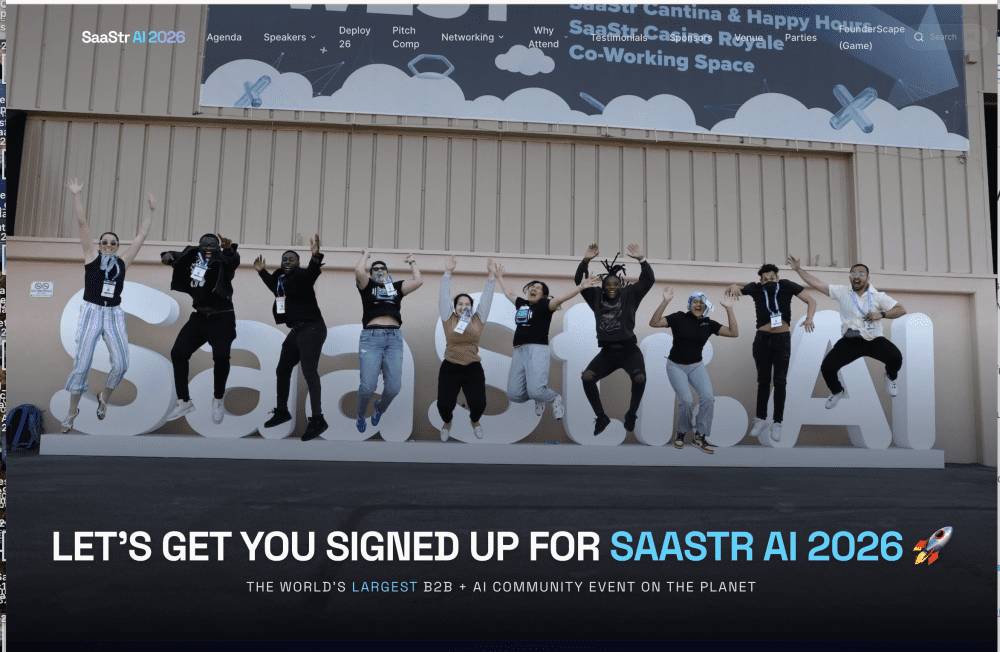
The upcoming SaaStr AI Annual, scheduled for May 12-14 at the San Mateo County Event Center, presents a distinct shift in the industry conference model. While many events focus on high-level theory or abstract AI roadmaps, this gathering is structured specifically for operators tasked with moving agents from experimental sandboxes into production environments. For those managing B2B revenue cycles, the event serves as a practical laboratory rather than a traditional trade show.
The Shift Toward Live Production Mechanics
The core value proposition of the 2026 event lies in its emphasis on "vibe coding" and live, unscripted technical demonstrations. On Tuesday, May 12, the main stage will host a session titled Deploy ’26, featuring Chief AI Officer Amelia Lerutte. Unlike standard conference presentations that rely on pre-recorded video, this session involves building a functional AI VP of Marketing from scratch in 45 minutes. The demonstration will utilize the same framework that currently powers SaaStr’s internal marketing operations, which relies on 14,230 lines of code and costs approximately $95 per month to execute.
This focus on transparency extends to the failure points of AI implementation. The session is designed to showcase where agents break during the build process and how they are repaired in real-time. This approach addresses a common frustration among technical leaders: the gap between polished marketing demos and the messy reality of production-grade agent deployment. By deconstructing the iteration process, the event provides a blueprint for attendees to replicate similar workflows within their own organizations.
Hands-On Technical Tracks for Non-Engineers
A recurring theme across the three-day schedule is the democratization of agent building. For attendees who lack a formal engineering background, the conference offers specific tracks designed to produce tangible results. On Wednesday, May 13, a 45-minute session will guide Customer Success leaders through the construction of an AI-powered agent capable of managing sponsor operations. The session is modeled after the internal tool "QBee," which has demonstrated a 70% reduction in human hours required for sponsor ops by automating hyper-personalized communication.
Additional sessions, such as "Vibe Coding 101" on Tuesday and the founder-focused "Build Your Own AI-Powered MVP" on Thursday, are structured to ensure that participants leave with a working application. These tracks are intended to lower the barrier to entry for founders and managers who have previously viewed engineering as a bottleneck to shipping. The presence of a dedicated "Vibe Lab," where Replit engineers provide direct assistance on company-specific problems, further reinforces the focus on immediate, actionable output.
Peer-to-Peer Networks and Executive Strategy
Beyond the technical workshops, the conference maintains a strict separation between vendor-led content and peer-to-peer executive summits. The invite-only CRO and CEO summit, scheduled for May 12, is designed to facilitate candid discussions on the actual impact of AI on revenue metrics. The agenda prioritizes questions that are typically omitted from public keynotes, such as the reality of current win rates, the integration of AI into sales quotas, and the reasons behind the high turnover of CROs during the 2024 and 2025 fiscal years.
Similarly, the 4th annual CMO summit provides a forum for marketing leaders to discuss the long-term evolution of B2B marketing. With speakers like Snowflake’s CMO, who oversaw the company’s growth from $3 million to over $3 billion in revenue, the sessions focus on the practical challenges of scaling sales-marketing partnerships in an AI-first environment. These sessions are restricted to practitioners, ensuring that the dialogue remains focused on operational strategy rather than sales pitches.
Operational Benchmarks and Sector Read-Throughs
The conference features over 200 speakers, including leaders from companies such as Vercel, Artisan, Qualified, People.ai, and HappyFox. These operators are scheduled to present specific metrics on agent performance, such as the 3x increase in inbound meetings reported by Qualified or the $1 million in expansion revenue surfaced by HappyFox through unstructured support data analysis. By focusing on these specific outcomes, the event provides a benchmark for what is currently achievable in B2B SaaS.
For those evaluating their own AI strategies, the most significant risk is the opportunity cost of delayed learning. As the industry moves toward agent-based workflows, the ability to compress months of research into a three-day intensive format becomes a competitive advantage. The event’s structure—combining hands-on technical training with high-level executive networking—is designed to accelerate this learning curve. For further context on how broader financial services and market shifts impact these operational decisions, one might consider the stock market analysis of firms currently navigating these same digital transformation cycles. The combination of technical capability and executive oversight remains the primary driver of success in the current B2B landscape.