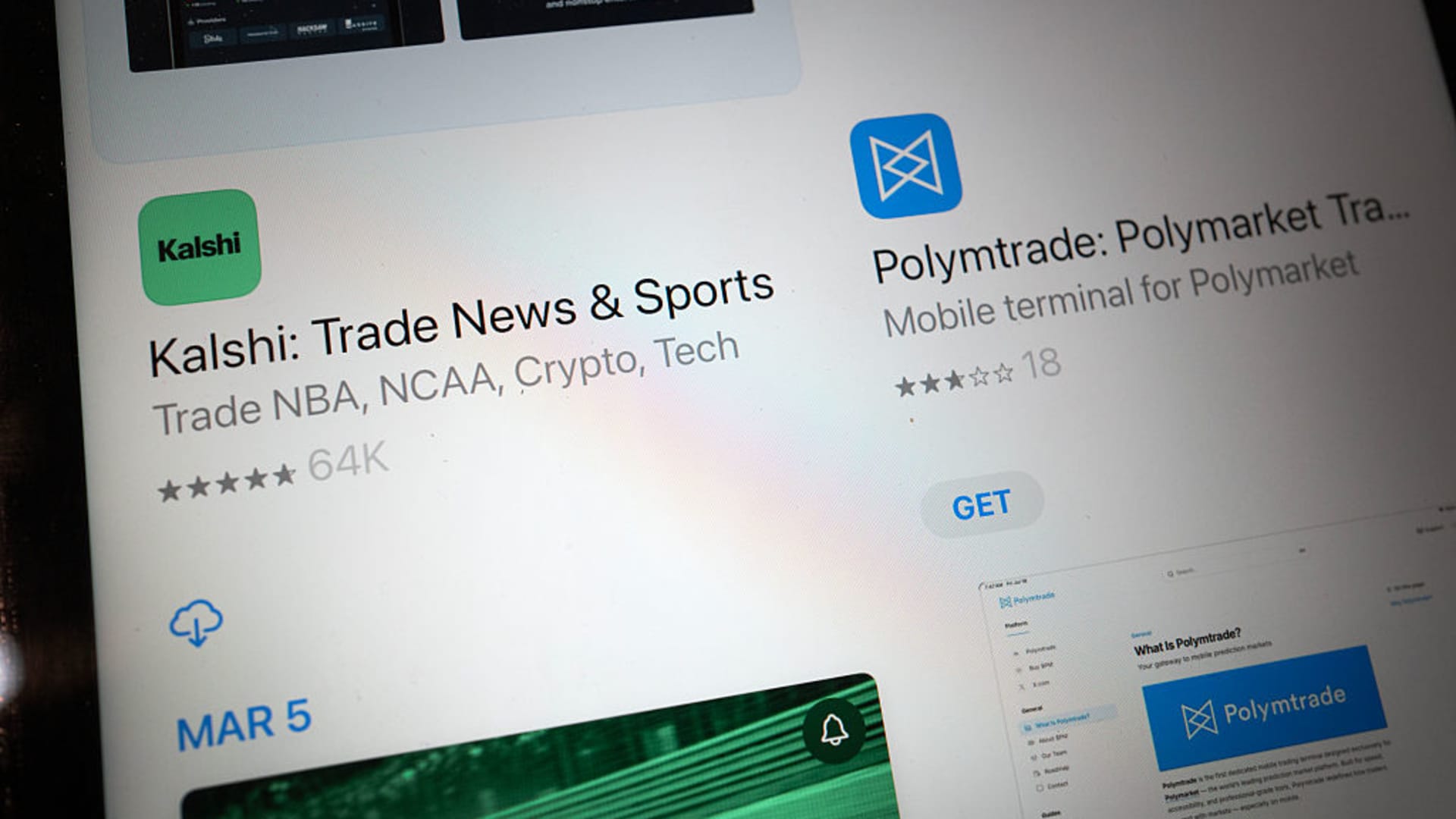
Logan Sudeith bought an antenna before the Super Bowl. Streaming services lagged the broadcast by several seconds. He wanted to see the commercials first and trade on what companies would run ads and what the spots would say before the crowd knew the answer. The 26-year-old full-time prediction market trader made $250,000 in one month.
"I wanted to have the lowest latency access to those," he said.
Between Polymarket and Kalshi, more than 100,000 active markets can be live at once. No one tracks that many by hand. The traders who win consistently told CNBC they rely on custom tools, AI bots, and obscure data sources to find edges the rest of the crowd misses.
Kenneth Deneau, 32, calls reading the news a "minimum requirement" for prediction market trading. He said it gets overwhelming. He turned to Anthropic's Claude language model to scan newsletters and Discord servers for trade ideas. Deneau left a decade in institutional investing last fall when volume surged on Kalshi and Polymarket. He carried one skill from his old job: deep research under a deadline.
Earlier this year, a contract asked the date President Donald Trump would fire former Attorney General Pam Bondi. Deneau searched Pacer, the federal court records database, for filings that would establish her departure date before the information became public.
"If you found those filings, which I did, you could use that as a baseline to help you determine when [Bondi] actually left the office," he said. "As far as I know, I was probably one of the first ones to take advantage of that."
Steve Farmer, a data engineer in Atlanta, built an AI bot that trades Kalshi economic contracts from his wife's closet. The bot wins about 70% of its trades. Farmer said he would not trust himself to trade manually.
"As a trader, I wouldn't do very well myself because you know, impulses and greed and all that will just drive me nuts," he said. "A bot doesn't have all that."
The bot covers his AI subscription costs. It is not his retirement plan.
Michael Boss started trading on Kalshi during the 2024 presidential election and went full-time in February. He waited until he had the necessary software. He would not describe what trains his system. He places many small trades across many markets. He said manual traders cannot keep up.
"Anything discretionary can be systematized," Boss said. "No person is going to be as competitive as good software."
Prediction market platforms know their top users run custom code. Kalshi recently launched a "Pro" trading terminal for faster execution and better data views. Deekaraul "Deek" Harinath, who has placed more than 5,700 trades on Kalshi, tested the terminal before its official launch this month. He trades 15-minute Bitcoin contracts on whether the price will rise or fall.
"Everything is faster on the Pro, and that's a big deal for me," he said.
Harinath plans to use the Pro terminal for manual trades while building a bot to handle short-term contracts he cannot monitor.
Startups are trying to sell the edge as a service. Jay Malavia is CEO of Kairos, an Andreessen Horowitz-backed terminal that lets traders access Kalshi and Polymarket from one interface. He said the goal is to give retail speculators the kind of technology big trading firms build for themselves.
"There's these big trading firms that are going to build the best tech in the world, and we are going to give you the closest technology to go and compete and win in these markets," he said.
Kairos shows contracts and price moves across exchanges and delivers real-time headlines. Malavia said the service maintains the software so traders do not have to.
Whether a third-party tool can match what individuals build for their own workflows is an open question. Sudeith, the antenna buyer, said a clever trade requires more than checking the odds.
"For the Super Bowl I bought an antenna, so that I could watch the commercials," he said.