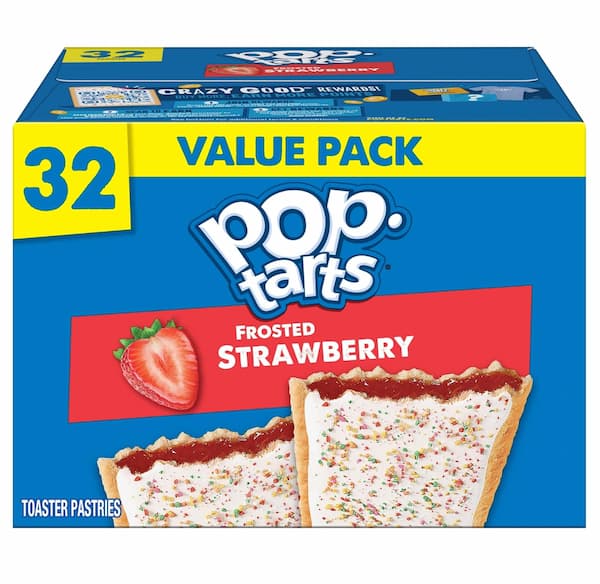
Amazon is offering the Pop-Tarts Toaster Pastries Value Pack 32-Count at $7.17 shipped through Subscribe & Save, with a second variety pack at $7.78 after a 20% coupon clip. That is a roughly 17% discount off the typical retail price of about $8.60 for a 32-count box. For a category staple that rarely sees deep promotions, this move warrants a closer look at what it means for the packaged food sector.
The simple read: consumers get cheap breakfast pastries. The better market read: Kellanova (K) , the company behind Pop-Tarts, is using Amazon’s Subscribe & Save channel to clear inventory, test price elasticity, or defend market share at a time when private-label alternatives are gaining traction.
Why a 17% Price Cut on Pop-Tarts Matters
Kellanova posted a 3.5% organic sales decline in its North America retail segment for Q1 2024, driven largely by volume loss as consumers traded down to cheaper store brands. Pop-Tarts, as a high-margin, shelf-stable product, is a bellwether for whether branded breakfast snacks can hold their premium. The $7.17 price point, about $0.22 per pastry, brings it near the per-unit cost of many generic toaster pastries. That compresses Kellanova’s margin on the SKU in exchange for volume. If this becomes a recurring pattern, it signals that branded pricing power is eroding in the breakfast aisle.
The mechanism is straightforward. Every 1% price cut on a staple SKU like Pop-Tarts reduces gross margin by roughly the same amount unless volume picks up by at least 1%. The 17% discount means Kellanova needs roughly 18–20% additional unit volume just to keep dollar contribution flat. That is a high bar for a product with stable consumption patterns.
The Amazon Channel Trade-Off
Subscribe & Save locks in repeat purchase cycles. The $7.17 price is conditional – shoppers must agree to auto-ship. That gives Kellanova visibility into future demand but also forces it to compete on retention rather than impulse display. For a brand accustomed to selling through Walmart (WMT) and Kroger (KR) endcaps, shifting volume to Amazon’s recurring-order model changes the cost structure. Calculate fulfillment fees, co-op advertising costs, and coupon redemption (the 20% clip is applied at checkout), and the net revenue per box could be near $6.00–$6.50. At that level, margin contribution approaches private-label economics.
What to Track Next
- Kellanova Q2 2024 earnings (expected in August): Look for commentary on promotional intensity in the snack category and whether volume growth is actually materializing. If the company reports organic volume loss in North America, the Pop-Tarts discount was defensive. If volume appears flat or positive, the deal may have been a limited-time trial push.
- Private-label toaster pastry sales data: Track IRI or Nielsen data for the toaster pastry category. If private-label share rises above 25% in 2024, it validates the competitive threat that made the discount necessary.
- Amazon Subscribe & Save pricing: Monitor whether the $7.17 price persists beyond one month. A sustained 17% discount is margin erosion. A one-month flash sale is routine clearing of seasonal inventory.
This article is not investment advice. The purpose is to illustrate how a single retail price point on a household staple acts as a signal for broader competitive dynamics in the stock market – specifically within the consumer packaged goods sector. For a broader look at how pricing power shapes equity performance, see the AlphaScala guide to stock market analysis.