Why Nvidia's Customer Mix Is the Real Story This Quarter
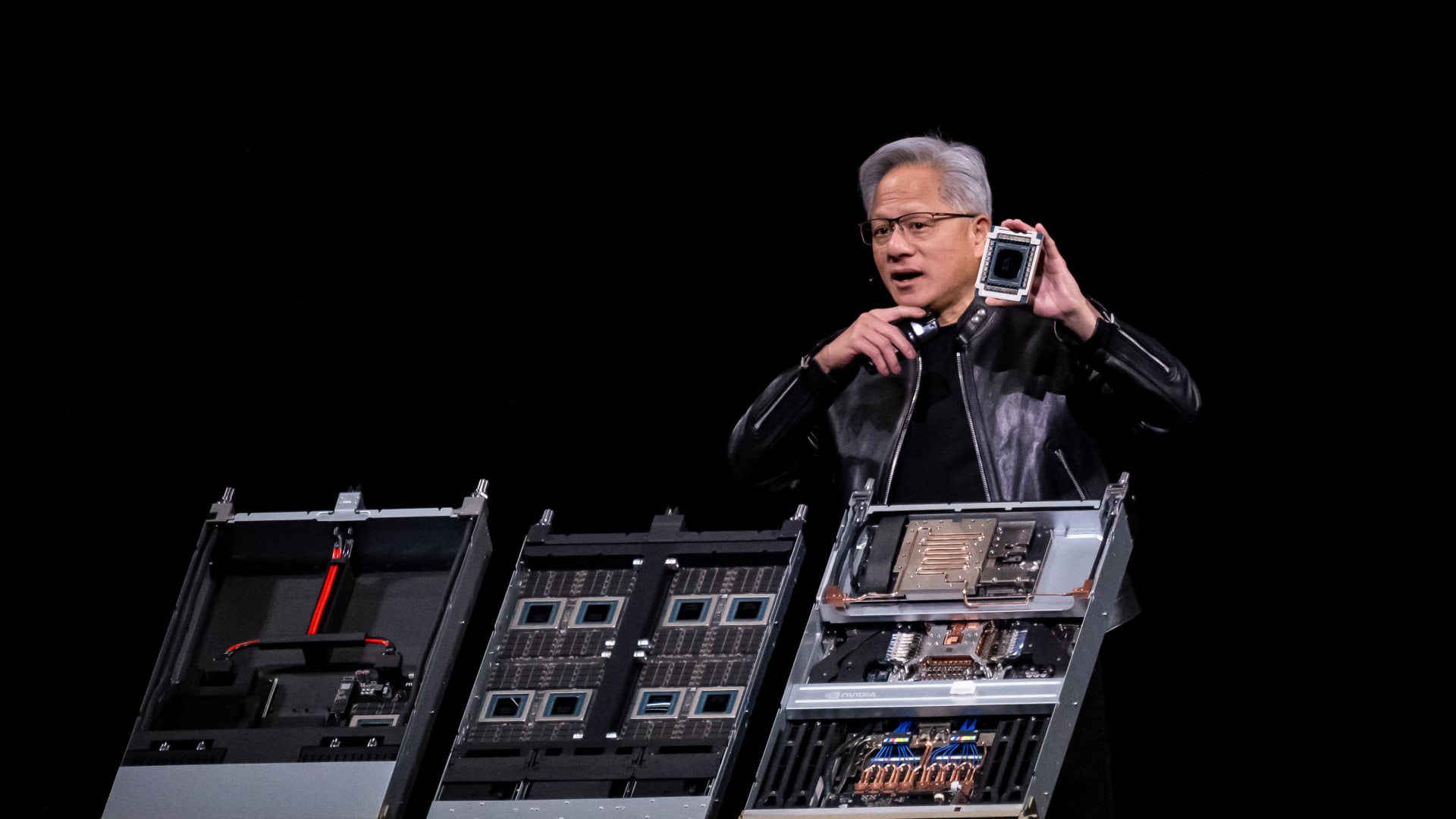
A $500bn chip-financing plan and surging ACIE demand may shift the narrative away from hyperscaler dependence. Vera Rubin shipments add upside.
Nvidia reports fiscal second-quarter earnings after the bell Wednesday. The question that has followed the stock for months – whether the company can outgrow its dependence on a handful of giant customers – is coming to a head.
Nvidia has been the profit engine of the artificial intelligence boom, filling data centers with its graphics processing units. The persistent concern is customer concentration. The hyperscalers – Amazon, Google and Microsoft – account for an outsized share of revenue. Those companies buy GPUs in bulk for their own workloads and sell access through cloud businesses. Add Meta and SpaceX, which have also been massive buyers.
In May, Nvidia changed its financial reporting to split out hyperscalers from the rest of the pack, which it now groups as ACIE – AI clouds and enterprise, plus industrial. Nvidia does not specify which companies fall into the hyperscaler group. CEO Jensen Huang defined it clearly on the May earnings call. "The easiest go-to-market, of course, is the hyperscaler, because there are only five or six of them," Huang said. "The rest of them, the rest of the industry, represents 250,000 companies around the world."
In the first quarter, the two segments were almost equal. Nvidia reported $37.9 billion in hyperscaler sales and nearly $37.5 billion in ACIE revenue. ACIE revenue grew 31% from the prior period, topping 12% growth from hyperscalers. Nvidia provided nine restated quarters on its website, showing hyperscalers making up about 55% of data center revenue over the past year. Hyperscaler revenue soared 115% from a year earlier in the most recent quarter, topping the 74% growth from ACIE customers.
Analysts expect the trend to flip. The ACIE side is expected to show 149% annual growth to $43 billion in the second quarter, according to StreetAccount. Hyperscaler revenue grows 83% to $43.6 billion over the same period. That would nearly close the gap. One potential big driver for the hyperscaler business is SpaceX, which aims to rapidly build out Nvidia-based data centers over the next year, said Gene Munster, managing partner at Deepwater Asset Management.
Skepticism has seeped into the stock. Shares fell 2.9% on Monday, dropping for a seventh straight day, the longest losing streak since 2022. They are down 7.5% over that stretch. Nvidia carries an Alpha Score of 70 out of 100, a Moderate rating, at a time when the market is pricing in a slowdown.
Investors worry about the ability of hyperscalers to further bolster spending. Amazon and Alphabet turned cash flow negative in the second quarter. Meta's cash generation dwindled more than 90% from a year earlier. Both of Elon Musk's public companies – SpaceX and Tesla – reported negative free cash flow as they pursue AI expansions.
"This story underneath the surface is investors' concern about just how sustainable the run has been for Nvidia, and feeling like the hyperscalers just can't give much more," Munster said. "They want to start to see the other segment starting to kick in."
In total, analysts see Nvidia's revenue almost doubling from a year earlier to $92.2 billion, according to LSEG. Data center continues to account for a bigger chunk of sales. That division is expected to reach $86.3 billion, based on StreetAccount estimates. That would be 94% of total revenue, up from 92% in the first quarter. For the full year, analysts expect 83% revenue growth to $396 billion, before slowing to 44% expansion next year, according to LSEG.
Nvidia is being proactive rather than waiting for new customers to arrive. Earlier this month, it unveiled a program with six leading financial firms that could pull together up to $500 billion in financing from investors who view chips as an investable asset, like real estate. Such a project, Huang said, could enable more companies to borrow money for GPU purchases at lower rates, because the chips will generate returns. Nvidia said in the announcement that it had signed a memorandum of understanding with the investment firms. Few specifics have been presented.
"There's been a lot of headlines and big numbers and not a lot of details on how this stuff is going to work yet," Stacy Rasgon, an analyst at Bernstein, told CNBC last week. "Color that they could give on that would be helpful to put some investors' minds at ease."
Another crucial number in the earnings report will be sales of Vera Rubin systems, which have just recently started to ramp up. Earlier this year, Huang told attendees at the company's GTC conference that he expects $1 trillion in sales through 2027 from current-generation Blackwell and Vera Rubin. Questions about the long tail of the customer base could ease if Vera Rubin looks like an even bigger success than projected.
"We expect Nvidia to report strong results and guidance with ramping Rubin GPU shipments representing the key drivers of upside," KeyBanc analysts, who recommend buying the stock, wrote in a note over the weekend.
Drafted by a large language model from the source reporting linked above, then screened by automated publishing checks. It is not read by a journalist before publication. Some articles cite our Alpha Score. Verify prices and figures against the original source. Educational coverage, not personalized advice.