Commodities● Neutral
Why Litchfield's Oonagalabi Drilling Needs Higher Grade to Matter
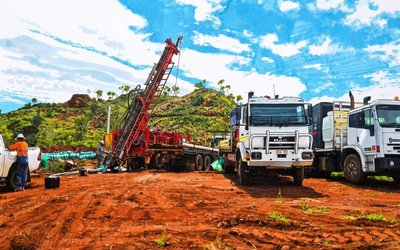
68m at 0.62% copper and 1.44% zinc sounds impressive. The combined metal value tells a different story. Why grade thickness alone does not make an economic discovery.
Continue with
Litchfield Minerals (ASX: LMS) reported thick copper-zinc intercepts from Phase 3 drilling at its Oonagalabi polymetallic project near Alice Springs. The best combined intercept of 68.26 metres at 0.62% copper, 1.44% zinc and 4.3 g/t silver from 10 metres depth confirms lateral and vertical continuity within the Main Zone. The headline numbers are impressive for thickness. The economics depend on whether the grade justifies the transport distance to processing infrastructure.
Thick Intercepts, Modest Grades: Reading the Assay Table
The company completed 11 reverse circulation holes for 1,772 metres and three diamond holes for 1,217.9 metres across Bomb-Diggity, VT1, VT2 and the Main Zone targets. The headline intercept from hole OGDD001 included sub-intervals of 19.66m at 0.66% copper, 2.58% zinc and 5.6 g/t silver and 14m at 0.52% copper, 1.55% zinc and 6.1 g/t silver.
Additional highlights included 120m at 0.92% zinc, 0.35% copper and 4.1 g/t silver from 52 metres, containing a higher-grade zone of 60m at 0.52% copper, 1.26% zinc and 6.3 g/t silver. Minor copper sulphides at the VT1 target suggest a potential new style of mineralisation. Assay results for hole OGDD003 remain pending from the laboratory.
The Simple Read: Size and Continuity
Thick intercepts across multiple holes indicate a large mineralised system. The continuity supports the geological model and justifies ongoing drilling. Managing director Matthew Pustahya described the campaign as challenging but productive:
The Better Process: Combined Metal Value Matters
A 68-metre intercept at 0.62% copper is thick for a polymetallic project. The grade is low. Economic viability depends on the combined metal value. At current copper prices near USD 4.50/lb and zinc near USD 1.30/lb, the gross metal value of the best intercept is roughly USD 85 per tonne before recovery costs. That is not obviously economic without higher-grade zones or significant tonnage scale.
Practical rule: Thick intercepts with low grades require a different valuation framework than narrow high-grade hits. The market should focus on the combined metal equivalent grade and the potential for higher-grade shoots within the system. A base-case resource estimate would need to demonstrate that the average grade supports mining costs, transport costs and processing recoveries for a project located in remote central Australia.