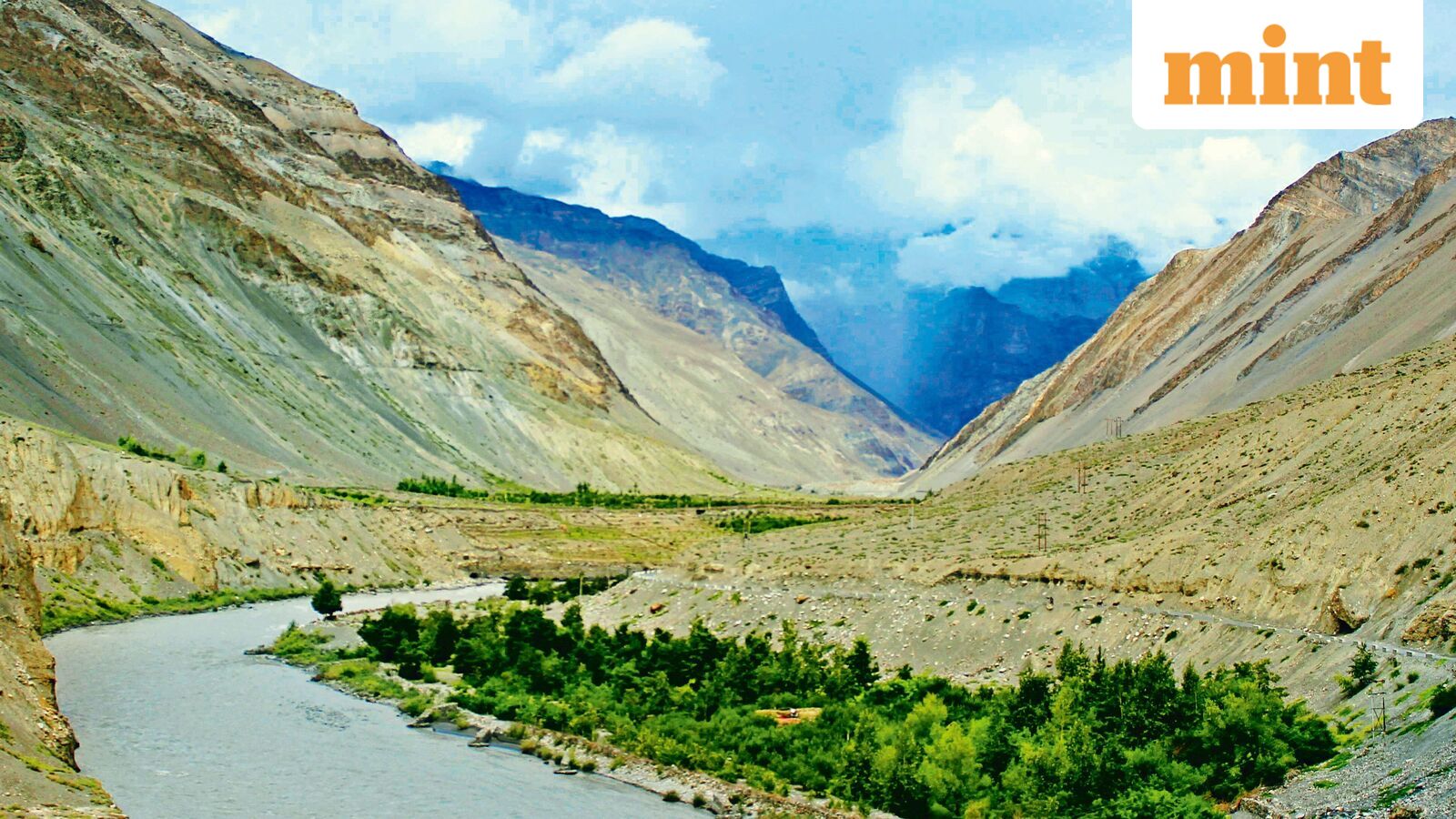
A 10-day summer trip to Ladakh versus Spiti Valley presents a clear risk event for a group of eight travelers with a ₹30,000 per person budget. The budget gap is not marginal. The source data shows Spiti can comfortably fit within that ceiling while Ladakh often stretches to ₹40,000–50,000 for the same duration. The difference is large enough to force a choice between destinations before departure.
The Budget Gap Starts With Transport
The first and largest cost divergence is getting there. For the group of eight, travel from Delhi to Spiti via the Shimla–Kaza–Manali road circuit runs ₹7,000–10,000 per person. The same for Ladakh runs ₹12,000–18,000 per person. The 50–80% premium comes from two sources: higher fuel expenses over longer distances and the common summer practice of flying into Leh when road travel via Manali or Srinagar is unreliable. Flight costs during peak season are a known budget risk.
Accommodation Cost Difference
Homestays and guesthouses in Spiti cost ₹6,000–8,000 for the full trip. In Ladakh, during the same July–August window, the cost rises to ₹8,000–12,000, a 33–50% increase. The pricing reflects higher tourist demand and shorter supply in Leh and the surrounding valleys.
Daily Spending Patterns Widen the Gap
Food and local transport continue the same pattern. Spiti’s villages and small towns keep café and restaurant prices lower because the supply chain from Delhi is shorter and less regulated. Ladakh’s internal transport is more expensive because of local taxi union rules and longer sightseeing routes to destinations such as Pangong Lake and Nubra Valley. These are not optional stops for a first-time visit, so the cost is baked in.
Total Trip Cost Comparison
| Cost Category | Spiti Valley (₹ per person) | Ladakh (₹ per person) |
|---|
| Travel from Delhi | 7,000 – 10,000 | 12,000 – 18,000 |
| Accommodation (10 days) | 6,000 – 8,000 | 8,000 – 12,000 |
| Food & local transport | 6,000 – 8,000 | 8,000 – 12,000 |
| Permits & misc. | 1,000 – 2,000 | 2,000 – 3,000 |
| Total | 20,000 – 28,000 | 30,000 – 45,000 |
The overlap band is narrow. A group of eight can keep Spiti under ₹25,000–30,000 per person. Ladakh pushes to at least ₹40,000–50,000 for the same itinerary.
What Makes the Risk Worse
Several factors would push Ladakh even higher. If the group flies to Leh due to road closures from landslides or weather, the ₹3,000–5,000 flight cost per person adds immediately. If they hire a tempo traveller for the entire Spiti circuit without sharing, the local transport cost rises. In Ladakh, union-mandated taxi rates for Pangong and Nubra are non-negotiable and increase with longer summer demand.
What Reduces the Risk
Booking shared cabs or a single tempo traveller for the group lowers per-person transport costs in both destinations. Locking homestay reservations two months before summer reduces accommodation price surges. Spiti’s road circuit (Delhi–Shimla–Kaza–Manali–Delhi) is well-established and allows groups to split taxi costs eight ways easily.
The Practical Choice for the Budget-Conscious Group
The data supports Spiti as the lower-risk destination. The entire Himalayan road-trip experience – high passes, monasteries, river valleys – is present. Ladakh offers higher altitude and more dramatic landscapes but at a cost premium that cannot be absorbed within ₹30,000 per person without cutting activities or lowering accommodation quality.
Key insight: The budget constraint is binding only if the group treats Ladakh as equivalent to Spiti. It is not. Ladakh costs 40–60% more for the same 10-day window. For a group of eight, Spiti removes the risk of mid-trip cash shortfalls or shared resentment over a blown budget.
The Decision Point
A group of eight can make this call without sacrificing adventure. Spiti delivers the complete mountain experience within ₹25,000–30,000 per person. The alternative is to stretch the budget to ₹40,000–50,000 for Ladakh, which requires individual approval and raises the risk that some in the group cannot afford the extra cost. The better market read is simple: treat the trip like an investment allocation – choose the destination where the return on experience per rupee is highest given the fixed budget constraint. Spiti wins that calculation for summer 2025.