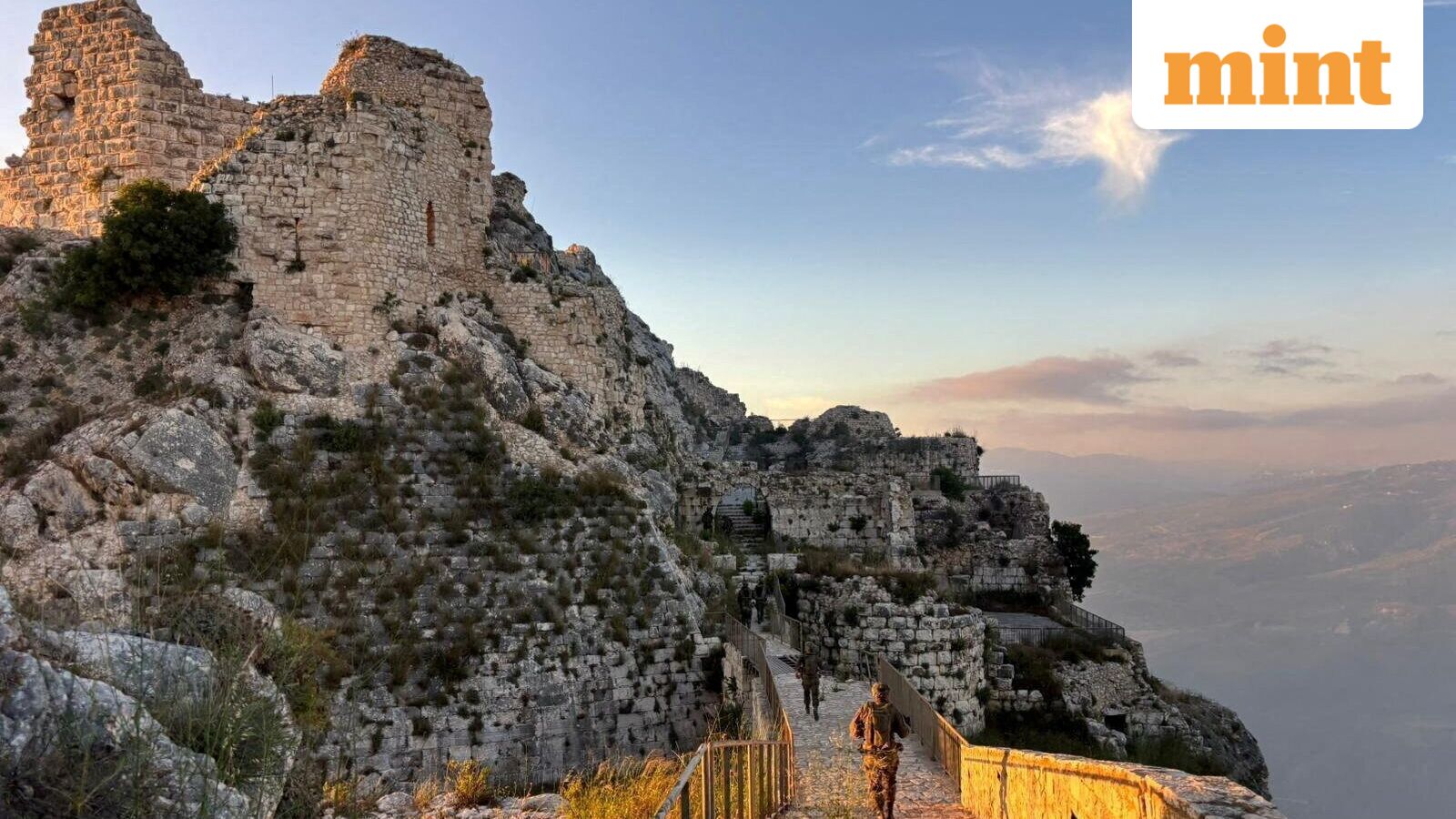
The Event: A Strategic Fortress Changes Hands
Israeli Defense Minister Israel Katz confirmed on Sunday that the military has captured the medieval fortress of Beaufort Castle in southern Lebanon, marking Israel's deepest ground incursion into Lebanese territory in over 25 years. The fortress, also known as Qalaat al-Shakif, sits near the city of Nabatiyeh and commands sweeping views of the surrounding region, giving the occupying force a significant tactical advantage.
Katz framed the operation as a return to historic ground. "44 years after the heroic Battle of Beaufort, and on this day commemorating the soldiers who fell in the First Lebanon War (1982), our troops have returned to the summit of Beaufort and once again raised the Israeli flag there," he wrote on his Telegram channel.
The capture followed days of intense fighting between Israeli troops and Hezbollah members, alongside airstrikes in nearby villages. The Israeli army's Arabic spokesperson Avichay Adraee posted a photograph on X showing Israeli troops outside the castle, and Katz posted that an Israeli flag had been raised over the structure. AFP footage from Sunday morning confirmed the flag was flying above the citadel, with shelling audible and smoke rising from the surrounding area.
Crossing the Litani River
Israeli troops advanced for days through villages close to Beaufort Castle after crossing the Litani River, which the Israeli military previously used as a de facto boundary. They are now about 5 kilometers (3 miles) from the city of Nabatiyeh, a major population center in southern Lebanon. Israel has designated the area from the Litani up to the Zahrani River a combat zone and called on all residents of Nabatiyeh to leave.
This is Israel's deepest incursion into Lebanon since its withdrawal from the country in 2000. Israeli troops previously captured Beaufort Castle in 1982 and held it until the withdrawal.
The Ceasefire Context: Talks Continue Despite Combat
The Israeli push came despite a nominal ceasefire that has been in place since April 17. Direct talks between Israel and Lebanon are currently underway in Washington, with the next round scheduled at the State Department on June 2 and 3. The capture of Beaufort Castle just days before those negotiations introduces a new military reality on the ground that could reshape the diplomatic leverage each side brings to the table.
Katz made the connection explicit: "Under Prime Minister Benjamin Netanyahu and my direction, the IDF expanded the operations in Lebanon, crossed the Litani River, and captured the Beaufort Ridge – one of the most important strategic points for defending the communities of the Galilee and safeguarding the security of our forces."
What This Means for the Negotiations
The timing suggests Israel is seeking to consolidate territorial gains before entering the next round of talks. The capture of a historically significant position like Beaufort Castle gives Israel a stronger defensive perimeter and a bargaining chip. For Hezbollah, the loss of the fortress represents both a tactical setback and a symbolic blow, given the group's history of fighting Israeli forces in that exact area.
Hezbollah's Response: Fiber Optic Drones and Attrition
Hezbollah overnight claimed two attacks targeting Israeli troops and a Merkava tank in the southwestern town of Bayada near the border. In recent days, the group has said it has clashed with Israeli troops in several towns just north of the Litani River near Nabatiyeh and the strategic castle.
The Fiber Optic Drone Problem
Hezbollah in recent weeks has frustrated Israeli forces with attacks using hard-to-detect fiber optic drones. These weapons bypass traditional electronic warfare countermeasures because they do not emit radio signals that can be jammed. For Israeli troops operating deeper in Lebanese territory, the drone threat represents a persistent vulnerability that could complicate supply lines and troop movements.
The Human and Military Toll
The latest Israel-Hezbollah war began on March 2, when Hezbollah fired rockets into northern Israel two days after the US and Israel attacked its main backer, Iran. Israel has since launched a ground invasion, capturing dozens of Lebanese villages and towns close to the border.
Casualty Figures
The conflict has left 3,350 people dead in Lebanon and over 1 million people displaced. According to Israeli Prime Minister Benjamin Netanyahu's office, at least 25 Israeli soldiers and a defense contractor have been killed in or near southern Lebanon, and two civilians have been killed in northern Israel, the vast majority by drones.
Sector Read-Through: Defense and Energy Exposure
For investors tracking the Middle East conflict, the capture of Beaufort Castle signals an escalation that has direct implications for several sectors.
Defense Contractors
Israeli defense companies and their international partners benefit directly from sustained ground operations. The need for counter-drone systems, armored vehicles, and precision munitions increases as troops operate deeper in hostile territory. Companies supplying fiber optic drone detection technology may see particular demand, given Hezbollah's demonstrated use of these weapons.
Energy Markets
The Litani River crossing and the push toward Nabatiyeh bring Israeli forces closer to critical infrastructure. Any disruption to energy production or transit routes in the region could affect global oil and gas prices. The Beaufort Castle position overlooks key terrain that could be used to monitor or interdict supply lines.
Israeli Shekel and Bond Markets
Extended ground operations carry fiscal costs. The longer Israeli troops remain deployed beyond the Litani River, the higher the defense spending burden. Bond yields may reflect increased risk premiums if the conflict shows no signs of de-escalation before the June 2-3 talks.
What Would Reduce the Risk
- A ceasefire agreement emerging from the June 2-3 Washington talks that includes a mutual withdrawal from the Beaufort Castle area.
- Hezbollah accepting the new territorial reality without launching a major retaliatory campaign that draws in Iranian proxies from Syria or Iraq.
- The US applying sufficient diplomatic pressure to freeze further Israeli advances beyond the current positions.
What Would Make It Worse
- Hezbollah successfully using fiber optic drones to inflict significant casualties on Israeli troops holding Beaufort Castle, triggering a larger Israeli mobilization.
- The fighting spreading to Nabatiyeh city itself, causing a new wave of civilian displacement and international condemnation that complicates the Washington talks.
- Iran responding to the loss of its proxy's strategic position by escalating elsewhere, potentially in the Red Sea or through Houthi attacks on shipping.
The AlphaScala View
Southern Company (SO) carries an Alpha Score of 41/100 with a Mixed label in the Utilities sector. While not directly exposed to Middle East conflict dynamics, utility stocks often serve as defensive plays during geopolitical uncertainty. The broader market risk from this escalation is concentrated in energy, defense, and Israeli-linked equities rather than US utilities.
Practical rule: The capture of Beaufort Castle is a tactical win for Israel but a strategic risk for markets. It raises the probability of a longer ground campaign, higher defense spending, and delayed diplomatic resolution. The June 2-3 talks are the next concrete catalyst. If they produce no ceasefire, expect the conflict to widen toward Nabatiyeh and beyond the Litani River.
For traders tracking this event, the key variables are Hezbollah's drone capability, the US diplomatic response, and whether Israeli forces attempt to hold Beaufort Castle permanently or use it as a bargaining chip. Each outcome points to a different risk profile for defense, energy, and regional equities.
Risk to watch: The fiber optic drone threat is asymmetric and hard to counter. If Hezbollah adapts its tactics to target Israeli supply lines rather than front-line troops, the cost of holding Beaufort Castle could rise faster than markets currently price in.