Commodities● Neutral
Why Indonesia should map heat before picking a fuel
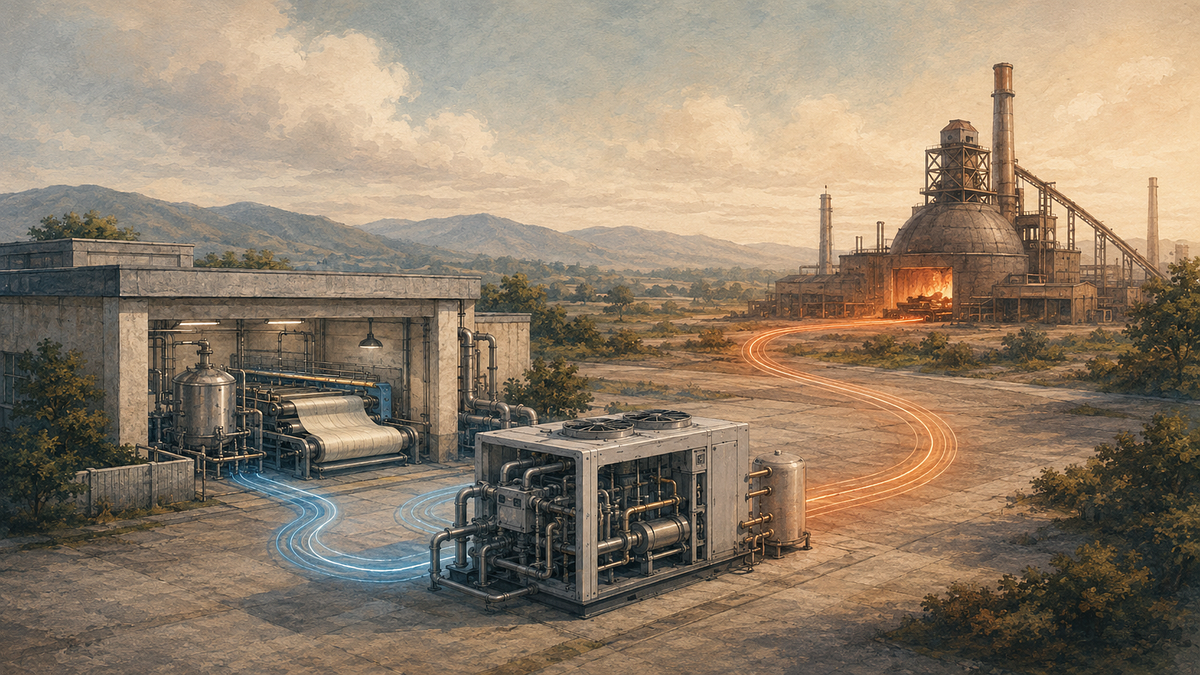
The IEA's Heat Pump Monitor 2026 argues Indonesia should map industrial heat demand by temperature band before picking decarbonisation technologies for each process.
Continue with
Industrial decarbonisation debates usually begin with a technology list. Biomass, hydrogen, carbon capture, electric boilers. The IEA's Heat Pump Monitor 2026, published this month, suggests a different starting point: the temperature, timing and location of the heat each process actually requires.
Drying food and firing cement both count as industrial heat. They need radically different temperatures and operating conditions. Treating them as a single problem risks assigning expensive technologies to processes that could use simpler ones, the report argues.
Industrial heat pumps remain a niche technology. Deployment is starting to expand as manufacturers look to recover waste heat, improve efficiency and cut fossil fuel use. The report identifies drying, pasteurisation and steam supply as the most suitable applications, particularly in light industry, paper and parts of the chemical sector.
This is not an argument for heat pumps in every factory. It is an argument for dividing industrial heat by process and temperature before choosing the technology.
The IEA's technical-potential modelling assumes heat pumps could serve most industrial demand below 60°C, half of demand between 60°C and 100°C, and a smaller share between 100°C and 150°C. The assumed potential falls sharply above that range, reaching only 3 per cent between 150°C and 200°C and zero above 200°C.
Those are modelling assumptions, not permanent engineering limits. Technology is advancing. Heat pumps capable of producing around 120°C were demonstrated earlier this decade. Commercial deployment of systems reaching above 160°C is expected from 2027, the report says. Even so, under stated policies heat pumps would supply only about 8 per cent of light-industry heat demand by 2035. That rises to 20 per cent in the IEA's net-zero scenario.
The economics depend heavily on the temperature gap the equipment must bridge. A heat pump moves heat from a source to the temperature required by a process. The smaller this "temperature lift", the more useful heat it can deliver for each unit of electricity.
That makes waste heat particularly valuable. Heat rejected by refrigeration equipment, wastewater, compressed-air systems or a neighbouring production line may provide a warmer starting point than ambient air. The IEA notes that higher-temperature waste-heat sources can help heat pumps reach higher output temperatures while retaining better performance.