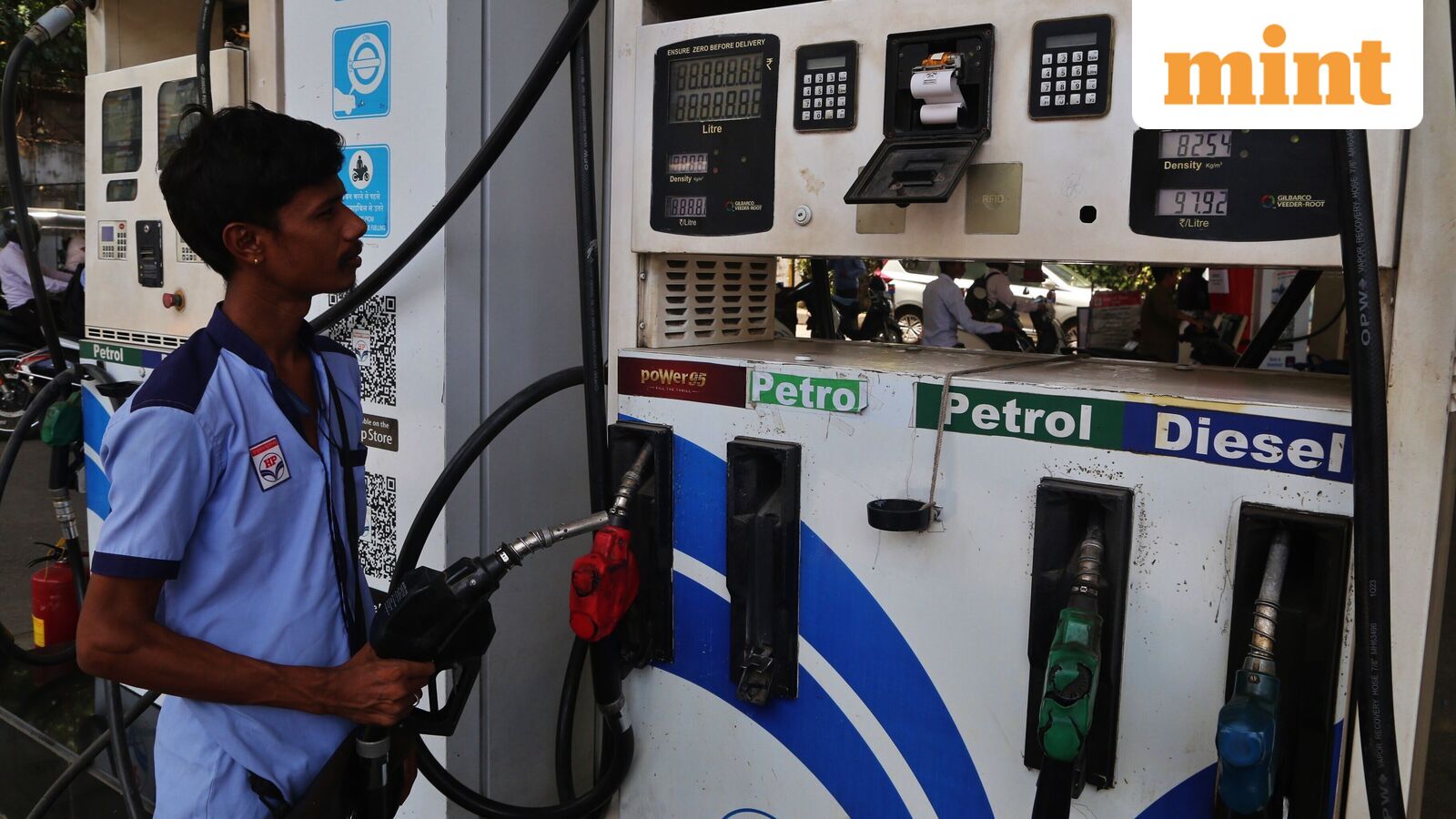
Brent crude has fallen to a four-month low, touching $71 a barrel as tanker traffic through the Strait of Hormuz normalizes and US-Iran talks advance. Yet petrol and diesel at Indian pumps remain unchanged. The disconnect is not a glitch – it is a deliberate lag built into the system.
State-run oil marketing companies – Indian Oil, BPCL, HPCL – are still burning through crude bought during the peak of the West Asia crisis, when insurance and freight rates spiked. The minister for petroleum and natural gas, Hardeep Singh Puri, made the timeline explicit on Thursday. "If this persists next two, three months, then that would be a legitimate question," he said when asked about cutting retail prices. For now, the OMCs are carrying stock bought at higher cost.
The numbers illustrate the gap. In the second half of May, OMCs raised petrol and diesel prices by about ₹7.50 a litre each. Since then, crude has slid more than 10%. The minister said OMCs have absorbed historical losses of ₹74,781 crore on fuel and subsidised cooking gas during the volatility. That figure gives the government cover to avoid a politically sensitive cut too early.
One private player has broken ranks. Nayara Energy, backed by Rosneft, reduced pump rates this week – the first private-sector cut in more than two years. That suggests some margin room exists if a retailer chooses to use it. The state-owned trio has not followed.
Meanwhile, OMCs did cut aviation turbine fuel by ₹5 a litre and commercial LPG by ₹183.50 per cylinder on July 2, the first reduction in nearly four months. That was a monthly revision tied to global benchmarks, not a discretionary move. The 5-kg free-trade LPG cylinder also dropped ₹13 to ₹808.50. Those cuts show the OMCs acknowledge lower global prices for some products, just not the most politically sensitive ones.
The global backdrop is one of oversupply. Brent is in contango, signalling that supply is running ahead of demand. Citigroup analysts including Francesco Martoccia and Eric Lee wrote on July 2 that "fundamentals are rapidly reasserting themselves" as Hormuz disruptions fade and shipping flows normalise. They added a caution: the US-Iran process remains fragile and disputes over Hormuz administration and transit fees persist. The contango and rising tanker traffic through the strait have added near-term barrels to the market.
For India's fuel consumer, the practical timeline is two to three months, as Puri noted. If crude stays near or below $70 a barrel through September, the OMCs will have finished processing their high-cost crude. At that point, a retail price cut becomes a realistic possibility. Until then, the pump price will reflect not the current barrel but the one bought three months ago.
Traders tracking the sector should watch the weekly Brent close and the OMCs' inventory turnover. A sustained contango in Brent that pushes crude below $65 would compress the timeline significantly. Nayara's move, if followed by other private retailers, could also force the state-run trio to respond earlier than the minister's timeline implies.