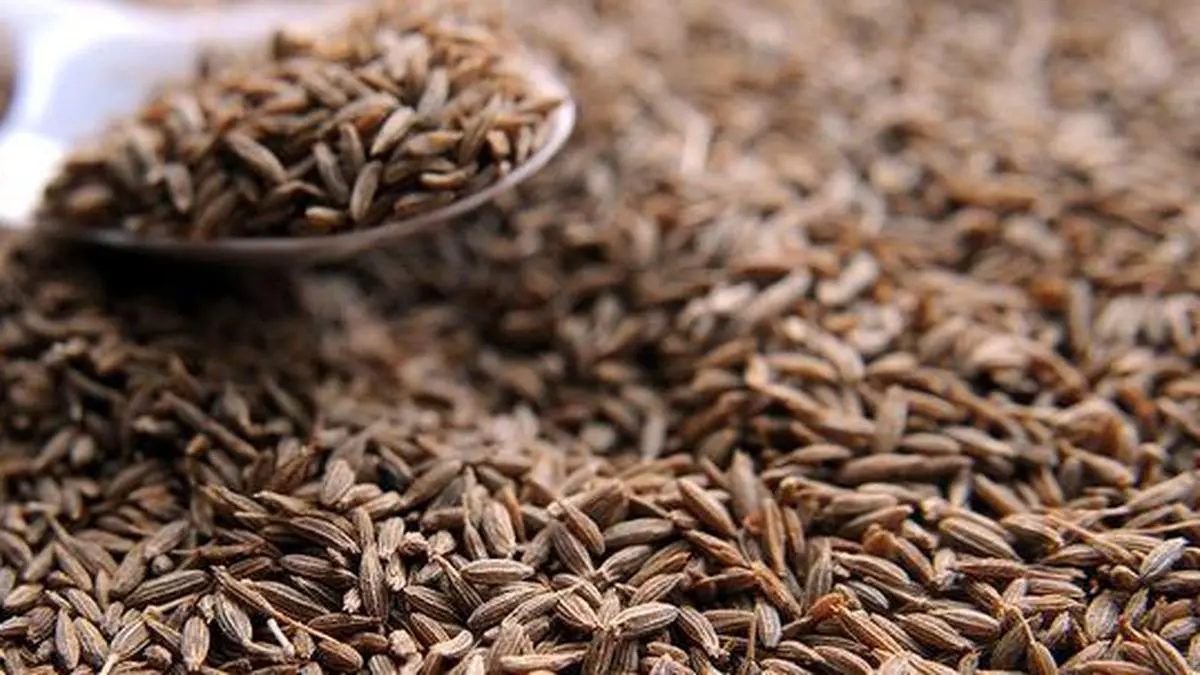
China bought 76% less Indian cumin in FY26 after a record domestic harvest. Total Indian cumin exports fell 28% to $524 million. Turkey's imports jumped fivefold.
China bought 76% less cumin from India in the 2025-26 financial year. The drop was the single biggest driver of a 28% decline in India's total cumin export value, which fell to $524 million from $732 million a year earlier.
Chinese imports from India fell to 9,271 tonnes from 38,721 tonnes. In dollar terms, the trade shrank 80% to $22.81 million. The reason, according to Yogesh Mehta of SpicExim, was a bumper Chinese domestic harvest. "Last year, China had a very good crop of around 85,000-90,000 tonnes, and hence, it avoided buying from India," Mehta said.
Total Indian cumin exports by volume fell 14% to 1.96 lakh tonnes from 2.29 lakh tonnes. In rupee terms, export value dropped 25% to Rs 4,611 crore.
The Middle East and North Africa region also bought less. Mehta blamed the Iran-US-Israel conflict for disrupting shipments there. Exports to the US fell to 15,458 tonnes from 17,384 tonnes. The UAE took 29,752 tonnes, down from 30,694. Bangladesh imported 29,579 tonnes versus 30,515 a year earlier.
Turkey was the exception. Turkish imports of Indian cumin jumped more than fivefold to 7,529 tonnes, valued at $19.61 million. "Turkey has issues with soil fertility and is unable to grow cumin seeds," Mehta said. "It had only option to buy from India, while the Syrian crop was not up to the mark."
The outlook for Indian cumin exporters is not improving. Mehta expects China to harvest an even bigger crop this year on favourable weather and better farming techniques. Syrian production is also recovering. "If the weak trend in exports continues this year, we may see farmers shifting to other crops and face higher carryover stocks," he said.
Tejus Gandhi, chairman of the Federation of Indian Spice Stakeholders, said the US-Iran deal could revive some Middle Eastern demand. "With the US-Iran deal reached we may see some demand coming in going forward," he said.
About 60% of the Gujarat cumin crop and 45% of the Rajasthan crop have already arrived in the market, Mehta said. That supply is hitting a demand base that has shrunk by more than a quarter in a single year.
Prepared with AlphaScala research tooling and grounded in primary market data: live prices, fundamentals, SEC filings, hedge-fund holdings, and insider activity. Each story is checked against AlphaScala publishing rules before release. Educational coverage, not personalized advice.