Stocks● Neutral
Why Idle Cash Is Costing You More Than You Think
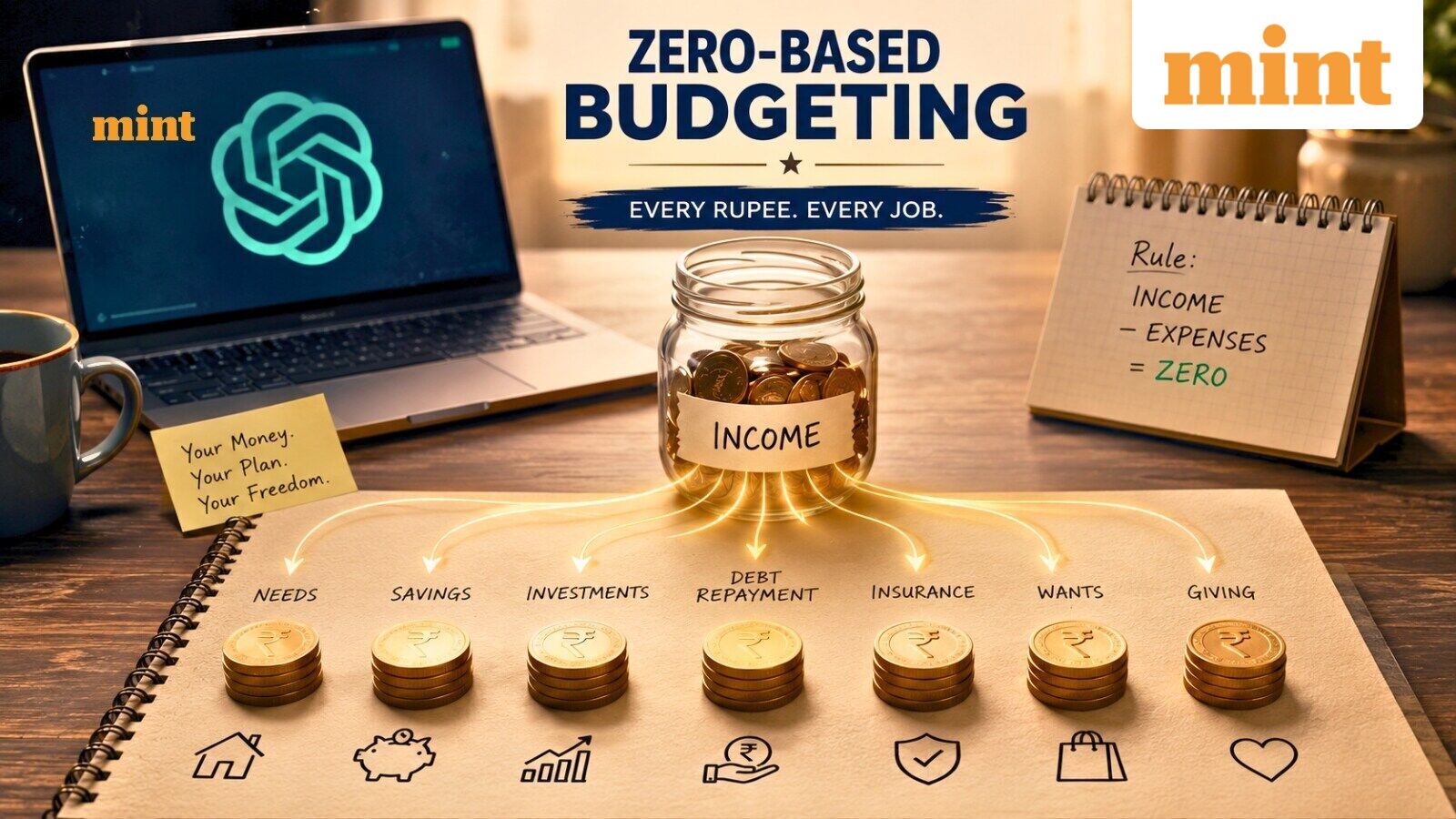
A 32-year-old household with ₹96,700 monthly income has 32% idle cash. The fix: a zero-based budget that assigns every rupee a job, starting with a SIP increase from ₹2,000 to ₹15,000.
Continue with
The Idle Cash Problem: A 32-Year-Old's Financial Audit
A recent analysis of a 32-year-old dual-income household in India reveals a common but costly financial pattern: capital sitting idle in a savings account earning poor interest. The household earns approximately ₹ 96,700 per month, with the primary earner contributing ₹ 66,700 and a spouse adding ₹ 30,000. Known fixed outflows total roughly ₹ 25,600 monthly, covering an EMI of ₹ 8,000, insurance at ₹ 2,600, OTT subscriptions at ₹ 800, parents at ₹ 10,000, and a travel reserve of ₹ 4,200.
After accounting for ₹ 35,000 to ₹ 40,000 in daily household living costs, the likely monthly surplus is ₹ 30,000 to ₹ 40,000. The money is not disappearing. It is simply waiting with no direction.
The Capital Sitting Idle Problem
The household's total investable wealth stands at approximately ₹ 2.22 lakh. That includes ₹ 71,000 in savings, ₹ 44,000 in mutual funds, and ₹ 1.07 lakh in EPF. The idle cash ratio is around 32%. The investment ratio is low. The retirement allocation is almost absent. The diagnosis is not recklessness. It is excessive caution that is costing compounding years that cannot be recovered.
Why the Emergency Fund Target Is Too High
The current emergency fund is the same as the savings balance. The appropriate target should be ₹ 3 to ₹ 4 lakh, not ₹ 4.8 lakh. Since the spouse also earns, a six-month single salary target is higher than necessary. The practical rule: keep ₹ 75,000 to ₹ 1 lakh in the savings account for daily life, build the emergency fund separately to ₹ 3 to ₹ 4 lakh, and deploy anything beyond that.
The Zero-Based Budgeting Framework: Every Rupee Gets a Job
The solution is a zero-based budgeting system where every rupee of income is assigned a purpose. The framework allocates the ₹ 96,700 monthly inflow across five categories.
Survival Expenses: 45% (₹ 43,500)
This covers food, utilities, insurance, EMIs, and parents. This is the non-negotiable floor. No optimization needed here beyond ensuring the number is accurate.
Stability: 15% (₹ 14,500)
Direct ₹ 10,000 toward the emergency fund each month until it reaches ₹ 4 lakh. Then stop. The remaining ₹ 4,500 stays in the savings buffer. This is the mechanism that prevents the idle cash problem from recurring.
Wealth Creation: 25% (₹ 24,000)
This is where the biggest change happens. Increase the SIP from ₹ 2,000 to ₹ 15,000 immediately. Allocate ₹ 5,000 to retirement and ₹ 4,000 to long-term investing. The current SIP of ₹ 2,000 is too low for a 32-year-old with a 25-year investment horizon. The gap between current allocation and appropriate allocation is the single largest missed opportunity.
Future Goals: 10% (₹ 9,500)
Split this among international travel, the child's future education (the baby is 2 years old), and a house upgrade. Each goal gets a separate account or sub-account so the money has a visible purpose.
Freedom Money: 5% (₹ 5,000)
Spend this without guilt or justification. This is the psychological release valve that makes the system sustainable. Without it, the discipline breaks down.