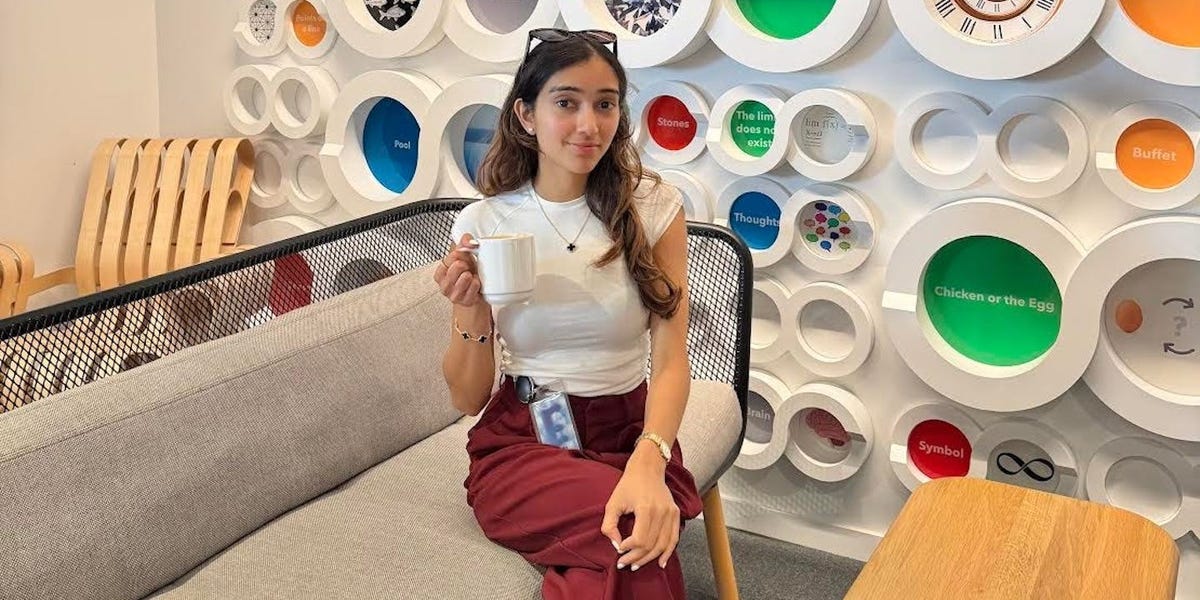
Aashna Doshi spent two years working on internal developer tools at Google after graduating from the University of Illinois Urbana-Champaign. The pay was good. The hours were reasonable. The brand on her resume opened doors. She loved her team.
She left anyway.
The 23-year-old software engineer turned down the stock grants and the stability to co-found an AI startup with her podcast cohost. The conversation that pushed her over the edge followed a familiar pattern: she and her cohost kept circling back to the same problem on their podcast. Small businesses wanted to use AI tools. They did not have the budget or the headcount for a data science team to set them up.
Weekend sketches turned into a prototype. By early 2025, that prototype had a waitlist of paying customers.
"I kept waking up thinking about the startup," Doshi said. "That's when I knew the math had changed."
The math she ran three times before quitting came down to opportunity cost. A Google salary with stock grants and benefits is a hard thing to walk away from at 23, especially with student loans on the books. Her calculation: even with a 90% failure rate, the expected value of the startup beat the guaranteed income over five years.
"The worst case at the startup is I fail and go back to a big tech job," she said. "The worst case at Google is I wake up in five years and realize I never tried."
Her cofounder quit the same week. They are building out of a shared office in Manhattan's Flatiron district. The product lets a local bakery or a dental practice set up an AI customer-service chatbot in under 10 minutes. A small seed round from angel investors covers salaries for 12 months.
Doshi acknowledges the timing looks strange. Big tech companies have been trimming headcount, making a stable seat seem more valuable. She sees the opposite logic. The layoffs mean the talent pool is deeper and the cost of hiring is lower for startups.
"The smartest engineers I know are sitting at home or taking contract work," she said. "That's a window that won't stay open."
Her father, an accountant, asked for a five-year financial projection when she told him the plan. She showed him a one-year burn rate and a list of 50 potential customers who had signed letters of intent. He stopped asking questions.
Her former manager at Google told her the door was open if she wanted to come back. She has not taken him up on it yet. The startup's first public beta is scheduled for late September.