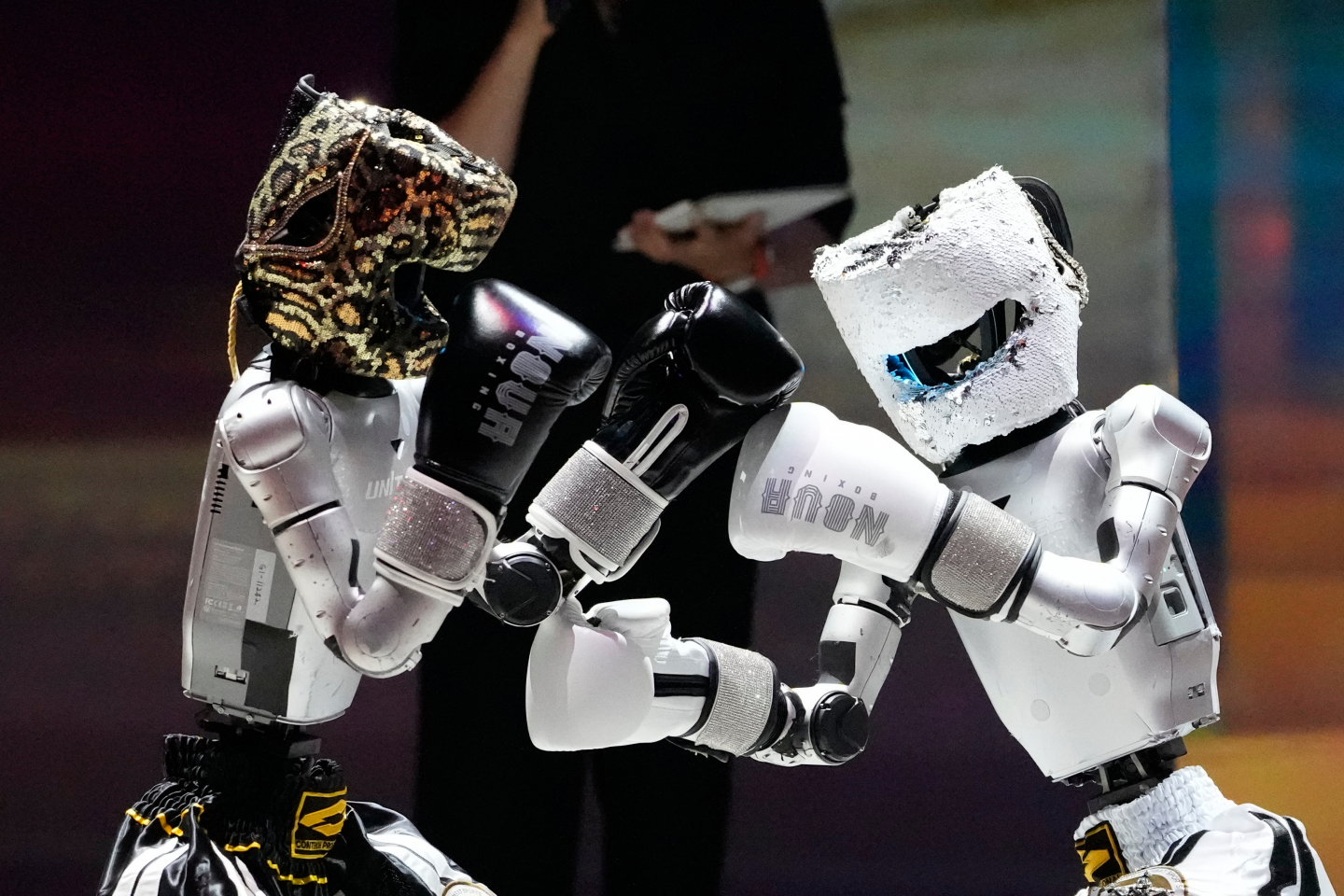
A carefully staged humanoid robot walking across a factory floor, stacking boxes, or folding laundry makes for compelling video. The gap between that performance and a commercially viable machine is wider than most investors appreciate. Jeremy Hsu at Ars Technica recently highlighted how robot demonstrations can distort public perceptions of real robotic capabilities. For anyone sizing up the robotics sector, the question is not whether the robot can walk. It is whether the demo tells you anything about cost, reliability, or production scale.
The Single-Run Demo Problem
Most humanoid robot demos are single-run, scripted sequences filmed in controlled settings. The robot may be teleoperated for part of the task, or have dozens of engineers on standby. The Ars Technica piece points out that these performances are optimized for optics, not for repeatability. That matters because venture capital and public market valuation often chase the viral moment rather than the engineering fundamentals.
A demo does not reveal the mean time between failure, the cost of replacement parts, or the energy draw per hour. Those numbers determine whether a humanoid can operate economically in a warehouse or factory. Without them, investors are making decisions on a highlight reel.
Why Robotics Stocks Overreact to Viral Clips
Companies from Tesla to Figure AI to Agility Robotics have released humanoid demos in the past year. Each clip creates a narrative spike. The stocks that benefit – whether directly or through ETF flows – can overshoot the underlying business reality. The real markers of progress are not views on social media. They are deployment contracts, unit economics, and field reliability data.
A useful framework: compare the demo stage to the autonomous vehicle hype cycle of the late 2010s. Companies showed cars navigating city streets, wide commercial deployment remains years away. Humanoid robots face similar challenges – perception, manipulation, battery life, and safety regulation – with the added difficulty of balancing on two legs.
The Hardware and Battery Cost Wall
The hardware and compute required for a capable humanoid are expensive. The sensors, actuators, and onboard AI processing often rely on NVIDIA chips, which are in short supply and carry high unit costs. A single humanoid robot can cost over $100,000 to build. At that price, the return on investment versus a traditional industrial robot – which may cost $30,000 and last a decade – is negative for most tasks.
Battery life is another hidden limit. Humanoids that run for an hour before needing a recharge cannot replace a human shift. Few demos show continuous operation beyond a few minutes. These constraints are not solved by better choreography.
What Real Commercial Progress Looks Like
- Field trials with a paying customer, not a lab partner.
- Mean time between failure measured in hours, not attempts.
- Production cost trending toward a price point that competes with human labor or fixed automation.
- Software updates that improve task success rates, not function expansions.
The next catalyst for the sector will be a public company announcing a repeat order from an industrial customer. Until then, each demo should be treated as a research milestone, not a commercial breakthrough.
Practical rule: Ask whether the demo answers the question, "How much does this cost per hour of useful work?" If it does not, the video is marketing.
The decision point for investors is the next round of quarterly earnings from publicly traded robotics firms. Look for deployment numbers, revenue breakdowns, and customer names. If the best data point is still a YouTube video, the bull case remains unproven.
For more on the compute side of robotics, see the NVIDIA profile.