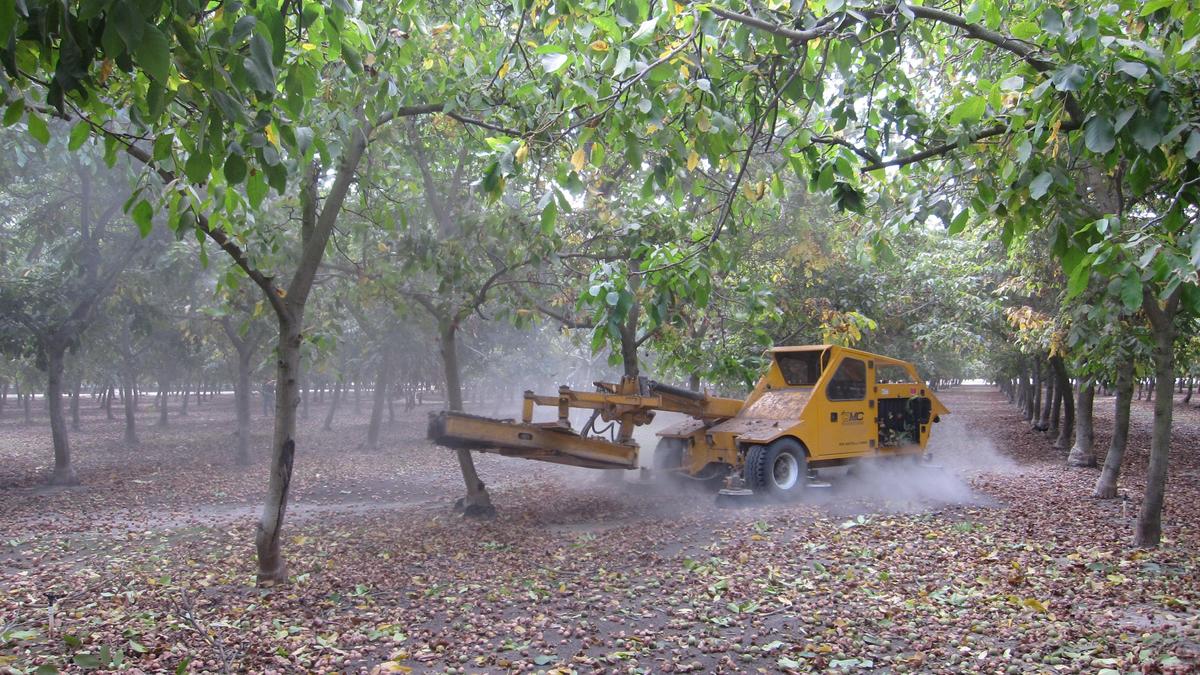
Hill states have a climate edge for nut farming. The NDFC founder argues that demand is strong, margins beat traditional crops, and policy support is building.
India's growing appetite for nuts is running ahead of what domestic farms can supply. Every tonne of almonds or walnuts grown at home at competitive quality is a tonne that does not need to travel from California or Australia, the founder and president of the National Development Foundation for Capital and Infrastructure (NDFC) wrote in a recent note.
Hill states have a genuine climate advantage for this crop. The cold winters and well-drained slopes of Himachal Pradesh, Uttarakhand, Jammu and Kashmir, and parts of the Northeast mirror conditions in the world's established nut belts. The crop fits the terrain, which keeps input costs lower than irrigated or chemically supported alternatives, the note said.
There is an ecological argument too. Once established, nut trees need far less tilling than seasonal crops, and their root systems help hold hill slopes together, reducing soil erosion year after year. On terrain where long-term soil loss is a genuine concern, that is not a small benefit.
Traditional hill farming – wheat, maize, even some fruit crops at altitude – often delivers thin margins once labour and transport are accounted for. Nuts flip that equation. They carry higher income per acre, a longer shelf life than perishable produce, and they tap into a demand curve that keeps climbing rather than flattening out. A farmer switching even a portion of land to walnuts or almonds is often trading a low-margin harvest for a commercial one, the NDFC founder said.
The employment case does not end at harvest. Nut orchards need people through cultivation, and also through grading, cracking, sorting and packaging once the harvest comes in. That work currently happens inconsistently or gets outsourced because local processing infrastructure has not caught up with production. Built out properly, that processing chain alone could anchor rural employment well beyond a single growing season.
Policy momentum is building. Recent budget announcements flagged almonds and walnuts as priority high-value crops. On the ground, efforts to import thousands of early-fruiting, thin-shelled sapling varieties into Jammu and Kashmir show a real shift away from slow-maturing traditional trees, the note said. What is still missing is coordination: reliable cold storage near growing clusters, structured training for farmers moving away from subsistence crops, and consistent access to quality grafted planting material rather than older seedling stock that can take a decade to bear fruit.
Turning this into a scalable model will take coordinated effort across state horticulture departments, farmer producer organisations and industry bodies working from the same roadmap rather than isolated pilot projects. "The climate advantage and the market demand are both already in place. What hill states need now is the institutional push to connect the two," the NDFC founder wrote.
Drafted by a large language model from the source reporting linked above, then screened by automated publishing checks. It is not read by a journalist before publication. Some articles cite our Alpha Score. Verify prices and figures against the original source. Educational coverage, not personalized advice.