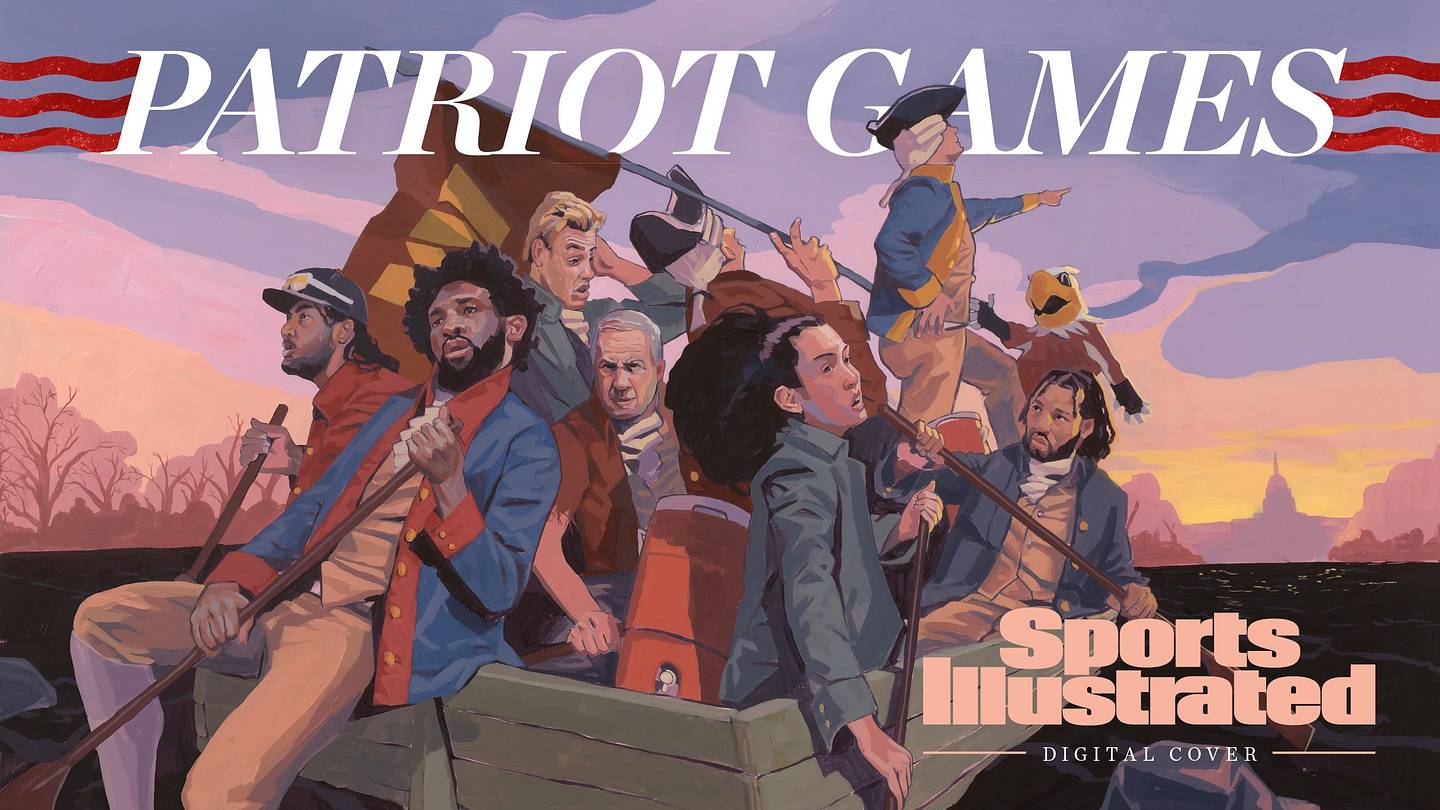
Washington hurled an iron bar beyond competitors' limits and threw a slate 372 feet across the Rappahannock, a feat that helped shape America's sports-mad culture.
George Washington was 6-foot-2 with a rear end so large that tailors struggled to find cloth to cover it. His biographer Ron Chernow described his body as "oddly shaped." The novelist Gore Vidal saw "a huge rump" that made him sit like an All-Star catcher. That lower body was the engine of his arm.
On a 1773 afternoon at Mount Vernon, Washington walked onto a field where younger men were pitching a heavy iron bar. Without removing his coat, he grasped the missile and hurled it far beyond their best marks. "We were indeed amazed," recalled Charles Willson Peale, the artist who painted Washington's portrait.
The Mechanism: Lower Body Power
Washington's wide, flaring hips and muscular thighs gave him a base that modern power pitchers and catchers would recognise. He leveraged that base to fire a muzzle-loading cannon of a right arm. Thomas Jefferson called Washington "the best horseman of his age." On a half-Arabian named Blueskin or a chestnut gelding called Nelson, Washington was an equestrian statue come to life.
Washington also threw a piece of slate across the Rappahannock River, a distance later measured at 372 feet when pitcher Walter Johnson replicated the feat with a silver dollar in 1936. Johnson trained by throwing a silver dollar against his barn door at home in Germantown, Maryland. On the 204th anniversary of Washington's birth, Johnson cleared the river on the last two of three attempts.
The Sporting Culture of the Revolution
During the Revolutionary War, soldiers filled downtime with foot-ball, nine-pins, and gambling. Foot-ball in the 1770s was violent and unregulated. Goals could be physical landmarks spread three miles apart. Matches between villages lasted four hours. One account from the Derby Mercury described a game in Yorkshire where a boy was trampled to death by the mob.
Washington issued an order on Oct. 3, 1775, banning gambling but not games. "The General does not mean by the above Order to discourage sports of exercise and recreation, he only means to discountenance and punish Gaming." The distinction between game and wager is one American sports still wrestle with today.
Nine-pins was so associated with drinking and gambling that Connecticut banned the alleys outright in 1841. Tavern owners added a 10th pin to get around the law. Charles Dickens, on a visit to New York in 1842, described the invention: "Ten-Pins being a game of mingled chance and skill, invented when the legislature passed an act forbidding Nine-Pins."
Washington Irving, born in 1783 and named for the general, captured that world in Rip Van Winkle. The story's hero finds men bowling in the Catskills, drinks their ale, and sleeps through the revolution. Irving also gave the world the Knickerbocker name, which eventually became the New York Knicks.
The Legacy
Washington died Dec. 14, 1799. Henry "Light-Horse Harry" Lee eulogised him as "First in war, first in peace, and first in the hearts of his countrymen." A century later, sportswriter Charley Dryden repurposed the line for the baseball Senators: "First in war, first in peace, and last in the American League."
Today, Washington's name still echoes in the Washington Commanders, the bridge that carries cars to Yankee Stadium, and the mascot races at Nationals games. In the middle of the fourth inning 81 times a year, mascot George Washington and mascot Thomas Jefferson sprint against each other. Jefferson, who once disdained "games played with the ball," now runs as an effigy with an oversized head that wobbles for a beer-buzzed crowd. The revolution, it turns out, never really ended. It just moved to the ballpark.
Prepared with AlphaScala editorial tooling from the source reporting linked above. Indexable analysis may include a cited Alpha Score value. Publishing checks screen each story before release. Educational coverage, not personalized advice.