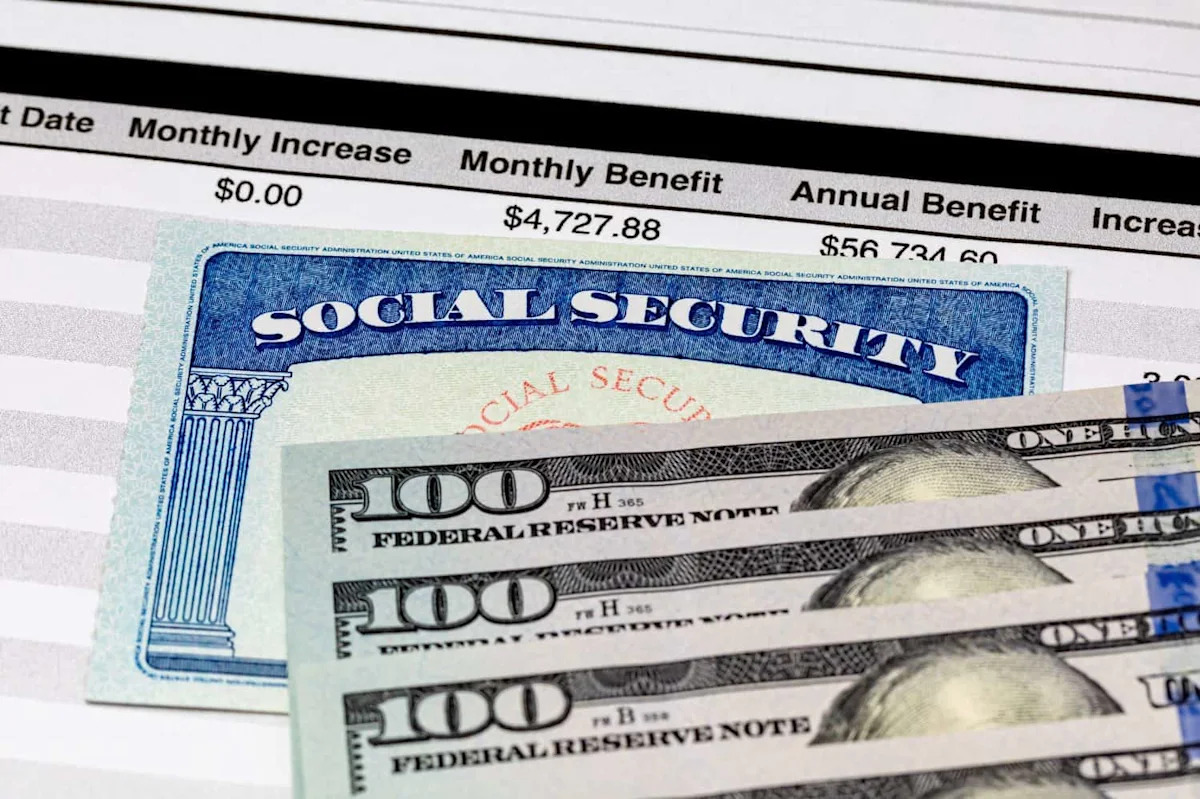
Delaying Social Security from 62 to 70 means forgoing roughly $158,000 in skipped checks. The payoff is a benefit about 76% larger in nominal terms, adjusted for inflation over a retiree's lifetime.
The central trade-off sits inside every retirement plan. Claim early, and the check is smaller for the rest of your life. Wait until 70, and you collect nothing for eight years. The Social Security Administration sets the math: claiming at 62 reduces the full retirement benefit by up to 30%. Delaying past full retirement age adds roughly 8% a year in delayed retirement credits, capped at age 70. The gap between the two strategies, before any cost-of-living adjustment, is about 76%.
A worker with an average earnings history who files at 62 gets roughly $1,650 a month. Skipping eight years of those payments produces that $158,000 figure. The calculation assumes the retiree has the assets to cover the gap or is still working. Many people do not, which helps explain why the average claiming age hovers closer to 63 than 70. The median full-time worker earned $1,251 a week in the second quarter of 2026, while average annual household spending was $78,535 in 2024. That skipped income equates to about two and a half years of typical household outlays.
Waiting pays off in a benefit indexed to inflation for life. The 2026 COLA landed at 2.8%. The June 2026 CPI reading of 332.6 reflects the kind of price pressures the adjustment addresses. A private annuity purchased at 70 with the same monthly payout would need inflation protection to match. Inflation-adjusted annuities carry a higher price tag than nominal ones.
Annuity payouts track prevailing interest rates. The 10-year Treasury yield was 4.75% at the end of July 2026. The upper bound on the federal funds rate was 3.75%. Those set the ceiling for what insurers can offer. The FDIC national average 12-month CD rate is 1.68%. Treasury I-bonds carry a composite rate of 4.26%, with a fixed component of 0.9%.
A single-premium immediate annuity bought at 70 by a healthy retiree currently pays roughly 7%-8% of the premium annually. The payout is fixed. Adding inflation protection drops the payout rate to around 5%. The implied return on an eight-year Social Security delay, counting the higher benefit and lifetime COLA, sits above what a commercial insurer can price at these rates, according to current annuity rate tables.
Longevity is the swing factor. Break-even on the delay strategy typically falls in the early 80s. A retiree who does not expect to reach that age, or lacks the assets to bridge 62 to 70, faces a different calculation. Social Security's own solvency outlook adds another layer. Trustees project the trust fund reserves will be exhausted in 2033. After that, payouts would be cut without legislative action.
The delay strategy remains the most reliable inflation-adjusted lifetime income available to most retirees. The $158,000 in forgone checks is the price. The annuity market, priced against a 3.75% policy rate and a 1.68% CD baseline, is not offering a better deal right now.