Why critics are wrong about bank resolution plans
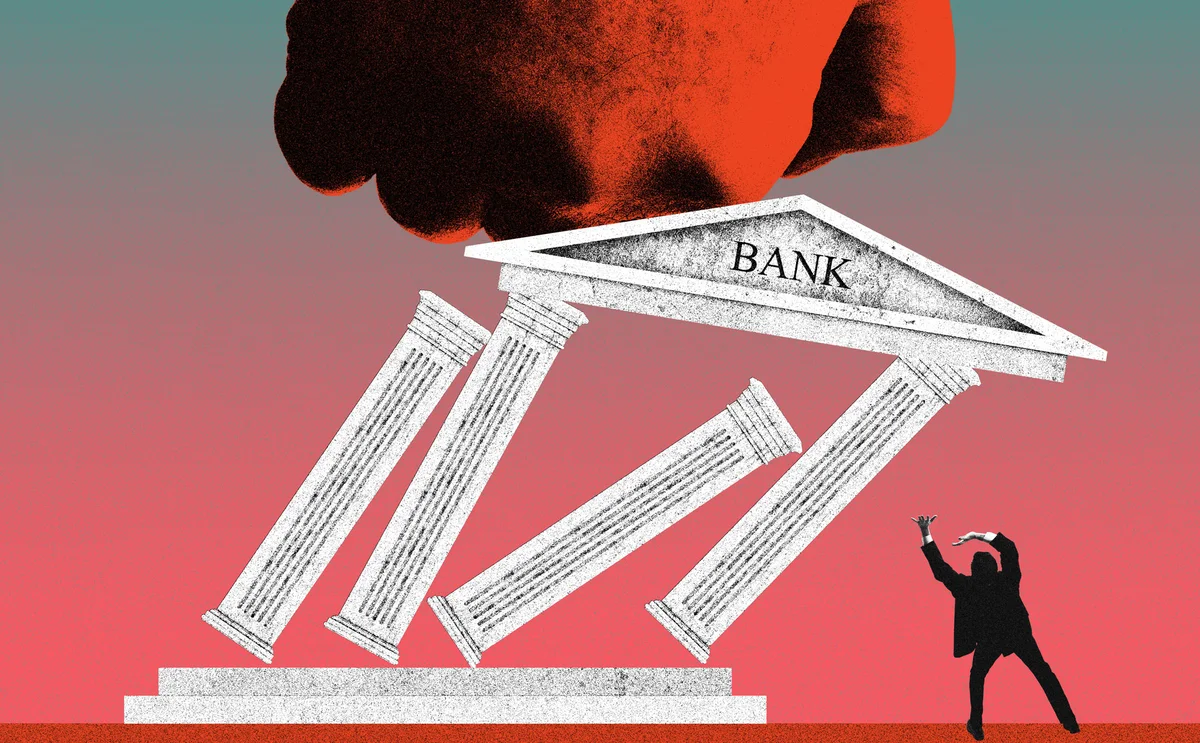
Critics want to scrap bank living wills after 2023 failures. But resolution plans gave regulators the tools to handle Credit Suisse and SVB without a repeat of 2008.
Alpha Score of 67 reflects moderate overall profile with strong momentum, strong value, weak quality, moderate sentiment.
The push to dismantle post-2008 bank resolution planning is gaining ground. Trump's comptroller of the currency, Jonathan Gould, wants the FDIC to scrap bank-level living wills. He helped shape a recent proposal to halve requirements for U.S. banks. In the EU, the Commission is pressing the Single Resolution Board to accept less frequent data reporting from the region's banks, citing competitiveness.
Resolution plans are a natural target for the coalition of lobbyists, politicians and regulators working to unwind the post-crisis regulatory framework. The documents run long, they are complex, and they require dedicated teams of specialists to produce. Critics point to the 2023 bank failures in the U.S. and Switzerland as proof the plans are unusable: no failed bank was resolved according to its living will that year.
That verdict is wrong.
The 2023 failures were not smooth sailing for resolution authorities. They triggered exceptional interventions and significant litigation in both the U.S. and Switzerland. But they also showed how far the system has moved since 2008.
In the Credit Suisse case, a sale to UBS was facilitated by writing down AT1 bondholders. The Swiss authorities offered a package of guarantees to smooth the transaction, but investors took the brunt of the losses. No state-funded capital injection was needed. For Silicon Valley Bank, regulators found the bank's previous resolution plan useful, particularly for keeping track of its international operations, according to people familiar with the process.
Resolution plans can never be step-by-step guides to an orderly failure. What they do is provide information that lets resolution authorities act fast to prevent contagion. Every time a bank sits down and drafts a plan, it builds the structures that make failures manageable.
The development of resolution planning over the past decade marked two advances over the pre-2008 status quo. First, it limited the unpredictability of bank failures and their aftershocks by setting out clear paths forward under different scenarios. Second, it ensured protocols are in place for regulators to receive the information they need to act fast.
Compare that to the weekend Lehman Brothers collapsed. Regulators lacked both a clear range of options and the means to act on them. A plan to split the investment bank into two entities almost came together. When UK government opposition killed that option, bankers and regulators simply ran out of time. Markets opened, Lehman declared bankruptcy, and the global economy went into a tailspin. From that point, there was no playbook: regulators scrambled to create emergency liquidity facilities and inject hundreds of billions in state-funded capital.
Ad-hoc solutions can work when a failure has few moving parts, a small bank, for example. For large, complex organisations, quick action depends on existing structures. Successful bank risk management follows the same principle: unforeseen losses become manageable when banks are set up to keep senior executives on top of risks, for instance through a risk and asset-liability committee structure.
For banks subject to resolution plans today, clean holding companies and stays on derivatives provide legal certainty. Bail-in bonds offer an extra cushion to protect depositors and avoid equity injections. Together, these tools give authorities the guardrails that were so sorely missing in 2008.
It may be true that the current U.S. model puts too much burden on banks to plan for their own failure. Moving toward a model closer to Europe's, where the resolution authority does most of the scenario planning, could be preferable. But reforms should preserve, and in some cases, like U.S. regional banks, expand, the structures that make it possible to limit the impact of bank failures.
The system has come a long way since 2008. Now is not the time to take a step back.
Drafted by a large language model from the source reporting linked above, then screened by automated publishing checks. It is not read by a journalist before publication. Some articles cite our Alpha Score. Verify prices and figures against the original source. Educational coverage, not personalized advice.