Stocks● Neutral
Why Complexity Stalls Productivity: Lessons from 4 Experts
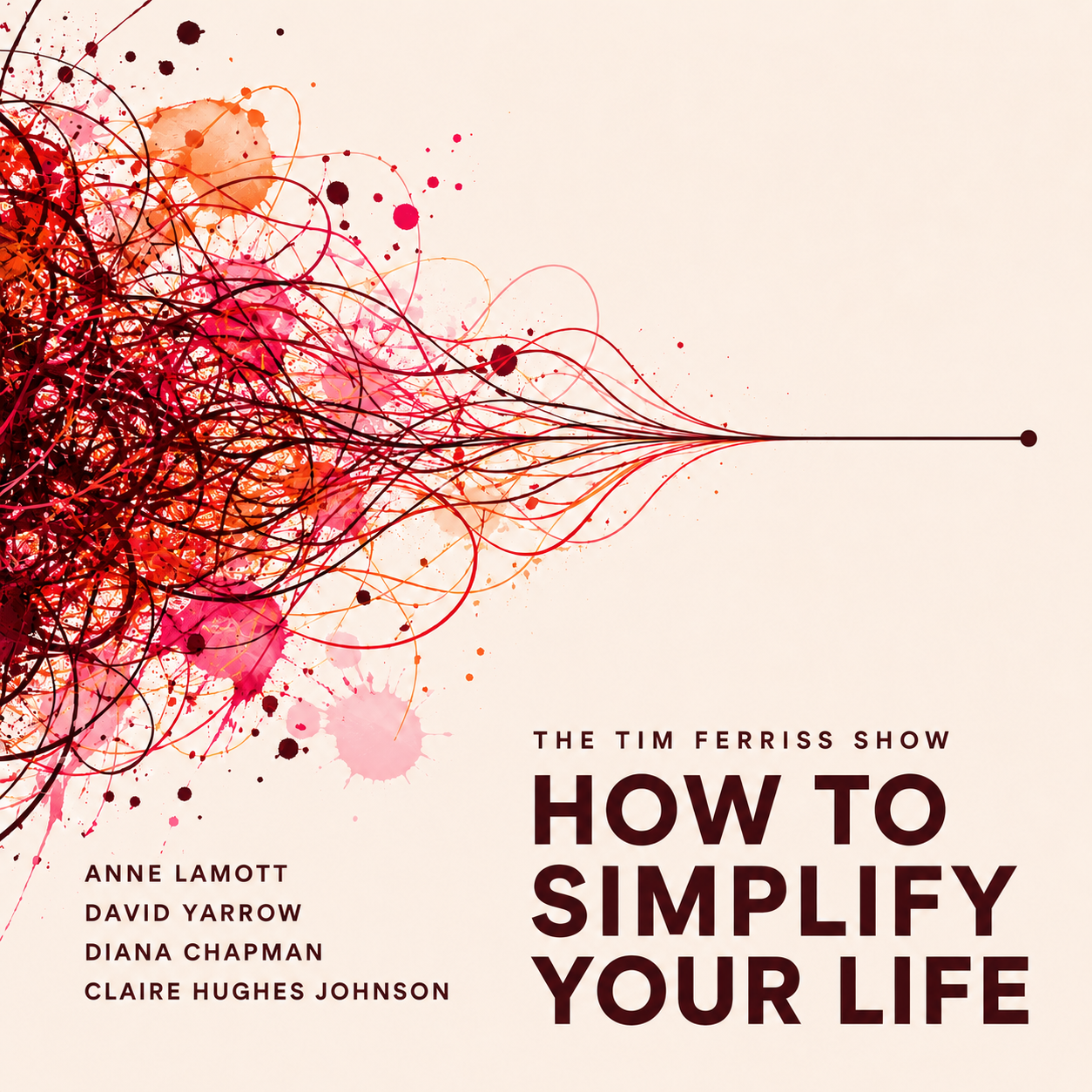
Experts share frameworks for reducing life complexity by auditing commitments, filtering networks, and shifting from obligation to intentionality.
Continue with
In a recent episode of The Tim Ferriss Show, four contributors—Anne Lamott, Claire Hughes Johnson, David Yarrow, and Diana Chapman—outlined specific frameworks for reducing life complexity. While the discussion centers on personal management, the underlying mechanics of their advice mirror the challenges of professional scaling, resource allocation, and decision-making in high-stakes environments. The core problem identified across all four perspectives is the "default yes" bias, a psychological trap where individuals over-commit to tasks, relationships, or obligations that provide diminishing returns on time and energy.
The Mechanism of the Default Yes
Claire Hughes Johnson, former COO of Stripe, notes that early-career growth often requires a "default yes" posture to build networks and acquire skills. However, as responsibilities scale, this habit becomes a liability. The transition to a "default no" is not merely about time management; it is a structural shift in how one allocates limited cognitive and emotional capital. Johnson suggests that when individuals fail to audit their commitments, they often do so because they derive self-worth from being "needed" rather than from the efficacy of their output. This creates a feedback loop where complexity is mistaken for productivity.
Diana Chapman, a specialist in conscious leadership, frames this as a misalignment between inner and outer worlds. She argues that complexity thrives in the presence of obligation. When individuals act out of "should"—social or professional pressure—rather than alignment, they create friction that consumes energy. Her approach involves establishing explicit relationship contracts, similar to the 15 Commitments of Conscious Leadership, to eliminate the need for blame and drama. By removing the ambiguity of expectations, participants can reduce the time spent managing interpersonal friction, which often accounts for a significant portion of daily operational drag.
Energy as a Luxury Asset
David Yarrow, a photographer, treats personal energy as a finite, high-value asset. His strategy for simplification involves a perpetual filter on his social and professional network. He argues that maintaining a large circle of "close friends" is an oxymoron that dilutes the energy available for deep, high-impact relationships. In a business context, Yarrow highlights the decision to operate without an agent as a means of maintaining direct, one-to-one control over his output. This eliminates the "financially thirsty" intermediaries who often prioritize volume over quality, a common issue in creative and professional services.
This perspective aligns with the concept of energy as a luxury brand. Just as a luxury brand maintains value through scarcity, Yarrow suggests that personal availability must be elusive to remain effective. When individuals invest energy in relationships or projects that do not reciprocate, they suffer a net loss in productivity. For those managing complex portfolios or high-pressure roles, the ability to say no is the primary lever for maintaining the focus required for high-level execution.