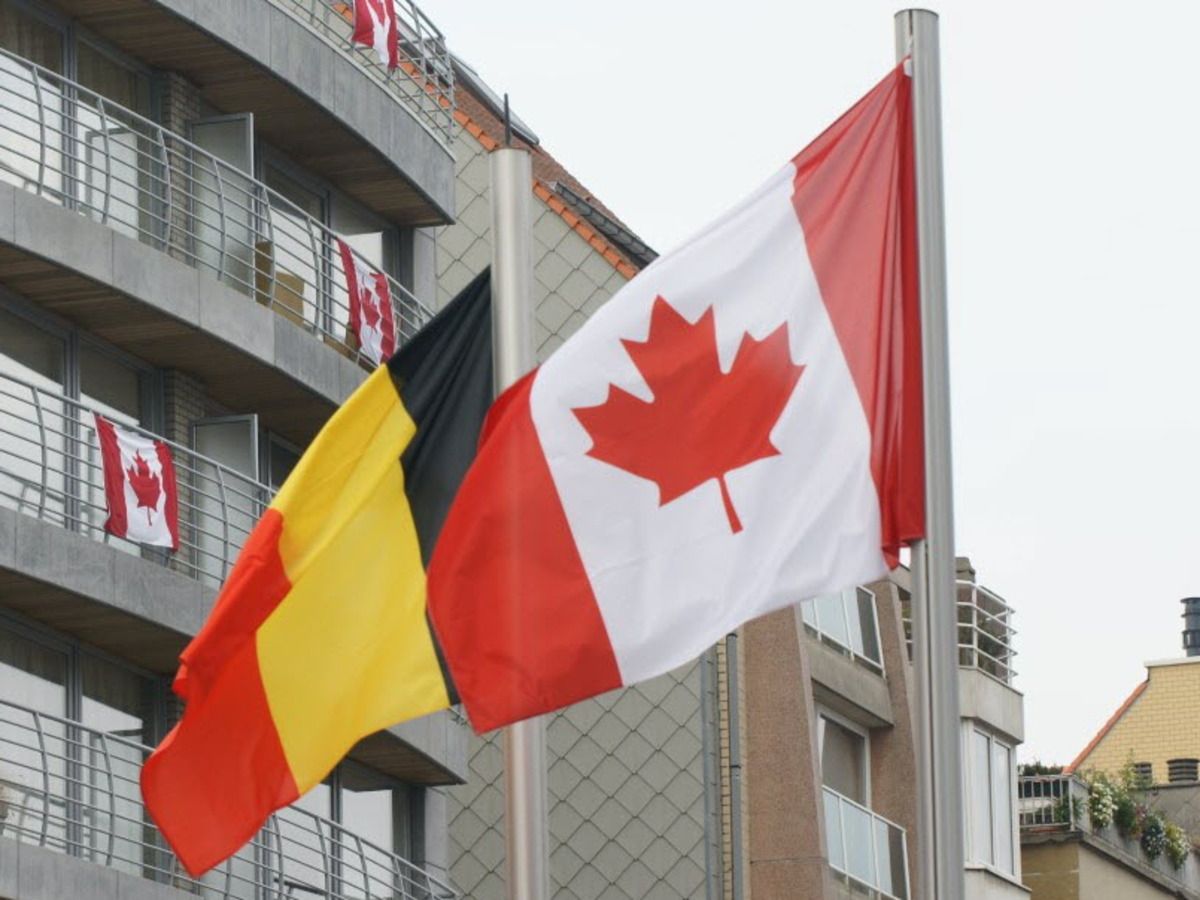
CETA helped push Canada-Belgium trade above $13 billion. The two economies barely overlap, leaving room for growth in clean tech, chemicals and logistics.
Belgium and Canada share history, values and a free-trade deal that has already delivered results. The Comprehensive Economic and Trade Agreement with the European Union, in force since 2017, helped push bilateral goods-and-services trade to roughly €8.5 billion last year. That is more than $13 billion Canadian. Belgium ranks as Canada's fifth-largest EU trading partner.
Yet the number leaves room. Trade between the two countries jumped more than 80% between 2016 and 2025, according to the data. The growth came from a relatively low base. CETA eliminated tariffs on 98% of product lines and opened services markets, but the real gains in sectors like agri-food, advanced manufacturing and clean technology have only started to show.
Canada exports everything from canola oil and aircraft parts to potash and wood pulp. Belgium ships chemicals, machinery, pharmaceuticals and diamonds. The two economies do not compete head-to-head. They fill gaps in each other's supply chains. A Belgian chemical maker buys Canadian nickel for battery cathodes. A Canadian miner uses Belgian port infrastructure to reach European buyers.
The complementarity is the point. Where the relationship is thin, the opportunity is wider. Belgian investment in Canada reached C$6.7 billion in 2023, concentrated in chemicals and logistics. Canadian investment in Belgium was smaller, tilted toward mining services and technology. The asymmetry suggests room for growth on both sides.
CETA's provisional application has been a net positive. The deal removed barriers that once made small-batch cross-border trade uneconomical. Yet some sectors remain underpenetrated. Canadian clean-tech firms, for example, have struggled to navigate Belgian procurement rules at the regional level, where Wallonia and Flanders set their own standards. Belgian food exporters face Canadian supply-management quotas that cap dairy and poultry volumes.
Those frictions do not require a new treaty. They need bilateral working groups, sector-specific agreements and more business-to-business contact. The Canada-EU summit in Brussels later this year is a chance to push that agenda.
A deeper partnership would also serve a strategic purpose. Both countries are mid-sized trading nations that depend on open markets and predictable rules. A stronger Canada-Belgium corridor makes the transatlantic economy less dependent on any single link. The relationship has history on its side. The next phase depends on whether the two sides treat the current numbers as a starting point, not a ceiling.
Drafted by a large language model from the source reporting linked above, then screened by automated publishing checks. It is not read by a journalist before publication. Some articles cite our Alpha Score. Verify prices and figures against the original source. Educational coverage, not personalized advice.