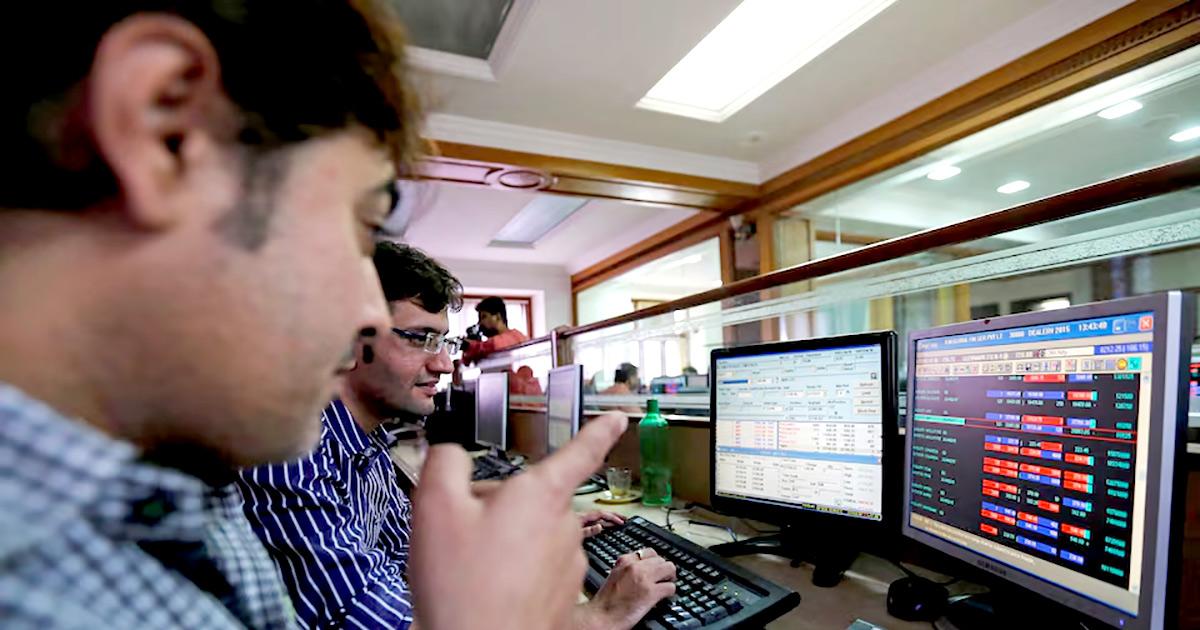
Indian equities rebounded Wednesday morning after a sharp fall the previous session. The Sensex climbed 187 points to 76,388.31; the Nifty rose 57 points to 23,878.85. The driver was a 1% drop in Brent crude to $76.29 a barrel.
For India, the world's third-largest oil importer, the move is macro-positive. Every dollar fall in crude improves the current-account deficit and eases imported inflation. VK Vijayakumar, chief investment strategist at Geojit Investments, said the crash in Brent below $77 "has removed the macro headwinds for India." The rupee has stabilised, and foreign institutional selling appears to have tapered off.
FIIs turned net buyers on Tuesday, purchasing equities worth ₹17.86 crore, exchange data showed. That marks a shift after weeks of selling, though the figure is modest relative to recent outflows. A weaker oil price also gives the Reserve Bank of India more flexibility on monetary policy, a factor that supports domestic demand-driven names.
Among the gainers were ICICI Bank, Infosys, Tech Mahindra, and Trent. ICICI Bank and Infosys each carry an Alpha Score of 57, a Moderate rating. For ICICI Bank, lower oil reduces provisioning risk in its corporate loan book. For Infosys, the benefit is indirect – lower macro uncertainty helps client decision-making – but the IT sector faces a headwind from Tuesday's 2.2% drop in the Nasdaq.
US equities fell sharply on Tuesday, with the S&P 500 down 1.4% and the Nasdaq down 2.2%, driven by renewed rate-hike fears. The global risk-off tone creates a crosscurrent for Indian stocks, especially export-oriented tech names. That the Nifty still managed to gain Wednesday suggests the oil-led macro relief is the dominant near-term factor.
Lower crude prices flow through directly to aviation fuel costs, auto demand, and input costs for paints, tyres, and lubricants – sectors that had been under margin pressure in recent quarters. The trade deal comment from a senior US official – that the US and India are "very, very close" to concluding a bilateral pact – adds a separate bullish catalyst, though no timeline was offered.
Not everyone is convinced. A separate report flagged that Indian markets could fall 20% from current levels, citing elevated valuations and potential global spillovers. That keeps the risk-reward two-sided, even as crude eases.
In Asian markets, South Korea's Kospi and Hong Kong's Hang Seng rose; Japan's Nikkei and Shanghai's SSE fell. The mixed picture mirrors the uncertainty.
The rebound comes after the previous session's decline, when institutional selling emerged. Wednesday's move recovers about half of that loss, leaving the Nifty still within a month-long range.
Brent crude at $76.29 is a level not seen since early 2024. If it holds or falls further, the readthrough for Indian equities improves. If supply concerns push it back above $80, the macro relief evaporates. The next scheduled catalyst is the trade-deal announcement, which the US official described as imminent but did not date.